
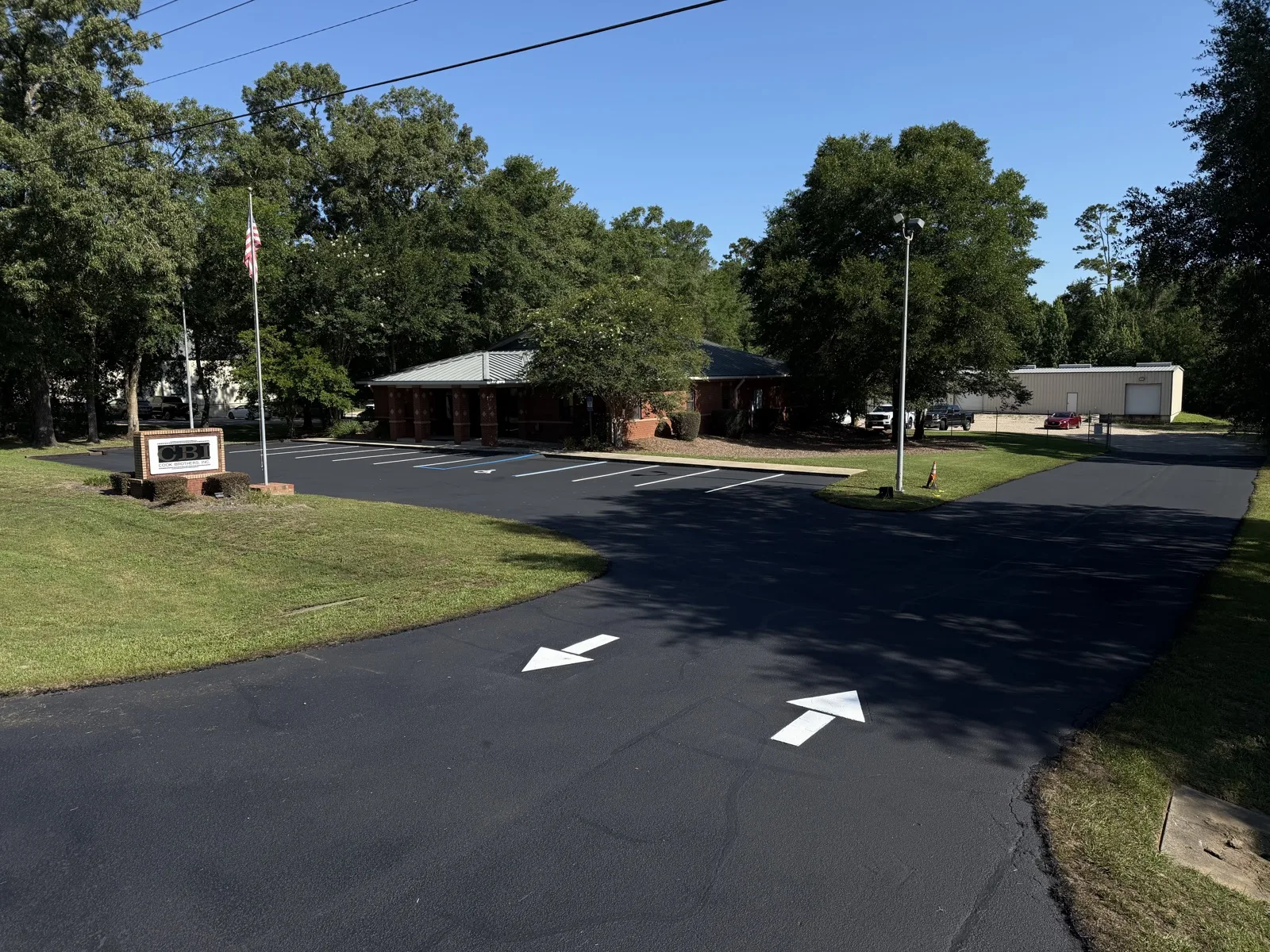
When it comes to maintaining asphalt, timing is everything. Acting during the 6-month window, when pavement is showing early signs of wear but is still structurally sound, is what separates a surface you can keep maintaining from one that has to go to a paving contractor for reconstruction. Once water gets past the surface and into the base, the fix stops being cosmetic.
Key factors for success include:
- Temperature: Mild is the target. The sealer has to be warm enough to cure, and the minimum application temperature is printed on the product data sheet for whatever material goes down.
- Humidity: The drier the air, the better the sealant bonds.
- Weather: A dry stretch before application and dry weather holding after it, with no rain in the forecast while the material sets.
- Season: Spring and fall are the workable windows in North Florida.
Spotting early signs, like hairline cracks, fading color, or standing water, and scheduling treatments promptly can prevent expensive repairs later. Regular inspections and a seasonal maintenance plan protect the investment and keep the lot in shape. Talk to a contractor who works locally so treatments line up with real weather conditions and with what your pavement actually needs.
Why Timing Affects Pavement Lifespan
Pavement wears down in stages. Small cracks look harmless at first, but they widen as water seeps in and traffic works the softened base underneath. What starts as a hairline separation ends as alligatoring, then a pothole, then a structural repair.
Sealing cracks as soon as they appear is the cheapest step in the whole sequence, and it is the one that keeps water out.
How Seasonal Changes Damage Pavement
Seasonal weather is hard on North Florida pavement, just not in the way it is up north. Rainwater finds its way into tiny cracks, saturates the base, and traffic then works that softened base until the crack spreads. Moisture trapped under a surface treatment also causes bubbling and peeling and speeds up deterioration from below.
Heat is the other half of it. Pavement baking in full sun gets hot enough to interfere with how well sealcoat adheres, and a hot afternoon followed by a cool night can disrupt the curing of a fresh treatment. Sustained UV exposure does the slow damage, drying the binder out and leaving the surface brittle.
Benefits of Early Pavement Maintenance
Taking care of pavement issues early, ideally within six months of noticing them, makes a real difference. Sealing cracks promptly keeps water out of the base, reduces trip hazards, and preserves traction. Getting the crack work done before the wet months means the surface goes into the heaviest rain of the year closed up rather than open.
Up next, how to identify early signs of pavement damage before they turn into bigger problems.
Spotting Early Signs of Pavement Damage
Catching pavement issues early, ideally within six months, helps you avoid expensive repairs down the road. One of the first changes to look for is color. Fresh asphalt starts deep black, and sun exposure fades it toward light gray or brown. That shift signals oxidation, which makes the surface brittle and more prone to cracking. Spot those indicators before you move on to more detailed inspection methods.
Visible Signs That Your Pavement Needs Attention
Certain visual cues tell you when your pavement is in trouble:
- Hairline cracks: These small fractures often result from thermal expansion and contraction, and they are the signal to schedule maintenance.
- Standing water: If rainwater is still sitting on the surface long after the rain has stopped, that points to a drainage or grading problem, which accelerates deterioration.
- Depressions or ruts: Low spots and wheel-path grooves that hold water mean the base underneath is no longer carrying the load.
- Rough or sandy texture: This suggests aggregate separation, where the asphalt mixture is losing its bond.
- Crumbling edges: Weak, unsupported edges ravel first and pull the failure inward toward the driving lanes.
Spotting these signs early lets you take proactive steps instead of reactive ones.
Simple Methods for Checking Pavement Condition
A few straightforward techniques will tell you most of what you need to know:
- Daylight inspections: Walk the entire area during the day to spot subtle changes in color or texture.
- Post-rain checks: After rainfall, look for water pooling and check every crack you can see. Cracks wide enough to hold water should be sealed quickly, while cracks you can see down into, or that have loose material crumbling from their edges, may indicate deeper structural concerns.
- Routine inspections: Create a schedule for regular checks:
- Quick walks: Look for safety hazards and drainage issues as part of your normal property rounds.
- Closer looks: Examine the surface for cracks, stains, or other signs of wear on a set cadence.
- Contractor assessment: Have a contractor walk the lot and assess it structurally on a recurring schedule.
Pay special attention to high-traffic areas like loading zones, dumpster approaches, and delivery truck paths. Those spots wear out first and they are usually where the first real repair gets written.
Best Weather Conditions for Pavement Treatments
Weather decides whether a pavement treatment works. Apply in the wrong conditions and you spend the money and leave the pavement unprotected. Match the treatment to the right temperature, humidity, and rainfall window.
Temperature and Humidity Requirements for Sealcoating
Sealcoating depends heavily on conditions to bond properly. The sealer's own product data sheet sets the minimum ambient and surface temperature it can be applied at, and those minimums are hard limits rather than suggestions. Too cold and the film never forms the way it should. Too hot and the water flashes off before the coat can level out, so on a lot baking in open Florida sun a light fog spray can bring the surface temperature down, as long as no puddles form.
Humidity is the other constraint. Dry air is what lets a coat cure. Heavy, muggy conditions can leave the sealer tacky and stop it from setting properly. A dry forecast matters after the crew leaves, not just while they are working, because rain falling on a coat that has not finished curing can wash the treatment off the lot and carry it into storm drains.
| Weather Factor | Ideal Range for Sealcoating | Impact of Suboptimal Conditions |
|---|---|---|
| Ambient Temperature | At or above the sealer manufacturer's stated minimum | Too cold prevents proper film formation; too hot can cause overly fast drying |
| Humidity | Dry air | Muggy conditions can stall curing and leave the surface tacky |
| Rainfall | None in the forecast until the coat has cured | Rain on an uncured coat can wash away the sealer |
| Wind Speed | A light breeze | Light breezes help curing; strong winds cause uneven drying |
Best Seasons for Crack Filling in North Florida
In North Florida, the best times for crack filling are spring (March through May) and fall (October through November). Those months bring moderate temperatures, less rainfall, and stable enough conditions to get a lot done in one mobilization.
Summer, June through September, brings afternoon thunderstorms and high humidity that interfere with both application and curing. Winter, December through February, can run cool enough that cracks need pre-heating for the material to adhere the way it should.
To plan around it, aim for dry stretches and read the forecast before you commit the crew: the surface has to be warm and dry when the material goes down, and it has to stay dry while the material sets.
Building Your Seasonal Maintenance Schedule
Once you know the weather windows and the early damage signs, a seasonal plan mostly writes itself. It keeps small work small and it keeps the lot out of the capital budget.
Maintenance Schedules for Asphalt vs. Concrete
Asphalt and concrete need different care, but both reward routine attention. On a commercial lot, the recurring task that returns the most is resealing the asphalt on a regular cycle, which shields it from UV and water. Concrete sections, aprons, pads, walks, and ramps, fail differently, usually at joints and edges, so they get inspected on the same walk but repaired on their own schedule.
| Maintenance Task | Recommended Frequency | Optimal Timing |
|---|---|---|
| Sweeping & Cleaning | Recurring, tied to spring cleanup | Spring |
| Crack Filling | As cracks appear | Spring / Fall |
| Pothole Patching | Immediately | Dry weather periods |
| Sealcoating | On a regular cycle, set by how the surface is wearing | Late spring / early summer |
| Restriping | After sealcoating, or when layout markings fade | Dry weather periods |
| Full Inspection | Recurring, at the close of the working season | Late fall |
Those seasonal guidelines let you time cleaning, inspections, and repairs so they do not collide.
Spring is the time to sweep and wash the lot clean and check for cracks that opened over the winter. Late spring and early summer give you the warmest, driest stretch for sealcoating and the bigger repairs, when curing conditions are best. Fall is for closing the surface up, filling cracks before the surface spends months absorbing rain. Winter is the slow season for surface treatments in North Florida, which makes it a good time for the full inspection and for planning next year's scope.
Tips for Following Your Maintenance Schedule
Pair your seasonal tasks with regular inspections. Setting reminders for early spring and late fall keeps the lot on your radar at both ends of the working season. Those checks are what catch small problems while they are still cheap. Schedule the big items, sealcoating especially, for late spring or early summer so you are not fighting rain or cool nights.
Keep irrigation heads aimed away from the pavement, because constant water exposure weakens asphalt and is a common cause of potholes that look mysterious until you watch the sprinklers run. A scheduled sweep is also a good excuse to look closely at the surface and catch hairline cracking before it spreads.
Planning Tools and Professional Services
American Curb Appeal's Pavement Services
American Curb Appeal has maintained commercial pavement across Tallahassee, Monticello, and the wider Big Bend since 1998. The work is maintenance and repair of pavement that already exists: parking lot striping, sealcoating, crack sealing, asphalt and pothole repair, concrete repair, and ADA compliance and signage. The concrete crews do pour new work where a property needs it, including driveway extensions, aprons, sidewalks, dumpster pads, and ADA ramps.
Some of the specifics that matter on a commercial site:
- Fast-cure striping paint that lets a lot reopen in about 30 minutes, which is how you restripe a business without closing it for a day.
- FDOT high-solids sealer spec, so the coat that goes down holds up under real traffic.
- Hot rubberized crack filler, which stays flexible as the crack moves instead of cracking straight back open.
- Spec-9.5mm hot mix for asphalt repairs.
- ADA layout done to spec: 12-foot stalls with a 5-foot van access aisle, 2% maximum slope, and 1/4 inch vertical separation treated as a trip hazard.
For property managers running several sites, having one provider handle striping, sealcoating, and repair keeps scheduling simple and keeps the standard the same from lot to lot.
Maintenance Planning for North Florida Properties
A workable plan is built around the property, not just the calendar: pavement age, traffic volume, drainage, and whether you are looking at asphalt or concrete. The core of it stays simple. Repair cracks as they appear, inspect every spring, and reseal on a regular cycle, scheduled into North Florida's dry stretches.
Working with a contractor who knows the local weather matters here, because the schedule has to dodge summer thunderstorms and get the crack work finished ahead of the wet months rather than after them. That is the practical version of staying inside the 6-month window: the work happens when the weather allows it, not when the surface has already failed.
Conclusion
Acting promptly is what keeps pavement in good condition. Addressing problems inside the six-month window is the difference between a maintenance line item and a capital project.
Treat when the surface is warm and dry, at or above the minimum temperature the sealer manufacturer prints on the product data sheet, with dry weather holding after the crew leaves. Those conditions are what let sealants bond and cure. Miss the window and you get soft sealant, streaking, or outright bonding failure, and you pay to do it twice.
Plan around North Florida's real treatment seasons, spring and fall, instead of whenever the budget frees up. Small cracks handled on time do not become the structural problems that put the lot in front of a paving contractor for reconstruction. Working with a local contractor who understands the region's weather is how the timing actually holds.
Contact American Curb Appeal to schedule an inspection and get the work on the calendar in the right season.
FAQs
How do I know if my pavement is still in the 6-month window?
Judge it by condition, not just by age. If the cracks are still hairline, the surface has faded from black toward gray but is not raveling, and water is not standing on it for days after rain, you are still in preservation territory and the lot can be sealed rather than reconstructed. Once cracks open wide enough to see down into, edges start crumbling, or the surface moves under a loaded truck, you have crossed into repair. Walk the lot after a rain and write down what you see. That record is what tells you which side of the line you are on.
What should I do if rain is forecast right after sealcoating?
If rain is in the forecast, hold off on applying the sealcoat. Rain can wash away or damage the fresh coating and stop it from curing correctly. If the sealcoat is already down and rain is coming, wait for the weather to clear and make sure the surface is completely dry before anyone walks or drives on it. That limits the damage and gives the sealcoat a chance to cure as intended.
When should I sealcoat versus just fill cracks?
Sealcoating and crack filling do different jobs. Crack filling comes first, because it keeps water from getting into the pavement and causing the damage underneath that sealcoat cannot fix. Once the cracks are handled, sealcoating goes on top. That step wants warm, dry conditions, at or above the minimum application temperature on the sealer's product data sheet, with no rain expected while the coat cures. Sealcoat adds a protective layer against UV, water, and oxidation, which is what extends the surface's life.
Need parking lot maintenance?
Contact us today for a free proposal on your next pavement project.
Get Your Free Proposal