
How Florida Heat and Rain Break Down Asphalt Pavement
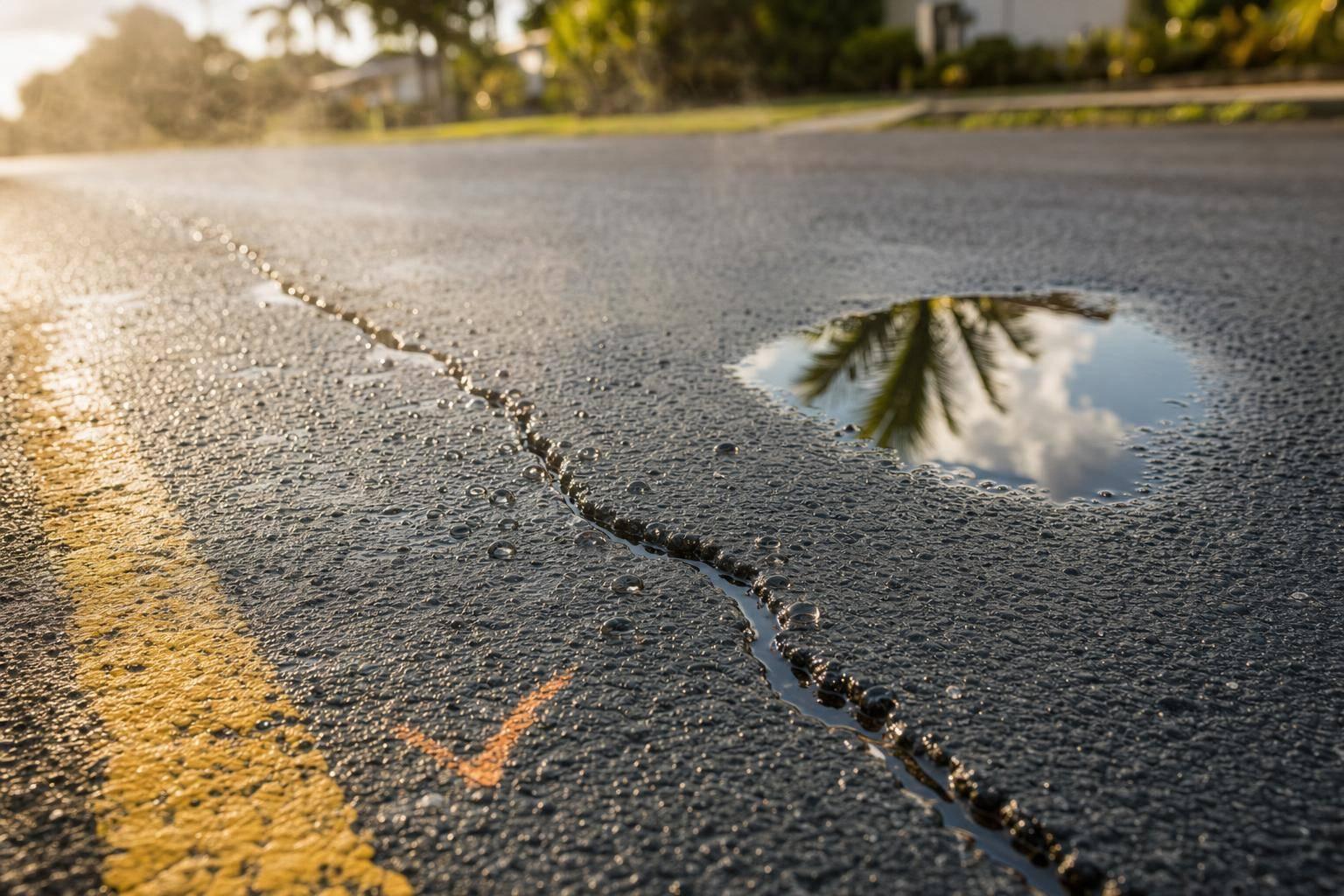
Florida heat can dry out asphalt, and rain can turn small cracks into deeper damage. If I manage a parking lot or other paved area, the main thing I need to watch for is simple: heat often starts the problem, and water often makes it worse.
Here’s the short version:
- Heat and UV can dry the asphalt binder and make the surface brittle.
- Early signs often include fading, hairline cracks, rutting, raveling, and low spots.
- Rainwater can move through cracks and joints and weaken the base below.
- Standing water and edge washout can lead to potholes, repeat failures, and sinking areas.
- Surface fixes may help early wear, but deeper damage often depends on the condition of the base and drainage.
- For Tallahassee-area properties, truck lanes, drive-thrus, and pavement edges often need closer attention after heavy rain.
A few facts in this guide stand out:
- The article points to 2% maximum slope for parking stalls and access aisles under Florida accessibility rules.
- It also breaks repairs into 4 main types: sealcoating, crack sealing, localized repair, and structural repair.
- In many cases, the same area failing again and again can point to drainage trouble below the surface.
If I want asphalt to last longer, the takeaway is clear: check the lot after major rain, catch cracks early, and match the repair to the type of damage instead of treating every problem like a surface issue.
How Florida Heat Damages Asphalt
Oxidation and Brittleness
Florida sun and heat wear down the binder in asphalt. As that happens, the surface dries out and starts to fade. The shift from deep black pavement to a dull gray surface is often one of the first signs that heat damage has started.
Once the binder dries, the pavement loses some of its flexibility and becomes brittle. Small hairline cracks can then spread into alligator cracking. That pattern usually means the surface is starting to break down.
Routine site checks should include a close look at surface color and any crack patterns.
Softening Under Traffic Loads
Heat can also soften asphalt when it carries heavy traffic. On very hot days, the surface may soften enough to deform under load. Wheel paths, tight turning areas, and delivery zones often take the hardest hit because they handle repeated, concentrated weight.
When tires press into softened asphalt, rutting can develop in the form of shallow depressions along wheel paths. Raveling, where aggregate starts to loosen from the surface, is another warning sign. Both can point to areas that may need professional asphalt services for a closer inspection.
Once these heat-related weak spots show up, rain can get into the pavement more easily and speed up the breakdown.
sbb-itb-bfcbd36
How Rain Turns Surface Wear Into Pavement Failure
After heat opens cracks, rain starts working its way in. That water can move through the surface and weaken the layers below, which is where small surface wear can turn into a much bigger pavement problem.
Water Infiltration Through Cracks and Joints
Once cracks or joints form, rain can slip into the base and the soil underneath. As those lower layers weaken, the pavement loses support. At that point, traffic can make the surface crack more, settle unevenly, or fail.
Standing Water, Potholes, and Edge Erosion
If pavement doesn’t have the right slope, water can pool after a rain. That standing water puts more stress on the surface. Along the edges, concentrated runoff can wash out the base and lead to edge cracking or even edge failure.
Potholes and low spots that keep showing up in the same place often point to a drainage problem. In many cases, water isn’t moving away the way it should. A surface patch may cover the damage for a while, but if the drainage issue stays in place, the same problem can come back.
When one area keeps failing, the cause is often below the surface. That can mean a drainage issue, a weakened base, or both.
When water keeps reaching the base, patching the surface alone will not solve the problem.
Why Heat and Rain Together Speed Up Asphalt Breakdown
Heat and rain don't just create separate issues. They often hit one after the other, and each round of damage sets up the next.
The Heat and Rain Damage Sequence
This is how a hot, wet cycle can turn minor surface wear into deeper pavement failure.
Heat and UV dry out the binder, and small cracks begin to open. Then rainwater gets in. As water moves below the surface, the base and subgrade can start to saturate. That weakens support under the asphalt. Once that support starts to give way, traffic pushes the pavement past its intended flexibility.
From there, the problem tends to build on itself. Cracks widen, more water seeps through, and the foundation gets weaker. With less support underneath, the asphalt above has to flex more than it was meant to. The result is rutting, alligator cracking, and potholes.
Damage Signs and Likely Repair Response
These signs can help match the damage to the right response.
| Cause | What Happens | Visible Signs | Typical Response |
|---|---|---|---|
| Heat and UV | Oxidation, binder loss | Fading, hairline cracks | Sealcoating or crack sealing |
| Rainwater | Base saturation | Widening cracks, soft spots, edge erosion | Crack sealing and drainage correction |
| Heat and traffic | Movement beyond the pavement's intended flexibility | Rutting, potholes, alligator cracking | Full-depth repair or patching |
Once you know what stage the pavement is in, the repair path is usually easier to sort out. In many cases, the right choice should follow the pavement's condition, whether that means sealcoating, crack sealing, or a more structural repair.
Matching the Right Repair to Pavement Condition
Preventive Care for Sound Pavement
Once heat and rain start opening up the surface, the main job is simple: keep water out before it reaches the base.
If the pavement is still sound and only showing early wear, surface treatments can often help. Sealcoating slows UV oxidation and helps limit moisture intrusion. Crack sealing should happen as soon as cracks open, since even small openings can let water work its way down into the base.
After heavy rainfall, a short inspection can help spot new cracks before they spread. That kind of early check is often a lot easier to deal with than waiting until the damage gets deeper.
Localized and Structural Repairs
There comes a point when surface treatment isn't enough. At that stage, the repair needs to match how deep the damage goes.
Soft spots that sink under light pressure usually mean the base is damaged or saturated. Alligator cracking, deep rutting, and potholes that keep coming back in the same area are all signs of base or subgrade failure. Those problems call for structural repair, not just a surface fix.
In some places, drainage also plays a part. If runoff keeps washing out pavement edges, targeted drainage corrections may need to be part of the repair.
Maintenance Planning for Tallahassee Area Properties
For commercial properties in the Tallahassee area, pavement upkeep tends to work better as an ongoing plan than as a string of emergency repairs.
High-stress areas like truck courts and drive-thru lanes usually wear out faster than light-traffic paths, so they may need more frequent inspection. Standing water along the edges and visible erosion after rain are worth dealing with early, before washout starts affecting the base.
Repair work can also be a good time to look at pavement markings. After structural or localized repairs, striping, layout, and ADA and safety compliance markings should be reviewed. Florida's Accessibility Code requires parking stalls and access aisles to maintain a maximum slope of 2% in any direction. Surface changes from repair work can affect compliance.
Use this guide to match the repair to the pavement condition.
| Treatment Type | Best Use | Purpose | Limitation |
|---|---|---|---|
| Sealcoating | Sound pavement with cosmetic wear | Shields against UV and water; improves appearance | Will not fix structural damage or cracks |
| Crack sealing | Open cracks with solid edges | Prevents water from reaching and weakening the base | Not effective for alligator cracking or crumbling areas |
| Localized repair | Potholes or isolated base failure | Fixes specific hazards and stabilizes the immediate area | Does not address property-wide aging |
| Structural repair | Widespread cracking, rutting, or slope issues | Restores load-bearing capacity and ensures ADA compliance | More expensive than surface treatments |
Conclusion: Act Early to Help Pavement Last Longer
Florida heat can open up the pavement surface, and rain can push that damage deeper. Water can move through cracks and joints, weaken the base, and in many cases lead to surface failure.
That’s why the repair should match the damage.
After heavy rain, a quick walk through the lot can help spot cracks, standing water, or edge erosion. American Curb Appeal can help property owners assess the damage and plan the right repair.
FAQs
How often should I inspect my asphalt after heavy rain?
Heavy rain doesn’t call for a fixed inspection schedule. Still, regular visual checks can help you spot water-related damage early, like base erosion, edge cracking, surface cracks, or soft spots.
For a more formal review, plan assessments every two to four years. In many cases, high-traffic areas should be checked every two years, while low-traffic areas can often go about four years between assessments.
If you notice damage, American Curb Appeal Inc. can help with restoration and structural repairs.
How can I tell if damage is only on the surface or deeper in the base?
Try a screwdriver test as part of your visual inspection. Press a screwdriver into cracks or along the edge of the pavement. If it sinks in more than 1 inch with little resistance, the base may be compromised.
Pay attention to how the material feels. If it has the texture of soft black clay, the problem likely runs deeper than the surface. In many cases, a simple patch isn’t enough, and a full-depth repair may be needed.
When is crack sealing enough, and when do I need structural repair?
Crack sealing is often enough when pavement is still in fair or satisfactory condition and the cracks are about 1/4 inch to 1/2 inch wide. The main goal is simple: keep water out so it doesn’t work its way down into the base.
When damage is spread across a large area, or the Pavement Condition Index is 70 or below, crack sealing alone may not be enough. In many cases, that points to a need for rehabilitation or structural repair instead.
A basic field check can help flag deeper trouble. If a screwdriver goes in more than 1 inch with little resistance, the foundation may be compromised.
Need parking lot maintenance?
Contact us today for a free proposal on your next pavement project.
Get Your Free Proposal