
If you have ever watched a typical concrete driveway repair project, you might have noticed a recurring scene. A crew working frantically to rip out old concrete, throw up wooden forms, and level out the dirt, all while repeatedly checking their watches. Why the panic? Because the concrete truck is already scheduled to arrive at 10:00 AM, ready or not.
In the concrete industry, this is extremely common. Many contractors let the truck's delivery schedule become the "boss" of the job site. The mindset is simple. Get the concrete on the ground, finish it quickly, move on to the next job, and keep the crew rolling.
While large crews with high volume setups can sometimes pull this off, the reality for most homeowners is that rushing past site preparation creates flaws you won't see until years down the line.
Concrete Isn't a Stone Slab, It's an Engineered System
It's easy to think of a driveway as a giant slab of stone, but concrete behaves very differently.
- It's a chemical process, not just a liquid drying out. Concrete hardens through a chemical reaction called hydration. Messing up the water ratio or rushing the pour compromises the crystal matrix structure, weakening the slab's compressive strength before it even sets.
- It conforms completely to the base beneath it. Unlike natural stone, which can bridge small gaps, concrete adopts the exact shape and stability of the subgrade. If the soil or aggregate base settles even half an inch because it wasn't mechanically compacted, the concrete above it will eventually crack to follow that dip.
- It expands, contracts, and flexes. As ground temperatures shift and moisture levels change, concrete moves. Proper reinforcement layout, slab thickness, and control joints aren't optional steps. They are what dictate whether that movement results in controlled joints or unsightly structural cracks.
The Cost of Rushing the Prep Work
When a contractor is racing against the mixer, the steps that get compromised are almost always the ones underneath the surface.
- Inadequate subgrade compaction. Skimping on proper base depth or failing to run a mechanical plate compactor leads to uneven settling and hollow spots under your driveway.
- Hurried formwork and drainage pitch. If forms are set in a rush, slope calculations get sloppy. That can mean water pooling near your garage or foundation instead of flowing toward the street.
- Improper reinforcement placement. Throwing rebar or wire mesh down without elevating it so it sits in the middle third of the slab neutralizes its structural benefit.
A job might look clean and shiny the day the crew washes down the street, but "good enough" prep work inevitably leads to premature failure. The same thing is true once the slab is in. Water that gets into an early crack keeps working on the base underneath, which is why we wrote about why water damage starts with cracks you ignore.
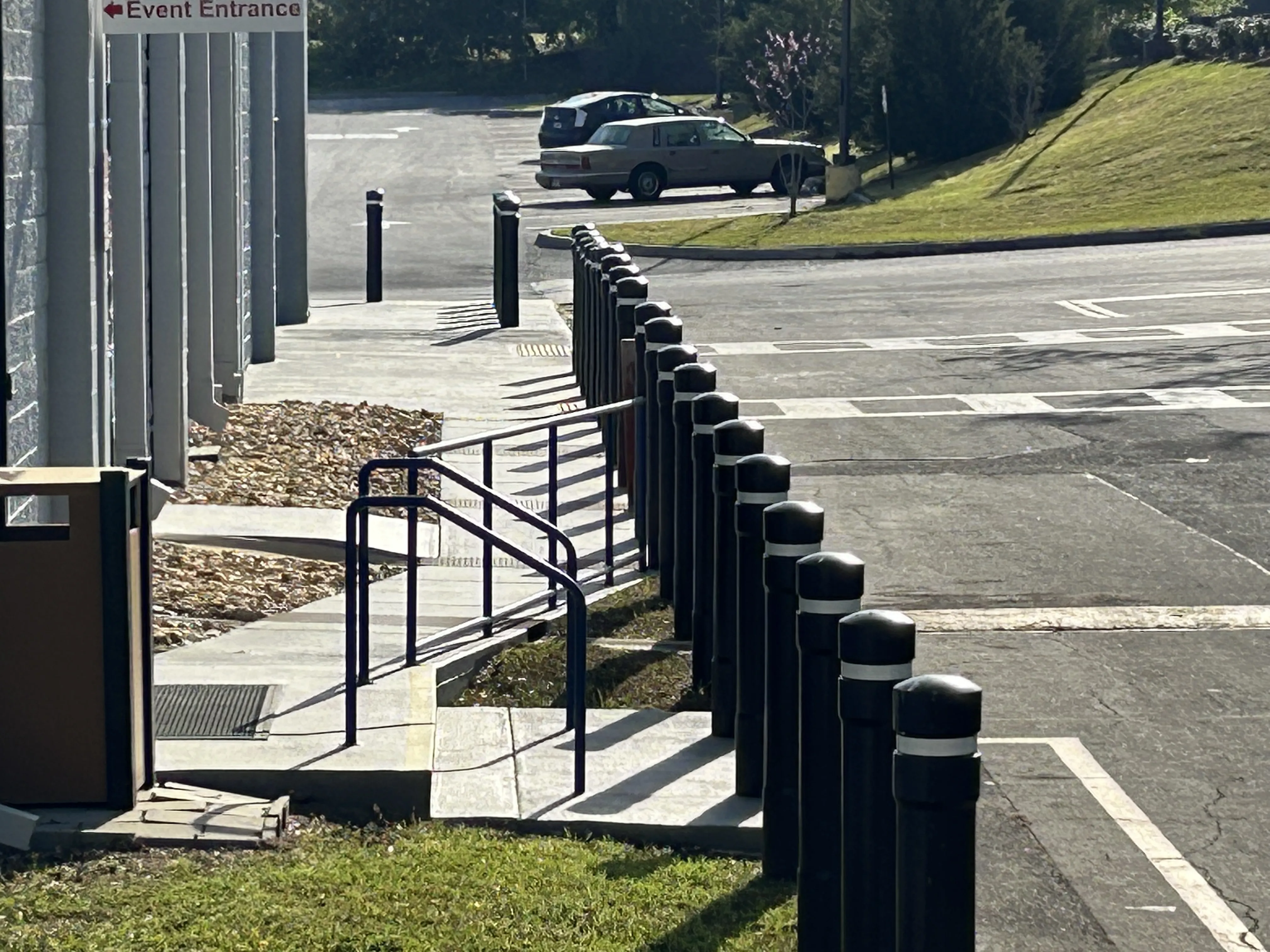
A freshly poured concrete walk, formed and finished after the base underneath was compacted.
Our Approach: Quality Over the Clock
Timely completion is important. Nobody wants a torn up driveway sitting open for weeks. But we believe speed should never come at the expense of craftsmanship.
Here is how we do things differently.
- Prep comes first, concrete second. We don't lock in a rigid pour time until the excavation, aggregate base, mechanical compaction, and steel reinforcement when needed, meet our structural standards.
- Detail oriented crews. We focus on the critical details, ensuring uniform slab thickness, precise control joint placement, and exact pitch for drainage.
- No shortcuts for convenience. If site conditions require extra base compaction or form adjustments, we take the time to do it right. The concrete arrives when the site is ready, not before.
Your Driveway Is a Long Term Investment
A concrete driveway is a complex structural feature of your home designed to last 25 to 30 years when built correctly. Choosing a contractor who respects the process, and refuses to rush the prep, is the difference between a driveway that stands the test of time and one that needs repairs in a few seasons.
Concrete Done Right in Tallahassee
In 28 years of concrete work around Tallahassee, Crawfordville and Quincy, American Curb Appeal has watched that rushed truck scene play out more times than we can count, and we built our concrete construction and repair work around not repeating it. If you are planning a new driveway or a repair, we are glad to walk the site with you and talk through what the base underneath needs before any concrete is ordered. Ask for a free estimate.
FAQs
Why does a new concrete driveway crack within a few years?
Most early cracking traces back to what is under the slab. Concrete takes the exact shape of the base beneath it, so if the subgrade was not mechanically compacted and it settles even half an inch, the slab cracks to follow that dip. Rushed forms and reinforcement placed too low make it worse.
How long should a concrete driveway last?
Built correctly, a concrete driveway is designed to last 25 to 30 years. The prep work underneath, the base depth, compaction, reinforcement placement and drainage pitch, is what decides whether it reaches that.
What should I ask a contractor before the concrete truck is scheduled?
Ask when the pour will be scheduled relative to the prep. A contractor who sets the truck time first and races the prep to meet it is the pattern to avoid. The concrete should arrive when the excavation, base, compaction and reinforcement are ready, not before.
Need parking lot maintenance?
Contact us today for a free proposal on your next pavement project.
Get Your Free Proposal