
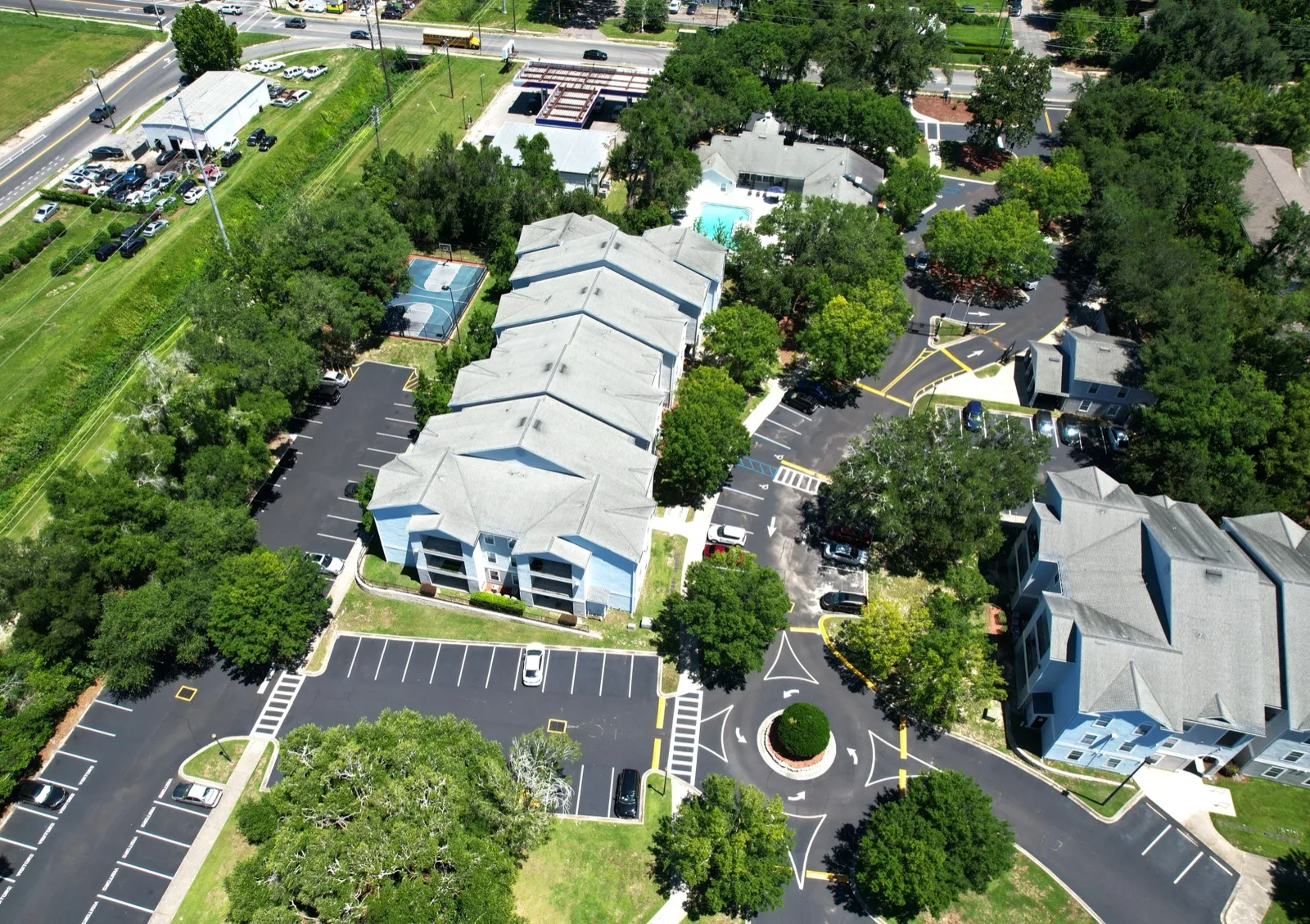
Pavement doesn’t last forever. From the moment it’s in use, factors like weather, UV exposure, and heavy traffic contribute to wear and tear. Instead of waiting for costly repairs, managing pavement as an asset means taking a planned, data-driven approach to maintenance. By inspecting and addressing small issues early, you can extend the lifespan of your pavement, improve safety, and reduce long-term costs.
Here’s what you need to know:
- Inventory Matters: Document all paved surfaces, including location, size, and condition.
- Regular Inspections: Use tools like the Pavement Condition Index (PCI) to track wear and plan maintenance.
- Preventative Care: Treatments like sealcoating and crack sealing can protect surfaces and delay major repairs.
- ADA Compliance: Regular checks ensure accessibility and avoid potential penalties.
With a focus on early action and proper planning, pavement can shift from being a liability to a well-maintained asset that supports property value and safety.
Pavement Management Fundamentals
Managing pavement effectively begins with understanding what paved assets you have and their current condition. Without a clear inventory and regular evaluations, you're more likely to find yourself reacting to problems instead of preventing them. Accurate records and inspections are the foundation for transitioning from reactive fixes to proactive, long-term management.
Creating a Pavement Inventory
Start by documenting every paved surface on your property, including parking lots, driveways, pathways, and alleys. Capture essential details like GPS-based location, dimensions, pavement type, and maintenance history.
For larger properties, break the pavement into sample units rather than treating each lot as one undifferentiated slab. ASTM D6433, the standard practice for roads and parking lots, sizes an asphalt sample unit at roughly 2,500 square feet, give or take 1,000 square feet. Group those units by how they are used: a loading zone that takes delivery trucks all week will not behave like a light-traffic pathway, and averaging the two together hides both. If your property is extensive, you don't need to inspect every square foot. A representative sample of units, chosen on a consistent interval rather than by eye, gives a reliable read on overall condition. Repeating the survey on a regular cycle is what shows you how fast the pavement is deteriorating, since a single snapshot only tells you where you stand today.
This inventory becomes the foundation for ongoing condition assessments.
Assessing Pavement Condition
After completing your inventory, evaluate the condition of each section through visual inspections. Look for common issues like alligator cracking, rutting, potholes, weathering, or bitumen bleeding.
The Pavement Condition Index (PCI) is a standard metric used to measure pavement quality. This scale ranges from 0 to 100, with 100 representing perfect condition and 0 indicating complete failure. Under ASTM D6433, a PCI of 85 to 100 is rated "Good", meaning minimal distress, while a PCI of 40 to 55 is rated "Poor" and generally points to rehabilitation rather than routine maintenance.
A pavement management program is really just a decision-making framework. You track current and historical condition for every surface you own, then use that record to make cost-effective calls about which maintenance and rehabilitation treatments to fund, and when.
Understanding the condition of your pavement is key to selecting the right treatment. For surfaces still in the middle of the scale, maintenance steps like crack sealing can be effective. However, when defects become widespread, more extensive rehabilitation may be necessary, and that is paving-contractor scope rather than a maintenance line item. Properties with heavy commercial traffic may benefit from additional tools, such as a Falling Weight Deflectometer (FWD), to evaluate structural capacity and estimate remaining service life. These assessments help ensure timely and cost-efficient decisions for pavement upkeep.
Maintenance and Repair Methods
Once you've assessed the condition of your pavement, it's time to use targeted treatments to maintain and extend its lifespan. A well-planned program that includes crack filling, asphalt repair, and sealcoating can help protect surfaces and prevent small problems from turning into expensive repairs. These preventative measures can delay the need for major reconstruction and keep your pavement in better shape for longer. Below are specific methods for sealcoating, crack filling, pothole repair, and ensuring ADA compliance.
Sealcoating: Protection and Timing
Sealcoating is an important step in shielding asphalt from weather, UV rays, and water. It works best on pavement that is still structurally sound, while the distress showing up is cosmetic rather than widespread. Sealcoating will not fix structural damage, so it is a preservation step rather than a rescue. After any asphalt patching, allow the fresh material to cure and its petroleum oils to evaporate before sealing over it, otherwise the sealer will not bond.
Crack Filling and Pothole Repair
Crack sealing is one of the most effective preventative measures available. It prevents water from getting into the pavement base, which can lead to structural damage over time. The cracks worth sealing are the ones that have opened enough to take material but have not yet crumbled at the edges, and a hot rubberized crack filler is what holds in them, because it stays flexible as the joint moves through the seasons.
Potholes, on the other hand, need to be addressed quickly to avoid further damage. During inspections, you can use a "screwdriver test" to check the condition of cracks and edges. If the blade sinks in easily instead of meeting solid material, that points to damage in the pavement base, which may call for a full-depth repair rather than a surface patch.
ADA Compliance and Safety Hazards
Regularly inspect sidewalks, curbs, and parking areas to identify safety hazards and ensure they meet ADA standards. Accessible surfaces should be stable, firm, and slip-resistant to accommodate mobility devices. The 2010 ADA Standards for Accessible Design set the thresholds here: under section 303, a vertical change in level up to 1/4 inch may be left vertical, and a change between 1/4 inch and 1/2 inch must be beveled at a slope no steeper than 1:2. Anything taller than that has to be ramped.
When repairing patches or utility cuts, make sure any height differences between new and existing pavement meet those same ADA thresholds. Parking spaces and adjacent access aisles should have surface slopes of no more than 2% in any direction. After repairs, check slopes again to account for settling. Additionally, section 302.3 requires that openings in drainage grates not allow the passage of a 1/2 inch diameter sphere, and that elongated openings be oriented so their long dimension runs perpendicular to the dominant direction of travel, which keeps wheelchair casters from dropping in.
Failure to comply with ADA standards can expose a property owner to civil penalties and private complaints, and the current penalty amounts are adjusted periodically, so check the figures in force before you budget. By following these safety measures, you can improve the usability, safety, and compliance of your pavement.
Building a Long-Term Maintenance Plan
Creating a long-term maintenance plan starts with compiling a detailed inventory of your pavement assets. This inventory should include essential details like the location, age, and condition of all paved surfaces. Regular condition assessments, often using the Pavement Condition Index (PCI), can help you gauge current distress levels and estimate how much service life remains.
A pavement management system uses this data to predict future deterioration, set project priorities, and create accurate forecasts for repair schedules and budgets. The guiding principle here is applying the "right treatment at the right time" to avoid expensive reconstruction down the line.
In practice, that means planning maintenance and repair across the whole network of paved surfaces you control, so conditions are optimized across the portfolio rather than treating each lot as a separate emergency. By leveraging this data, you can proactively schedule maintenance and extend the lifespan of your pavement.
Scheduling Preventive Maintenance
Regular visual inspections are crucial for keeping condition data up to date and planning preventive treatments. Set the interval by how hard each area is worked rather than running one schedule across the whole property: a truck court or a drive-thru lane earns a closer look far more often than a light-traffic pathway does. Using the ASTM D6433 standard ensures that these assessments are both consistent and reliable, and that this year's survey can be compared against the last one.
Preventive treatments, such as crack sealing and sealcoating, are most effective when applied early in a pavement’s life cycle, before significant wear and tear occur. As pavement ages, existing issues can lead to new problems at a faster rate. Preventive treatments scheduled off these condition assessments, rather than off whoever calls first, can help you avoid the much higher costs associated with major repairs or full reconstruction.
Choosing the Right Treatment
Once you have updated condition data, you can evaluate the most cost-effective treatment options. For minor defects, maintenance treatments like crack filling can slow further wear. Once damage is widespread, it takes heavier rehabilitation, which is a different trade and a different budget line, so that is a scope to price out with a paving contractor rather than fold into your maintenance program.
To make informed decisions, conduct a Life Cycle Cost Analysis (LCCA) over a horizon long enough to capture at least one full rehabilitation, not just the next budget year. This analysis should include initial costs, ongoing maintenance, rehabilitation expenses, and salvage value. Additionally, consider "user costs" like vehicle operating expenses, closed stalls, and traffic delays to fully understand the economic impact of different maintenance schedules.
Conclusion
Taking care of pavement as a long-term asset is a smart way to safeguard your property investment. Rather than waiting for issues to arise, a proactive approach with data-driven, scheduled maintenance can help ensure safety and better control over costs.
Preventive work is consistently cheaper than the repair it postpones. Sealing cracks before water reaches the base, and sealcoating a surface while it is still sound, costs a fraction of what it takes to rebuild a failed section later. By making these modest investments on a schedule, property owners not only control cost but also reduce liability risks and improve the overall appearance of their property.
This preventive care goes beyond cost savings. It enhances safety by reducing trip hazards and contributes to a polished, professional image. Well-maintained pavement sends a message of responsible property management, helping to preserve property value while ensuring budget stability and public safety. It's a forward-thinking approach that prepares you to meet future challenges with confidence.
FAQs
How do I start a pavement inventory if I have multiple lots?
To start a pavement inventory for multiple lots, examine the condition of each lot separately. Pay attention to factors such as surface distress, visible cracks, and the overall state of the pavement. Keep detailed records for every lot, noting these observations clearly. Use this information to create a pavement management plan that prioritizes maintenance tasks. Taking this organized approach allows you to monitor changes over time, schedule repairs effectively, and help prolong the lifespan of the pavement across all your properties.
What PCI score means maintenance is no longer enough?
There is no single cutoff, and any number offered as one is a guess. What the PCI (Pavement Condition Index) actually tells you is which band a section sits in. Under ASTM D6433, 85 to 100 is rated "Good" and 40 to 55 is rated "Poor". As a section works its way down that scale, surface treatments return less and less, because the problem stops being the surface. Once distress is widespread instead of isolated, the decision has left maintenance territory, and the section should be assessed by a paving contractor for rehabilitation. Regular condition assessments are what tell you which of your lots are still worth maintaining and which ones need that conversation.
What maintenance plan gives the best ROI for my property?
A preventive maintenance plan is the most cost-effective way to care for your pavement. Scheduling regular inspections and handling sealcoating and crack sealing promptly keeps water out of the base, which is where the expensive failures start.
Preventive maintenance isn't just about saving money. It slows down wear and tear, minimizes the need for costly repairs, and helps maintain the overall value of your property. Plus, well-maintained pavement can improve tenant satisfaction, making it a smart investment for property owners.
Need parking lot maintenance?
Contact us today for a free proposal on your next pavement project.
Get Your Free Proposal