
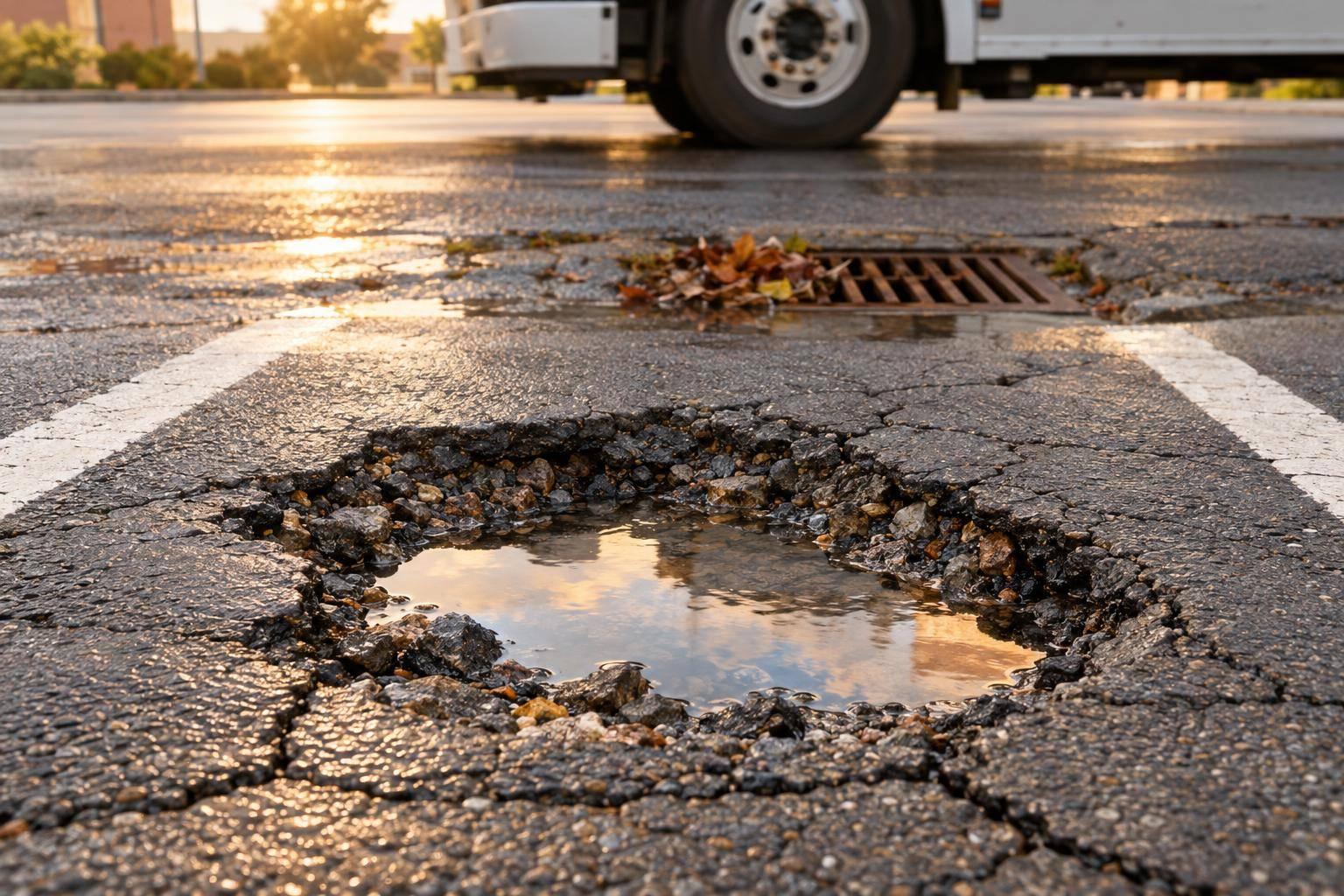
What Causes Potholes in Commercial Parking Lots
Water, aging asphalt, and traffic often work together to cause parking lot potholes. In Tallahassee, I recommend checking for standing water, open cracks, and settled patches after heavy rain - especially near loading bays and turning lanes.
Here’s what I look for:
- Water and drainage problems that weaken support beneath the asphalt.
- Heat, sun exposure, and aging that make asphalt brittle and let cracks form.
- Heavy loads and turning tires that break apart weakened pavement.
- Returning potholes that may point to trouble below the patch.
Freezing can worsen cracks, but potholes can form without cold weather. My main advice: <u>check the cause before choosing asphalt pothole repair</u>. The right approach depends on drainage, traffic, and pavement condition. Sealcoating can help preserve sound asphalt, but it cannot repair failed support.
Water Weakens Pavement Support
Water can enter through cracks, joints, or pavement edges and soak the stone base or soil beneath the asphalt, weakening its support. Wheel loads can then push wet material upward, leaving voids that cause the surface to crack.
Cracks, Low Spots, and Returning Potholes
Ruts, low spots, and settled patches can point to base problems, not just surface wear. Damage may reach beyond the visible pothole, so these signs should be checked together.
Before another repair, check the asphalt, base, and soil below for moisture, apply sealcoating to prevent future intrusion, and unstable material. Remove failed material down to firm support, and address drainage if water is causing the damage.
Standing Water and Blocked Drains
Repeated pooling can keep pavement wet long enough for damage to spread. Poor slope may hold runoff against cracks and other openings, while leaves, sediment, or trash can block drain inlets. A clear grate doesn’t mean drainage is working: a blockage farther downstream or a grading problem may keep pavement wet and contribute to returning potholes.
After rain, note where water collects and how long it stays. Follow runoff through inlets, swales, pavement edges, and visible outlets. Clear accessible surface debris, then have repeated ponding checked for drainage or grading problems.
sbb-itb-bfcbd36
Heat and Aging Make Asphalt Brittle
Asphalt weakens over time, even when drainage works well. As the binder oxidizes, it loses the flexibility needed to handle normal pavement movement. Heat and ultraviolet exposure speed up surface aging, making cracks more likely. Once the binder stiffens, cracks can open more easily and let water reach the base.
Untreated Cracks Let Water In
Fine cracks and crumbling edges can appear before a pothole forms. Openings near curbs and drains also let water below the surface. Check these spots while the surrounding asphalt is still intact, before pieces break loose.
Cracks suited for filling or sealing need cleaning and proper preparation first. The treatment should match the crack’s movement, size, and pavement condition. Crack treatment cannot restore failed support. Address structural repairs first, then use an appropriate surface treatment on sound asphalt to help slow oxidation.
Freezing Can Worsen Existing Cracks
When water freezes inside a crack, it expands and can widen the opening or break its edges. But Tallahassee potholes can form without freezing when aging, rain, weak support, and traffic combine.
After heavy rain, severe storms, or unusual cold, compare known cracks and repaired areas with earlier photos. Look for openings that have grown, broken edges, reopened patches, and new pooling. Record changes and mark hazardous areas when needed. Recurring damage calls for checking drainage and support, rather than blaming cold weather alone.
Once cracks open, traffic can turn them into potholes.
Traffic Strains Weak Pavement
Traffic puts more stress on pavement that has already lost support. Repeated loads widen cracks over weak areas until a pothole forms. Heavy trucks, braking, and sharp turns can speed up that damage.
Damage in Loading Areas and Turning Lanes
Delivery traffic puts repeated stress on loading bays and turning lanes. Turning tires push sideways against the asphalt, while repeated loads can leave wheel-path ruts. Watch for connected cracks, rippling, and returning potholes in these areas, as well as tight corners, driveway entrances, and truck approaches.
Map the damage against delivery routes and turning movements. Note vehicle types, where drivers brake or stop, and whether repaired spots settle again. These details help a contractor assess repeated loading rather than treat the damage as an isolated hole. Spots that keep failing may have problems below the surface.
Surface Damage or Failed Support?
When damage extends below the surface, patching alone may not hold. Shallow wear or raveling without settlement may affect only the asphalt layer. Deep depressions, severe rutting, interconnected cracks, or potholes that return after patching can point to base or subgrade failure. Appearance alone does not show which layer failed.
Vehicle loads over unstable material can cause a patch to crack, settle, or separate. If an inspection finds deeper failure, structural repair may require correcting drainage and removing failed material before rebuilding the pavement on firm support.
Fix the Cause to Keep Potholes From Returning
Keeping potholes from returning starts with fixing what caused them.
Record Damage Before Choosing a Repair
Record each pothole’s location and size, along with nearby cracks, standing water, blocked drain inlets, and crumbling edges. Use those details to identify the likely cause and choose a repair that fits the damage.
| Observable Condition | Likely Issue | Next Step |
|---|---|---|
| Standing water | Poor drainage | Assess grading and redirect runoff |
| Alligator cracking | Weakened base or structural fatigue | Assess whether full-depth repair is needed |
| Returning potholes | Water intrusion or weak base | Investigate below the patch |
| Edge damage | Missing support or washout | Cut back to sound material and restore support |
| Settlement across a large area | Soil movement or poor fill | Remove weak material and stabilize the base |
These observations can guide the repair, but confirm the base’s condition before cutting out material.
Repair Failed Areas and Preserve Sound Asphalt
Address drainage first, then repair the pavement. Choose crack treatment, localized patching, or structural repair based on the damage and its location. Where support has failed, remove weak material, stabilize the base, and replace the asphalt.
Sealcoating helps preserve sound asphalt; it cannot fix failed support. Check repairs, cracks, and drainage during routine maintenance.
FAQs
When does a parking lot pothole need urgent repair?
Potholes in active traffic lanes need urgent repair because they can damage vehicles and create liability risks. Trip hazards also need immediate attention for safety and compliance, especially on accessible paths or ADA-compliant routes.
Potholes that keep coming back or show alligator cracking can point to base failure. These conditions call for a professional assessment by American Curb Appeal Inc. to determine what structural repairs are needed. Prompt repair helps keep water from reaching the sub-base and causing more extensive damage.
Can potholes be repaired during rainy weather?
Permanent asphalt repairs should wait until the rain stops. In Tallahassee, repairs can take place year-round, but dry conditions are needed for proper bonding.
Cold patch can serve as a temporary safety fix in wet weather, but it doesn’t repair the underlying damage. For lasting results, American Curb Appeal Inc. schedules hot-mix asphalt patching and structural repairs during dry, warm weather.
How can I prevent potholes in truck loading areas?
Controlling water helps prevent potholes. Water is the primary cause of pavement failure. It weakens the limerock base, which can collapse under heavy vehicles.
Proper drainage helps keep water from pooling or reaching the sub-base. Depending on site conditions, asphalt berms or curbs can redirect runoff, while regrading can address low areas.
Seal cracks promptly with hot-applied sealant, and schedule routine inspections to spot drainage issues and surface wear early.
Need parking lot maintenance?
Contact us today for a free proposal on your next pavement project.
Get Your Free Proposal