
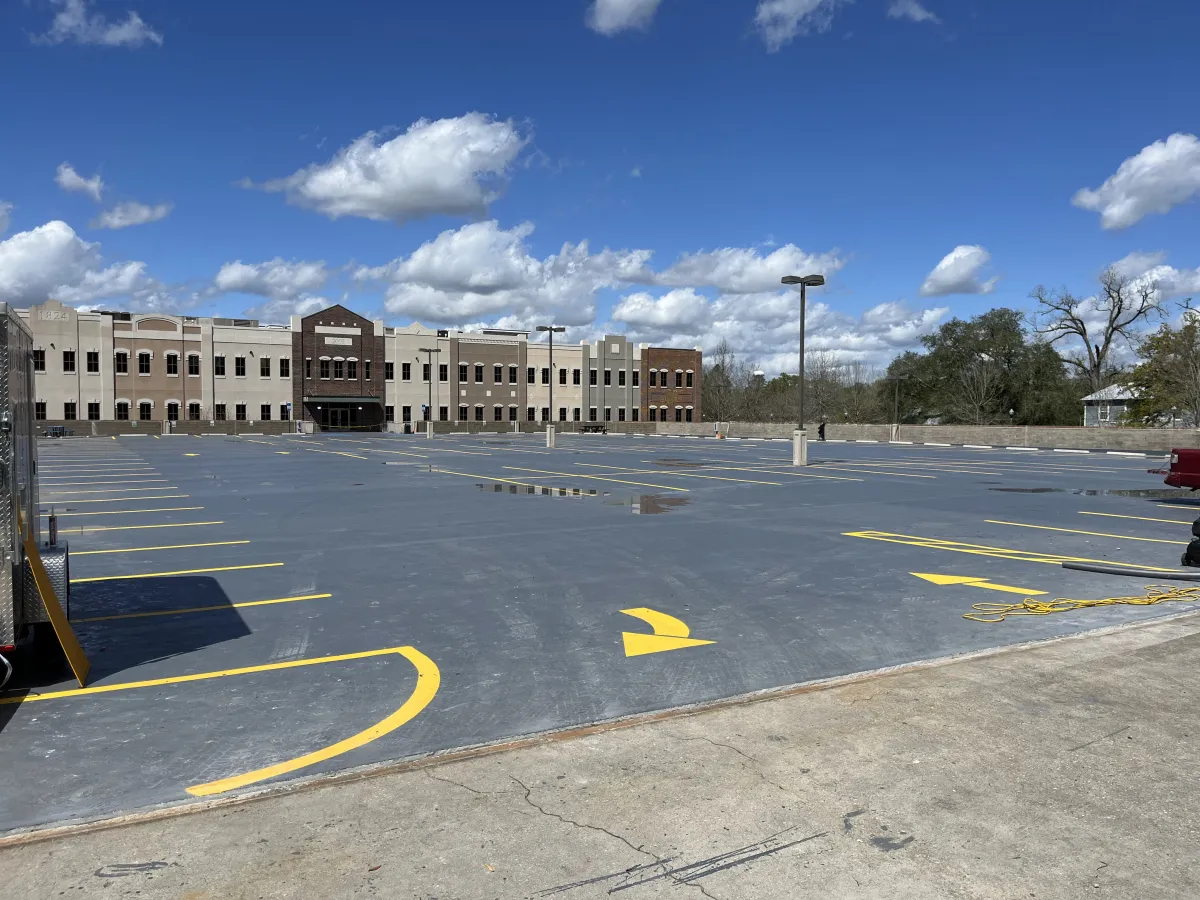
If your asphalt looks gray, dry, or lightly cracked, it may be time to sealcoat. For many Havana properties, the decision usually comes down to four things: pavement age, past sealcoating, visible wear, and weather.
Here’s the short version:
- Newly placed asphalt has to finish curing before its first sealcoat, so ask the contractor who paved it when the surface will be ready.
- Light-use pavement can go longer between coats than a lot that works every day.
- Commercial lots come due on a regular cycle, and the busiest sites reach that point soonest.
- Hairline cracks can mean it’s time to seal cracks first, then sealcoat.
- Sealcoating needs warm pavement and a dry stretch of weather long enough for the sealer to cure.
- In many cases, spring and early fall are better times in North Florida than peak rainy periods.
I’d look at the surface before anything else. If the color has shifted from black to dull gray, the texture feels rough, or wear is showing in drive lanes and turning areas, sealcoating may make sense now. If you see alligator cracking, sealcoating alone will not fix it.
| What to check | What it can mean |
|---|---|
| Asphalt was placed recently | May be ready once it has fully cured |
| Surface is gray or chalky | Sealcoat may be due |
| Hairline cracks are showing | Crack seal first, then sealcoat |
| Alligator cracking is present | Repairs come first |
| Lot has heavy daily traffic | Surface may need attention sooner |
| Forecast shows a warm, dry stretch | Better window for application |
The main goal is simple: seal the surface before wear turns into larger damage and higher repair bills.
Step 1: Check pavement age and past maintenance
Start with the pavement’s age and the last time it was sealcoated. Those two details give you the baseline for timing.
Newer asphalt versus previously sealed pavement
Asphalt needs time to cure before it can be sealed, and in North Florida’s climate that wait runs for months after the surface goes down. If the lot was paved recently, the contractor who placed it should tell you when it is ready for a first coat. Sealing it too early can trap the oils in the asphalt. That can leave the surface soft and more likely to get marked up or worn down by traffic.
Here’s a simple way to check: use the water test. If water beads on the surface, the asphalt is not ready. If it spreads out and soaks in, it is.
Once the asphalt has cured, the timing depends on how much protection is still left on the surface.
How service history affects the schedule
For pavement that has already been sealed, the last sealer type matters. Products that last longer can stretch the time between coats.
If you don’t know the last sealcoat date, check the surface for signs like:
- Fading
- Raveling
- A dull gray color
The right timing also depends on how the property is used. Newly placed asphalt has to finish curing before the first coat goes on. Light-use pavement can stretch the gap between coats. A commercial lot comes back around sooner than that, and a busy one sooner still.
In Havana, strong sun can wear surfaces down faster, so it helps to inspect the pavement on a regular basis.
If the age and service record still don’t point to a clear answer, the surface itself usually will.
Step 2: Look for visible signs that sealcoating is due
If age and service history still don’t give you a clear answer, check the pavement itself. The surface often tells the story. Fading, cracking, and a rough feel can show when sealcoating may be due.
Color fading, oxidation, and dry surface texture
One of the first things to check is color. Healthy asphalt starts out dark black. Over time, UV rays wear down the binder oils, and that deep black can shift to charcoal and then pale gray. When that happens, the surface is starting to lose the binder that helps protect it.
A chalky look or a sandpaper-like feel is another warning sign. That usually means the pavement is drying out. If the surface looks dry but still hasn’t broken apart, it’s often a good time to deal with it before cracking spreads.
Small cracks and light wear before major damage starts
Hairline cracks, the thin ones that still read as a line rather than a gap, are an early sign that the surface is under stress and starting to let water in. In Havana’s summer storms, even small openings can let water reach the base and turn a minor issue into a larger repair.
It also helps to look closely at high-friction areas, such as:
- travel lanes
- parking stalls
- tight-radius turns
These spots often wear down faster than the rest of the pavement. In many cases, they show up as grayer or smoother paths across an otherwise darker lot.
Here’s a quick guide based on what you see:
- Fade or chalky texture: sealcoat now
- Hairline cracks: crack seal first, then sealcoat
- Alligator cracking: repair first
Heavy traffic and Havana’s weather can make these signs show up sooner, so timing can make a big difference.
Step 3: Factor in traffic levels and Havana weather
Light-use pavement versus commercial parking lots
Once fading or cracking shows up, traffic level helps you gauge how fast the pavement may keep wearing down. Put simply, light-use pavement wears at a slower pace than a commercial lot.
Commercial parking lots deal with daily traffic, plus constant turning and braking. That extra stress can wear the surface down much faster. A standard commercial lot comes due on a regular cycle, while high-traffic sites like retail centers or busy restaurants reach that point noticeably sooner.
Larger properties and apartment complexes often handle sealcoating in phases. That way, part of the property can stay open while another section cures.
| Property Type | Relative Reseal Frequency | Primary Stress Factors |
|---|---|---|
| Light-Use Pavement | Longest gap between coats | UV oxidation, light vehicle use |
| Commercial (Standard) | Comes due on a regular cycle | Daily traffic, oil drips, turning |
| High-Traffic (Retail/Dining) | Shortest gap, due soonest | Constant vehicle volume, frequent turning and braking |
| Apartment or Multi-Building Site | Closer to light use, often phased | Resident traffic, multi-phase needs |
Plan around warm, dry conditions in North Florida
After use level sets the interval, weather sets the work window.
Sealcoating needs warm pavement so the sealer can bond as intended, and every sealer carries a minimum application temperature on its product data sheet. In Havana, property owners should also plan for a dry, warm stretch after application so the sealer has time to cure. In many cases, that means keeping foot traffic off the fresh surface first, then holding vehicles back longer than that. On our work the sealer meets the FDOT high-solids spec, and the crew gives you the reopen window for the product actually going down on your lot.
For Havana properties, spring and early fall are often the best times to schedule service. Peak summer rainy periods can get in the way, since too much moisture may affect curing and increase the risk of washout.
On larger sites, phased work can help keep access open while each section cures.
Conclusion: Schedule early to protect your pavement and lower repair costs
When age, wear, traffic, and weather all point in the same direction, it’s time to sealcoat. At that stage, the safer move is to act before the surface starts to fail.
Waiting until damage is easy to see can lead to higher repair bills. Once alligator cracking or structural failure shows up, sealcoating alone won’t fix the problem.
Sealcoating helps protect asphalt from UV damage before the surface breaks down.
In Havana, strong UV exposure can speed up oxidation and make asphalt turn brittle sooner than many property owners expect.
If the pavement seems close to that point, the next step is simple: get it checked. A professional inspection can confirm whether crack sealing should happen first, whether the surface is ready, and whether the weather window is dry and warm enough.
FAQs
How do I know if my asphalt is cured enough to sealcoat?
Asphalt that has recently been placed needs time to cure before its first sealcoat, and the contractor who paved it should tell you when that point arrives. The wait gives the pavement time to breathe and let out its natural oils. Sealing it too early can trap those oils, which may leave the surface soft and more likely to get damaged.
A simple way to check is the water test. Pour a small amount of water on the surface:
- If the water beads up, it’s still too soon to seal.
- If the water spreads out and wets the surface, the asphalt is ready.
Should cracks be repaired before sealcoating?
Yes. Cracks should be repaired before applying sealcoat.
Sealcoating adds a protective layer to the surface. It does not fill or fix damaged pavement.
Repairing cracks first helps keep out moisture and can slow further damage. For better results, cracks and potholes should be filled and allowed to cure before sealcoating starts.
What time of year is best for sealcoating in Havana?
In Havana and across North Florida, the best times for sealcoating are spring (March through May) and fall (usually October through November). Those seasons often bring moderate temperatures and drier, steadier weather, which can help the sealcoat cure the way it should.
Summer can still work in many cases. But there’s a catch: frequent afternoon storms and high humidity may slow curing or even wash away fresh sealant if rain hits too soon after application.
Need parking lot maintenance?
Contact us today for a free proposal on your next pavement project.
Get Your Free Proposal