
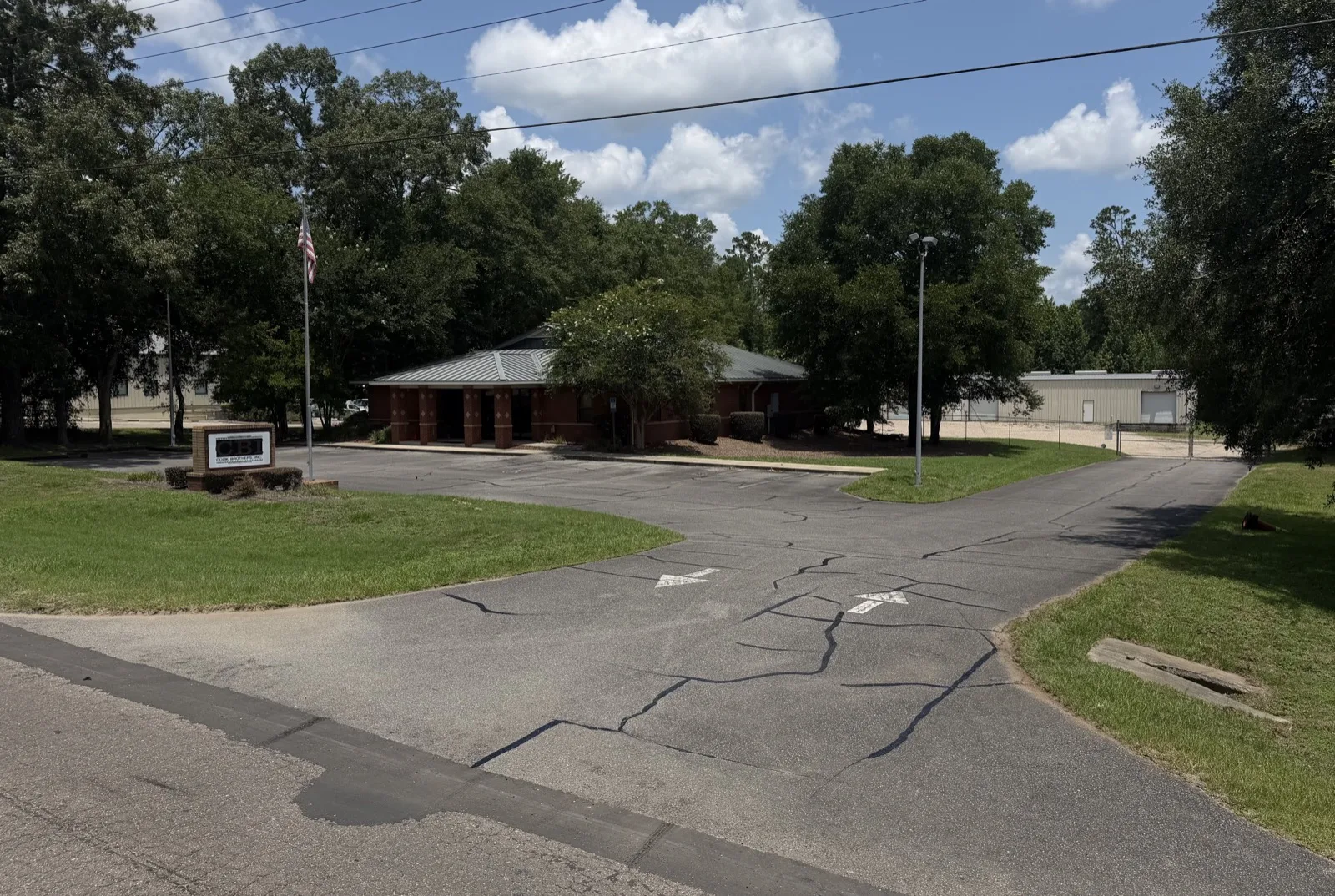
If damage is limited to a few small spots and the base still feels firm, targeted patching is usually the right call. If the lot has alligator cracking, repeat potholes, standing water, rutting, or uneven walking areas, the lot needs to be assessed for resurfacing or deeper structural work instead.
In Tallahassee, heat, rain, and sun can speed up asphalt wear. That matters because a small surface issue can turn into a base problem if water gets below the pavement. Once alligator cracking or deep rutting spreads across a large share of the lot, patching usually stops making sense.
Here’s the short version:
- Patch when damage is small and isolated
- Get a resurfacing assessment when wear shows up across much of the lot
- Look deeper when water sits in the same places, patches keep failing, or the pavement flexes under traffic
- Do not rely on patching for alligator cracking, drainage failure, or sinking sections
What to check first:
- Are the damaged areas limited to one or two spots?
- Does the pavement around them still look solid?
- Is there standing water after rain?
- Are there trip hazards or uneven transitions?
- Have the same potholes or patches failed more than once?
Quick Comparison
| Factor | Patch | Full resurface |
|---|---|---|
| Best fit | Small, isolated damage | Damage spread across much of the lot |
| Base condition | Base still holding | Base may still be sound, but surface wear is spread out |
| Common signs | One pothole, a few cracks, small broken area | Repeat patches, ruts, fading surface, many cracked areas |
| What it will not fix | Base failure, bad drainage, alligator cracking | Deep base or soil movement may still need more than an overlay |
| Cost pattern | Lower up front, but repeat visits can add up | Higher up front, but may cut repeat repairs |
| Look | Patched, mixed color, visible seams | More even surface and cleaner striping base |
The call should rest on how far the damage has spread and whether the base is still stable, not just the lowest short-term fix.
When Localized Patching Still Makes Sense
If the problems in your lot are small, scattered, and not tied to a failing base, targeted repairs can buy you more time without the cost of a full resurface.
Damage limited to small areas
The clearest sign that patching still makes sense is when the damage is actually isolated. A single pothole, a short stretch of edge crumbling, a few cracks that have opened up wide enough to take water, or a small area where the asphalt is starting to break apart can all be good candidates for localized repair.
The key is what the pavement looks like around that damaged spot. If the asphalt on both sides is still solid and there are no signs that the damage is spreading, a patch can help stop things from getting worse. From there, the next thing to check is the base underneath.
Signs the base is still holding
A patch is only going to last if the material below it is still sound. Before moving ahead with spot repairs, look for a few clear signs that the base is still doing its job.
- The pavement should not flex under traffic or push up water or fine debris when vehicles pass over it. If that happens, the stone base may have lost stability.
- Drainage should be working. If the lot keeps holding standing water in the same areas after every rain, that can point to trouble below the surface.
- The edges should feel firm and stay intact. Crumbling edges can mean the base is thinning or washing out along the perimeter.
If you see those warning signs, patching often will not hold.
What patching cannot fix
Spot repairs have limits. They will not fix a drainage issue. If low areas are collecting water after every rainstorm, the surface may need regrading before any patch has a chance to last.
Patching also cannot solve base failure once it has spread under the pavement. And most of all, patching is the wrong fix when alligator cracking shows up. That connected, scaly crack pattern is a sign that the base layer itself has failed. At that point, a surface repair will not fix what is broken underneath. Once alligator cracking appears, the lot has moved past what a patch can fix, and it is time to have a paving contractor look at resurfacing or reconstruction.
Signs a Parking Lot Is Beyond Simple Repair
Once damage spreads past a few isolated spots, the choice often shifts from patching to full-depth repair.
Alligator cracking and repeat potholes
Wide alligator cracking across drive lanes or parking stalls usually points to base failure, which often takes simple patching off the table.
The same goes for potholes that keep coming back in the same areas. If a lot has been patched again and again, and those patches are now cracking or sinking, the problem is likely below the surface. At that stage, the structure under the asphalt is no longer supporting the repair.
A useful rule of thumb: once alligator cracking or deep rutting has spread across a large share of the lot, patching is often no longer enough.
Drainage failure and base deterioration
Water is one of the biggest warning signs. If you keep seeing standing water in the same low spots after rain, that water can soften the asphalt and weaken the base underneath. Over time, that leads to rutting and flexing under traffic.
In Tallahassee, repeated heavy rain can speed up that damage once water gets below the surface. In many cases, that means the lot may need regrading or added drainage, not just another surface patch.
If ruts are forming along drive lanes, or whole sections of pavement have sunk, that often points to movement in the base or soil below. A surface overlay by itself usually will not fix that kind of problem.
Trip hazards, uneven grades, and accessibility problems
Broken edges and crumbling transitions can create trip hazards and add liability risk. When the pavement settles unevenly, or patched areas leave sudden height changes, the lot becomes harder, and less safe, to walk. A 1/4 inch vertical separation is enough to count as a trip hazard on an accessible route.
You can also run into safety and compliance issues when broken edges, uneven transitions, and faded accessible markings show up together. If the pavement has worn down so much that restriping alone will not bring back a safe, level walking path, broader correction is usually needed instead of more spot repairs.
When trip hazards, drainage problems, and failing accessibility routes start stacking up, patching stops working as a maintenance fix and starts becoming a risk. When those issues appear together, the lot is often past simple repair.
Patch vs. Full Resurface: Cost, Disruption, Lifespan, and Appearance
Matching the repair option to lot condition
If a parking lot is fairly new and only has one failed area or a few cracks near the entrance, targeted patching and crack sealing often make the most sense. That approach works best when the base is still firm, drainage is doing its job, and most of the pavement is still in good shape.
That changes when the damage spreads beyond a few isolated spots. A Tallahassee lot with repeat patches, standing water, and ruts in the drive lanes is no longer a good fit for spot repair. In many cases the honest answer there is a resurfacing assessment, because that scope of work deals with the lot as a whole rather than one defect at a time. Resurfacing, milling, and base correction are paving contractor work, so that is a separate conversation from ongoing maintenance.
When repeated patching costs more over time
One patch may be cheap. Patching again and again usually isn’t.
Each return visit can bring added mobilization, traffic control, and downtime. And if the root problem is still there, new failures may keep showing up in the same area or nearby.
Looking at the whole life of the lot, instead of one invoice at a time, often changes the picture. Repeat patching, indirect costs, and business disruption add up. When distress is spread across the lot, a resurface can reset service life and reduce how often repairs are needed.
Comparison table: patching vs. resurfacing
The side-by-side view below helps show where each option fits.
| Factor | Patching | Full Resurfacing |
|---|---|---|
| Scope | Targets specific defects, such as potholes, small failed areas, and isolated cracks | Treats the full surface or large sections; may include milling and base repairs |
| Best use case | Newer or mid-life lots with isolated distress; also works as an interim fix before a planned overlay | Older lots with widespread cracking, raveling, oxidation, or repeat patching, but with a generally stable base |
| Disruption level | Small crew; most parking stalls can stay open | Larger equipment; may need a partial or full closure |
| Appearance | Seams and color differences usually remain visible; over time, the lot can look pieced together | Uniform, dark, smooth surface; improves curb appeal and makes striping easier to see |
| Expected service life | May extend the repaired area, while the rest of the pavement keeps aging | Resets the surface across the lot when the base underneath is still sound; how long it lasts depends on traffic and upkeep |
| Long-term maintenance value | Needs close watch; nearby failures may still follow | Still needs sealcoating and crack sealing, but often lowers repair frequency |
| Cost framing | Lower upfront cost per visit, but repeat mobilizations can add up on a worn lot | Higher initial investment; often a better cost per year of service when distress is widespread |
Conclusion: Choosing the Right Next Step for Your Tallahassee Lot
After you check how far the damage has spread and whether the base is stable, the next move usually becomes pretty clear.
Key decision points to remember
If you’re looking at isolated potholes, a few cracks, or a small crumbling edge, patching may still be enough. But alligator cracking, recurring potholes, standing water, and uneven walking surfaces usually point past patching, toward a resurface or a deeper structural fix. Those problems don’t get better with one more patch. In many cases, they spread.
A small pothole today can turn into a much more expensive section replacement later. In many cases, acting early costs less than putting it off.
Patch isolated defects on a stable lot. Bring in a paving contractor for a resurface when the damage is spread across the pavement or points to a deeper issue. A site walk and a straight diagnostic will show which of the two you are actually looking at. American Curb Appeal maintains and repairs existing asphalt, so if the walk says the lot has passed the point of patching, you will hear that too. That call should come from the condition of the lot, not just the lowest short-term fix.
FAQs
How do I know if my lot has base failure?
A common sign of base failure is widespread alligator cracking. In many cases, that points to a weakened base layer that can no longer support patchwork or other localized repairs.
Can resurfacing fix drainage problems?
Generally, no. Resurfacing usually does not fix drainage problems.
If water is pooling or running the wrong way, the issue often comes from the slope or surface shape, not just the top layer. In many cases, fixing that can require regrading, drain installation, or other surface adjustments to move water where it should go.
How long can I delay repairs before costs rise?
Not long.
When repairs get pushed back, small issues turn into bigger ones, and the fix gets more involved. A crack that could have been sealed opens up and lets water into the base. A pothole that could have been cut out and patched turns into a failed section that has to be rebuilt.
Sealing cracks and repairing potholes while they are still small is what keeps a lot out of the resurfacing conversation in the first place.
Need parking lot maintenance?
Contact us today for a free proposal on your next pavement project.
Get Your Free Proposal