
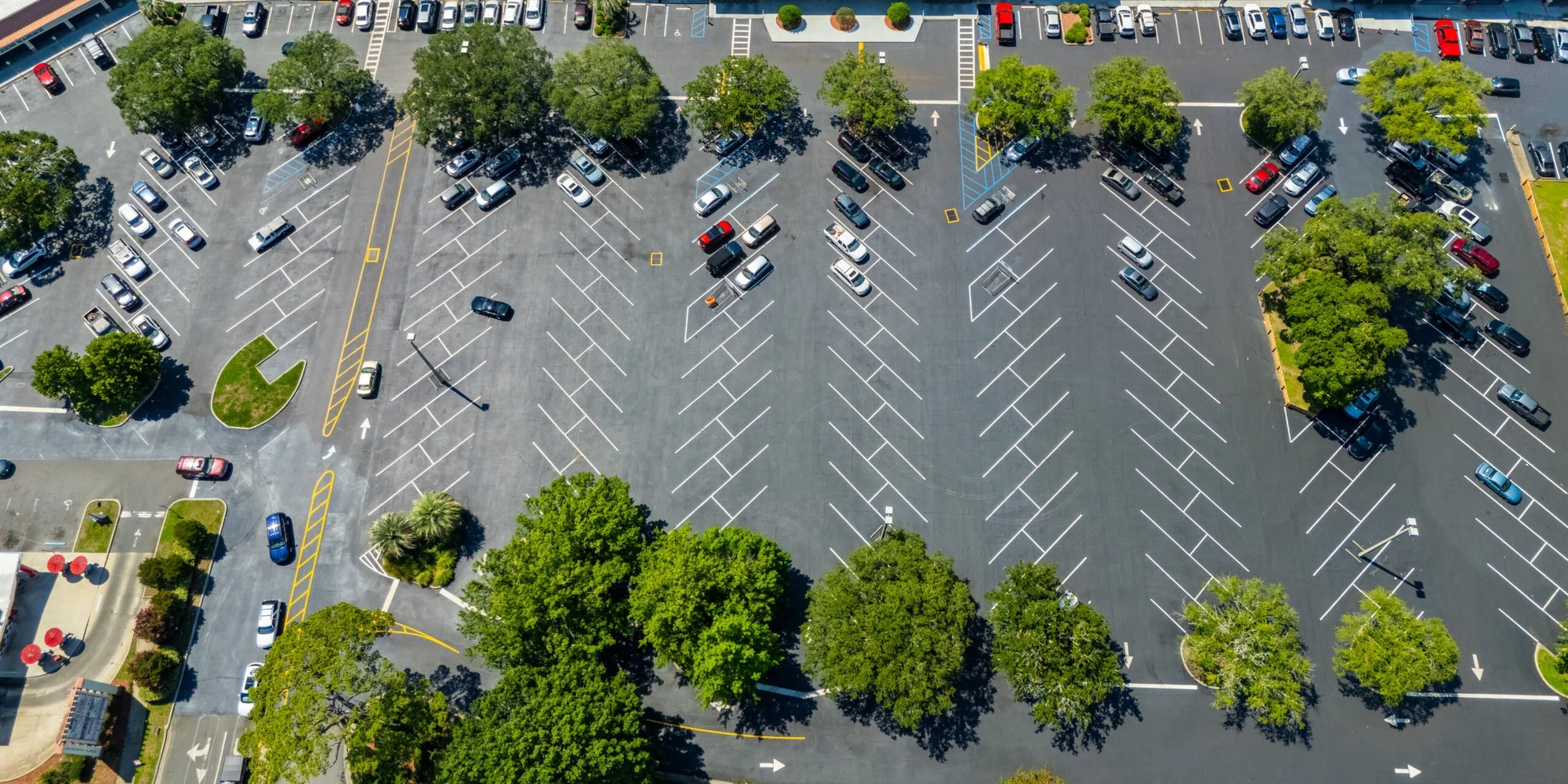
A small pothole can turn into a bigger property issue fast. For Monticello commercial sites, the main steps are simple: inspect the lot, fix the highest-risk areas first, choose the repair based on surface damage vs. base failure, and stay ahead of water problems.
Here’s the short version:
- I’d check the lot on a set schedule and again after heavy rain.
- I’d look first at entrances, main drive lanes, ADA paths, and drainage areas.
- I’d treat cold patch as a short-term safety fix.
- I’d use hot asphalt patching for isolated potholes where the base still looks sound.
- I’d look at full-depth repair when potholes keep coming back, the surface shows alligator cracking, or the base has failed.
- I’d pair repairs with crack sealing, sealcoat, and restriping when the site condition calls for it.
- I’d pay close attention to standing water, because water intrusion is one of the main drivers of lot damage.
In Jefferson County the pattern behind most of this work is water. Heavy summer rain, a lot that does not drain the way it was built to, and a crack that never got sealed are usually the three things standing behind a pothole.
If I were managing a busy retail center, office site, or apartment property, I’d keep the plan straightforward: inspect, document, rank by risk, repair the cause, and fix drainage before the same spot fails again.
Quick comparison
| Repair option | Best use | What to keep in mind |
|---|---|---|
| Cold patch | Short-term safety needs | Can help right away, but may not fix the root problem |
| Hot asphalt patching | Isolated potholes with a sound base | Often a fit for high-traffic lanes and entrances |
| Full-depth repair | Repeated failure, alligator cracking, base problems | May be needed when damage goes below the surface |
Below, I’ll walk through what to inspect, how to sort repair priority, and when each repair type may make sense for your property.
Inspect potholes and decide what needs repair first
What to look for during routine lot inspections
Inspect the lot on a set schedule and again after heavy rain. During each check, look for cracks that have opened wide enough to take on water. Watch for gray, oxidized asphalt too. That color change is a sign the surface is drying out and getting brittle.
Give extra attention to low spots near storm drains. If water is still sitting there days after the rain has stopped, that often points to a drainage or slope issue. Left alone, that can speed up pavement damage.
Check the joints where asphalt meets concrete, including curbs and sidewalks. Look for gaps or lifted edges that could turn into trip hazards. Anything over 1/4 inch of vertical separation on a walking route is a trip hazard in its own right. Also keep an eye out for alligator cracking. In many cases, that pattern points to sub-base failure and calls for deeper repair, not just a surface fix.
How to document and prioritize repairs
When you find damage, take a photo with a measuring tape in the frame. Then note the date, size, depth, and exact location on a site map. That record helps you track repeat problem areas and sort out what needs attention first.
Use that documentation to match each defect to the right repair method. A small crack and a failed base are not the same problem, and they shouldn't be treated the same way.
Prioritize repairs by safety and traffic exposure:
| Area | Key Signs | Repair Priority |
|---|---|---|
| Entrances/Exits | Edge breakdown, heavy wear | High |
| ADA paths and accessible stalls | Trip hazards, slope changes, parking lot markings | Critical |
| Main drive lanes | Pothole depth, alligator cracking | High |
| Drainage areas | Standing water, loose aggregate | Medium |
| Parking stalls | Minor cracking | Low/Medium |
ADA-related repairs should move to the top of the list because accessible areas carry the highest compliance risk and should be addressed first. Entrances and main drive lanes come next since they usually handle the most traffic. After you rank the worst spots, you can move on to choosing the right repair method for each one.
Choose the right pothole repair method for the damage
The right repair depends on what failed. Your inspection notes should point you there. Look at the crack pattern, pothole depth, and whether the base is still sound. Then match the defect to the repair that fits.
The three main choices are cold patch, hot asphalt patching, and full-depth repair. Each one suits a different level of damage.
Cold patch for temporary safety repairs
Cold patch is a no-heat asphalt mix used for immediate, short-term safety repairs after storms, during wet weather, or while you wait to schedule a permanent fix.
Think of it as a stopgap. It can help make an area safer fast, but it is not meant to fix the root cause.
Hot asphalt patching for longer-lasting repairs
Hot-mix asphalt patching is the standard choice for most commercial pothole repairs. It works best for isolated potholes without base failure. In many cases, that means medium to large potholes in high-traffic lanes and entrances. The repair involves saw-cutting out the damaged material, placing hot-mix, and compacting it flush with the surrounding surface. A Spec-9.5mm hot-mix is the usual material for a commercial lot patch.
Plan hot-mix repairs for a dry stretch when the surface is warm, so the material can bond as intended.
Full-depth repair for repeated or severe failure
Some potholes keep coming back for a reason. If the surrounding asphalt shows alligator cracking and settlement, or if your inspection showed base failure, patching alone may not hold. In that case, the failed area needs a full-depth repair.
Full-depth repair means removing all damaged material down to stable ground, correcting the drainage problem underneath if there is one, rebuilding the base, and restoring the surface with hot-mix across the repair area. Use it when the problem is structural, not just surface-level.
Use this quick comparison to match the repair to the damage and the downtime your site can handle.
| Repair Method | Best For | Relative cost | Expected life | Downtime |
|---|---|---|---|---|
| Cold Patch | Temporary safety repairs; immediate attention after storms | Lowest | Short-term, meant to hold until a permanent repair | Minimal - ready for traffic quickly |
| Hot Asphalt Patching | Standard potholes in high-traffic lanes and entrances | Moderate | Long-term, as long as the base under it stays sound | Moderate - the patch has to cool before traffic returns |
| Full-Depth Repair | Base failure, alligator cracking, repeated patch failure | Highest | Longest of the three, since the base is rebuilt | High - involves excavation and grading |
How to plan and complete commercial pothole repair work
Start with a clean repair area and a base check.
Prepare the area and check the base condition
Before any material goes into a pothole, clean the area well. Oil, dirt, and debris can keep the repair material from bonding the way it should.
Then check the base under the damaged spot. This part matters more than many owners expect. If the base is soft, pumping, or voided, the patch will likely fail again once traffic rolls over it. When the sub-base is compromised, a surface patch usually isn't enough. In that case, a full-depth repair is the better fix.
The rule is simple:
- Sound base: patch
- Failed base: full-depth repair
Schedule repairs around traffic, tenants, and safety needs
Once you've picked the repair method, line up the work around weather and site traffic. Hot-mix work should be planned for a dry stretch of warm weather.
If you're dealing with a busy retail center, office property, or apartment complex, phased work can make life a lot easier. One section stays open while another section is repaired. That helps cut down on disruption for tenants, customers, and staff. Off-peak hours or weekend scheduling can also reduce friction on site.
Pair pothole repair with related pavement services when needed
If potholes are showing up alongside cracks or faded markings, it often makes sense to handle those items in the same maintenance window. Use this order: complete pothole repairs and crack sealing first, then apply sealcoat, then restripe.
Hot rubberized crack filler goes in before any sealer, since sealer alone will not bridge a working crack. Sealcoating on a regular cycle protects the surface, and fresh striping before the markings fade keeps the lot organized and the accessible spaces clearly marked. Fast-cure striping paint can reopen a section to traffic in about 30 minutes, which is what makes phased striping possible on an occupied site.
This is also a good time to verify that accessible spaces, access aisles, and signage meet current standards: a 12-foot stall with a 5-foot van access aisle, and no more than 2% slope across the accessible route.
Prevent future potholes and protect your pavement investment
Reduce water intrusion and surface wear
Pothole repair deals with the damage you can see. Drainage and routine upkeep help stop the next one from forming.
Water is the main driver of pavement failure. Once water gets into a crack, it can move down into the sub-base, wear away the foundation, and lead to potholes. That’s why early crack sealing matters. It helps stop water from reaching the base. Sealcoating can also help by adding a layer that resists water, UV exposure, and chemical wear.
Drains and downspouts need attention too, especially after heavy rain or major storm events. If water sits on the surface, that usually points to a drainage issue that should be addressed soon.
Ponding areas deserve quick action. If water keeps pooling in the same place, have the grade in that spot assessed, since correcting slope is a different job from patching the hole it creates. Proper grading and drainage help prevent ponding, which is a leading cause of asphalt deterioration.
Use a regular maintenance plan for busy properties
For busy commercial properties, a set maintenance schedule makes it easier to catch trouble early. Small defects can turn into potholes fast, especially when traffic and water are part of the mix.
| Maintenance Task | Recommended Frequency | Benefit |
|---|---|---|
| Inspection | On a set schedule, plus after heavy rain | Spot cracks and drainage issues early |
| Crack Sealing | As needed, caught at each inspection | Prevents sub-base erosion |
| Drain Cleaning | After heavy storms | Prevents water-related structural damage |
| Sealcoating | On a regular cycle | Blocks UV, water, and chemicals |
| Restriping | Before the markings fade | Supports ADA compliance and safe traffic flow |
It also helps to plan bigger preventive work, like crack sealing, sealcoating, and restriping, for a stretch of dry, warm weather. In many cases, that supports better material adhesion.
If you can bundle those services into one visit, that may cut down on disruption for tenants and customers and help keep costs in check.
When this work is handled on schedule, it can reduce repeat potholes and help pavement last longer.
FAQs
How do I know if a pothole needs patching or full-depth repair?
Use a screwdriver test during your property inspection. Press a screwdriver into the pothole’s edges or bottom. If it pushes in easily with little resistance, the sub-base may be compromised. In many cases, that points to full-depth repair instead of a surface patch.
Prompt repair can help limit further damage from water getting in under the surrounding pavement.
What should I fix first in a commercial parking lot?
Put safety and structural integrity first. Take care of immediate hazards like potholes and uneven areas that can lead to trips, falls, or vehicle damage.
Then move to preventive maintenance. For example, seal the cracks that have opened wide enough to take on water so it never reaches the sub-base.
After that, deal with faded striping and ADA-compliant markings so the lot stays functional and keeps its curb appeal.
How can I keep potholes from coming back?
Preventing potholes starts with fixing the moisture problems behind them. The main goal is simple: keep water out of the pavement base before it has a chance to do damage.
A proactive maintenance plan often includes a few core steps:
- Inspect the pavement on a set schedule and seal cracks that have opened wide enough to take on water.
- Apply professional sealcoat on a regular cycle.
- Maintain proper drainage so water does not pool or reach the sub-base.
When water gets below the surface, the pavement can weaken from the inside out. That’s why routine checks matter. Small cracks may not look like much at first, but they can let in enough moisture to start a much bigger problem.
Need parking lot maintenance?
Contact us today for a free proposal on your next pavement project.
Get Your Free Proposal