
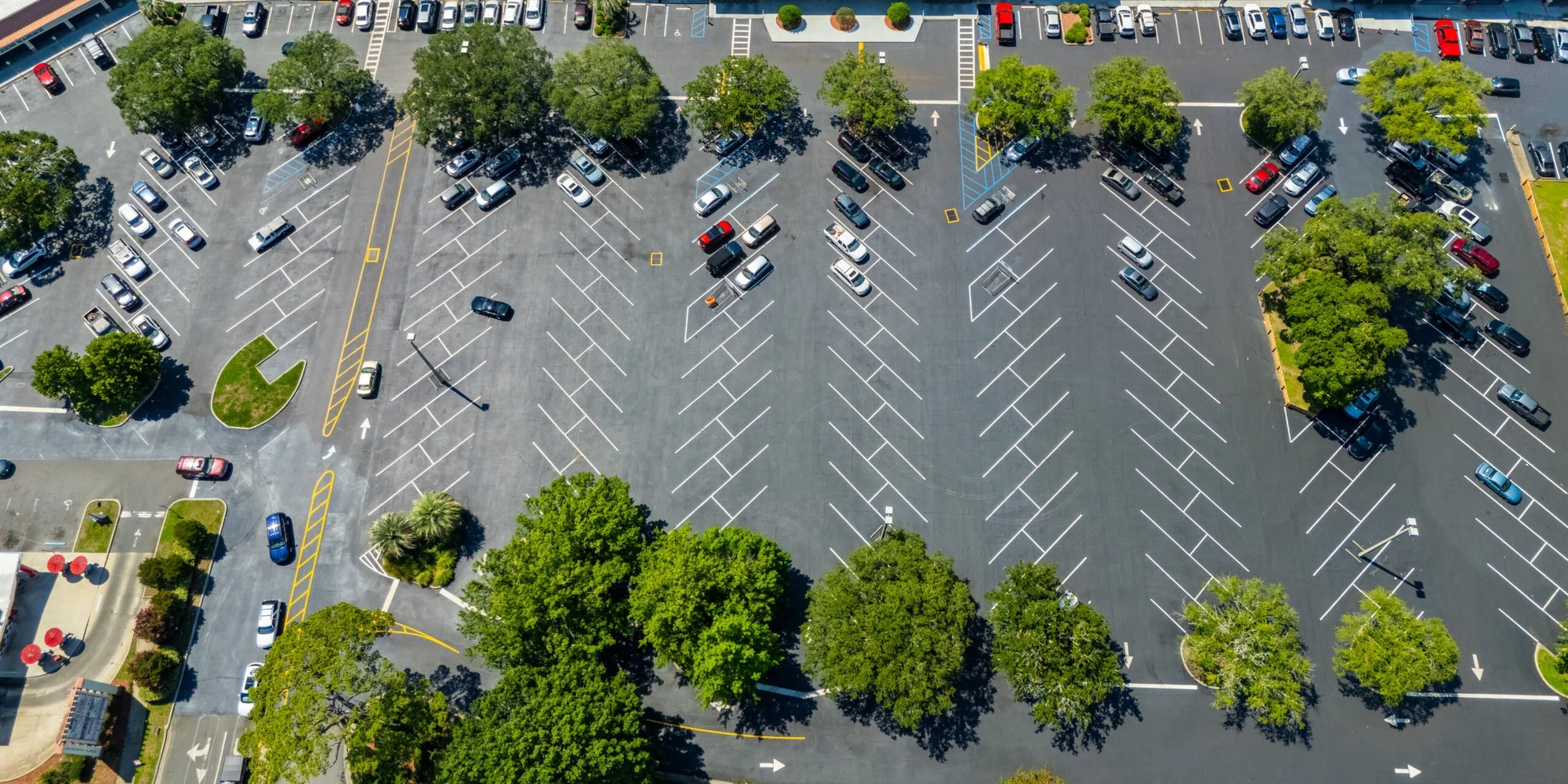
Small cracks can turn into base damage fast. If you manage a commercial property in Havana, you need to inspect each area, fix the right problem, keep water moving off the surface, and update striping after repairs.
Here’s the short version:
- Check parking areas, drive lanes, loading spots, sidewalks, and entry areas by zone
- Separate surface wear from deeper failure
- Fix cracks, potholes, and isolated low spots before they spread
- If the same area keeps failing, the problem is in the base, not the surface
- Sealcoating can help protect sound asphalt, but it will not fix base problems
- After repairs, plan on new striping and an ADA layout review
- Regular drainage cleaning, sweeping, and inspections can help the surface last longer
Two things are worth planning around:
- A professional condition review belongs on a regular cycle, not only after something breaks
- Accessible parking and slope issues can create legal risk if markings or surfaces no longer meet rules
The main point: do not treat every crack or pothole the same. The right repair depends on traffic, drainage, and whether the problem is only on the surface or deeper below it.
Start with a pavement inspection and document condition by area
Inspect the pavement by zone before you price any repairs. Monthly walks and post-storm checks can help you catch new cracks, blocked drainage, and damage that calls for different repair types. A fixed schedule also makes it less likely that small issues slip by between storms.
A simple schedule can keep inspections steady and easier to track:
| Inspection Type | Frequency | Primary Focus |
|---|---|---|
| Routine Walk | Monthly | New cracks, debris in drains, faded markings, trip hazards |
| Post-Storm | After heavy rain | Standing water that is still there days later, catch basin blockages, edge erosion |
| Preventative | Semi-Annually | Structural integrity, sealcoat condition, ADA compliance |
| Professional | On a regular cycle | Overall condition and repair priorities |
What to look for during routine walks and post-storm checks
Walk each area with a set list in mind. Check for cracks, potholes, loose aggregate, and crumbling edges near curbs and landscaping. Look at striping and signage too. If markings have faded or signs are damaged, note that. Watch for abrupt level changes that may create a trip hazard: a quarter inch of vertical separation at a walkway edge is already enough to count as one.
After rain, pay close attention to low spots, inlets, and curb cuts. Standing water and debris that blocks runoff can point to drainage issues.
Edge damage often spreads fastest near curbs and landscaping, so it helps to log that area on its own.
How to map damage and tell surface wear from structural failure
Document each zone on its own. Entrances, drive lanes, parking stalls, dumpster pads, and loading areas all handle traffic and weight in different ways. A crack at a dumpster pad may point to heavy-load stress. A similar crack in a low-traffic stall may mean something else.
The main thing is to separate surface wear from structural failure.
Surface wear often shows up as:
- Graying asphalt
- Minor oxidation
- Isolated cracks
Structural failure usually looks more serious:
- Interconnected alligator cracking
- Potholes that keep coming back in the same spot
- Ruts from heavy traffic
- Visible depressions where the pavement has settled
Those patterns often mean the base layer has been damaged, and a surface-level fix may not last.
If you map damage by zone before calling a contractor, the conversation gets much clearer. You can match crack sealing, pothole repair, or full-depth patching to the actual problem instead of paying for work that doesn't fit the condition of the pavement.
Match the repair method to the pavement condition
Once damage is mapped by zone, pick the repair that fits the problem. Structural failure comes first. If the pavement has base trouble, surface fixes usually won't last.
Crack filling, pothole repair, and localized patching
Fill cracks as soon as they show up. Once water gets into a crack, it can reach the base and speed up failure. Hot rubberized crack filler stays flexible through the heat cycle instead of pulling away from the crack wall the first hot week after it goes down.
Repair potholes when the asphalt has opened enough for water to reach the base. Open potholes can also create safety issues for cars and foot traffic. A saw-cut, full-depth patch in Spec-9.5mm hot-mix is what holds in a drive lane; a cold-patch shovel fill in the same spot is a temporary measure.
Use localized patching for isolated depressions or low spots that hold water but have not spread into the surrounding pavement. This kind of patching works best for small, contained problem areas.
Patch only isolated failures. If cracks or potholes keep coming back in the same spot, that's usually a sign the issue goes deeper. At that point the fix is a full-depth repair, not another surface patch.
Signs that damage has gone deeper than the surface
When the base underneath is still sound and the surface only shows broad wear, oxidation, or minor cracking, the lot is still a maintenance candidate. Seal the cracks, repair the isolated failures, and protect the surface.
Full-depth repair is what you need when you see alligator cracking across a large part of the lot, repeat failures after patching the same area more than once, or sections that move or flex under traffic. Damage that widespread has moved past anything a surface treatment can hold.
Drainage-related breakdown is another clear sign. Standing water with no path out will undermine whatever repair goes over it.
After you choose the repair, the surface still needs protection and fresh markings.
Choose the repair that fits the damage.
Protect the surface and restore markings after repairs
Once the repairs are done, the focus shifts to two things: protecting the pavement and making the lot easy to read again. That means treating the surface and putting all markings back in place so the lot stays safe and functional.
Sealcoating as a protective step, not a structural fix
Sealcoating is a protective top layer for asphalt. It can help slow oxidation, limit water intrusion, and add protection against oil and fuel spills from vehicles.
That said, sealcoating only works when the pavement underneath is still sound. Before it goes on, cracks should be filled, and the surface needs to be clean and dry. If sealer is applied over standing water, debris, or oil stains, it may not bond well and can fail early.
Ask what is actually going down. A high-solids sealer meeting the FDOT spec leaves more material on the pavement than a thinned product does, which matters on a lot that takes North Florida sun all summer. How often it needs reapplying depends on traffic and exposure, not on a fixed calendar.
Just as important, sealcoating is not a structural fix. It won't correct alligator cracking, deep depressions, or failures tied to the base layer. If those issues are still there, sealcoating only puts off the repair that the pavement already needs.
Re-striping, ADA layout review, and traffic flow updates
Sealcoating covers existing markings, so the lot needs to be restriped before it reopens. That includes stalls, arrows, fire lanes, crosswalks, loading zones, and curb markings. Without that step, the lot may be hard to use for drivers, tenants, and delivery traffic.
Downtime is the part property managers usually care about most, and it is manageable. Fast-cure striping paint can take traffic again about 30 minutes after it goes down, so a lot can be striped section by section and handed back the same day rather than closed for a weekend.
This is also the right moment to check compliance instead of just repainting the old layout. A van-accessible stall needs 12 feet of width plus a 5-foot access aisle, stalls are laid out inside a 17-foot depth envelope, and accessible stalls and routes should not slope more than 2 percent in any direction. Slope is the one that catches people out, because it is invisible until somebody measures it.
Even if the original layout met the rules, damaged pavement, faded striping, and worn signs can still create violations. A restriping project gives you a practical chance to fix those gaps before they turn into legal exposure.
If vehicle or pedestrian conflicts are still happening, this phase can also be used to improve the layout instead of putting everything back the same way. Clear markings can help traffic move better and may reduce accident risk for tenants, customers, and delivery vehicles.
It also helps to document the repaired areas and new markings so the maintenance plan starts from an accurate baseline.
Build a long-term pavement maintenance plan
Use the repair map and updated markings as your starting point for future upkeep.
The repair log should also guide future work. Track pavement condition by area and note how each section changes over time. That makes it easier to tell the difference between routine surface work and spots that may be getting close to base repair.
Drainage, sweeping, and seasonal upkeep
High UV exposure and seasonal rain cycles can speed up asphalt wear in Havana's climate. One of the simplest ways to slow that damage is to keep drainage paths clear.
Clean catch basins and runoff paths before the rainy season and after major storms. When debris builds up, water can sit on the surface. That standing water can soak the base layer and lead to potholes and soft spots. Regular sweeping matters too. Grit and loose material can wear down the surface and clog drains over time.
Keep monthly walk-throughs on the calendar. It also helps to do closer checks in the spring and fall. Look for ponding water, blistering, and sealcoat failure so you can spot areas that need attention.
Budgeting and scheduling future rehabilitation work
Once runoff stays clear, it gets easier to plan ahead.
Put a professional pavement assessment on a regular cycle to confirm current condition and update budgets. A formal condition survey follows a published method, ASTM D6433, so the score you get one year can be compared to the next. When setting a budget, leave contingency room above your routine numbers, because material costs move with oil and base-layer repairs are the ones nobody sees coming. For large properties, it often makes sense to phase the work by section. That can help limit tenant disruption and make cash flow easier to manage.
The table below sums up the main maintenance tasks, when to schedule them, and the problems they help avoid.
| Maintenance Task | Typical Timing | Purpose | Risk Prevented |
|---|---|---|---|
| Drainage Cleaning | Seasonal / Post-storm | Ensures proper water runoff | Standing water and base saturation |
| Sweeping | Monthly or more often | Removes abrasive debris | Accelerated surface wear and drain clogs |
| Pavement Review | Monthly / Semi-annual | Identifies early wear signs | Expensive emergency repairs |
Pavement tends to last longer when maintenance is routine instead of reactive.
FAQs
How do I know if damage is only on the surface?
Surface damage often starts small. You might notice hairline cracks or minor appearance issues. In many cases, routine maintenance such as sealcoating or crack sealing can address those problems before they get worse.
Deeper structural failure is more likely when you see alligator cracking, potholes, or low spots where water collects. Those signs can point to a compromised base layer, which means it’s smart to have a professional assess whether the pavement needs a full-depth repair rather than a surface treatment.
When should I choose full-depth repair instead of patching?
Choose patching for small, localized issues like minor cracks or isolated potholes. It’s a preventive repair that can help extend the life of the pavement.
Choose full-depth repair when the same area has failed again after being patched, or when alligator cracking and flexing under traffic show that the base beneath it has given way. Patching over a base failure does not hold.
How should I budget for pavement repairs and upkeep?
Plan for routine maintenance as a standing line item rather than treating each repair as a surprise. Crack sealing, sealcoating, and re-striping run on a predictable cycle you can schedule and forecast.
Base repair is the one that arrives without warning, so leave contingency room above those routine numbers.
Real figures only come from a look at your own lot, because square footage, traffic loads, and current condition drive every one of them. If you want a budget built around your property and its pavement condition, American Curb Appeal Inc. can help put together a tailored plan.
Need parking lot maintenance?
Contact us today for a free proposal on your next pavement project.
Get Your Free Proposal