
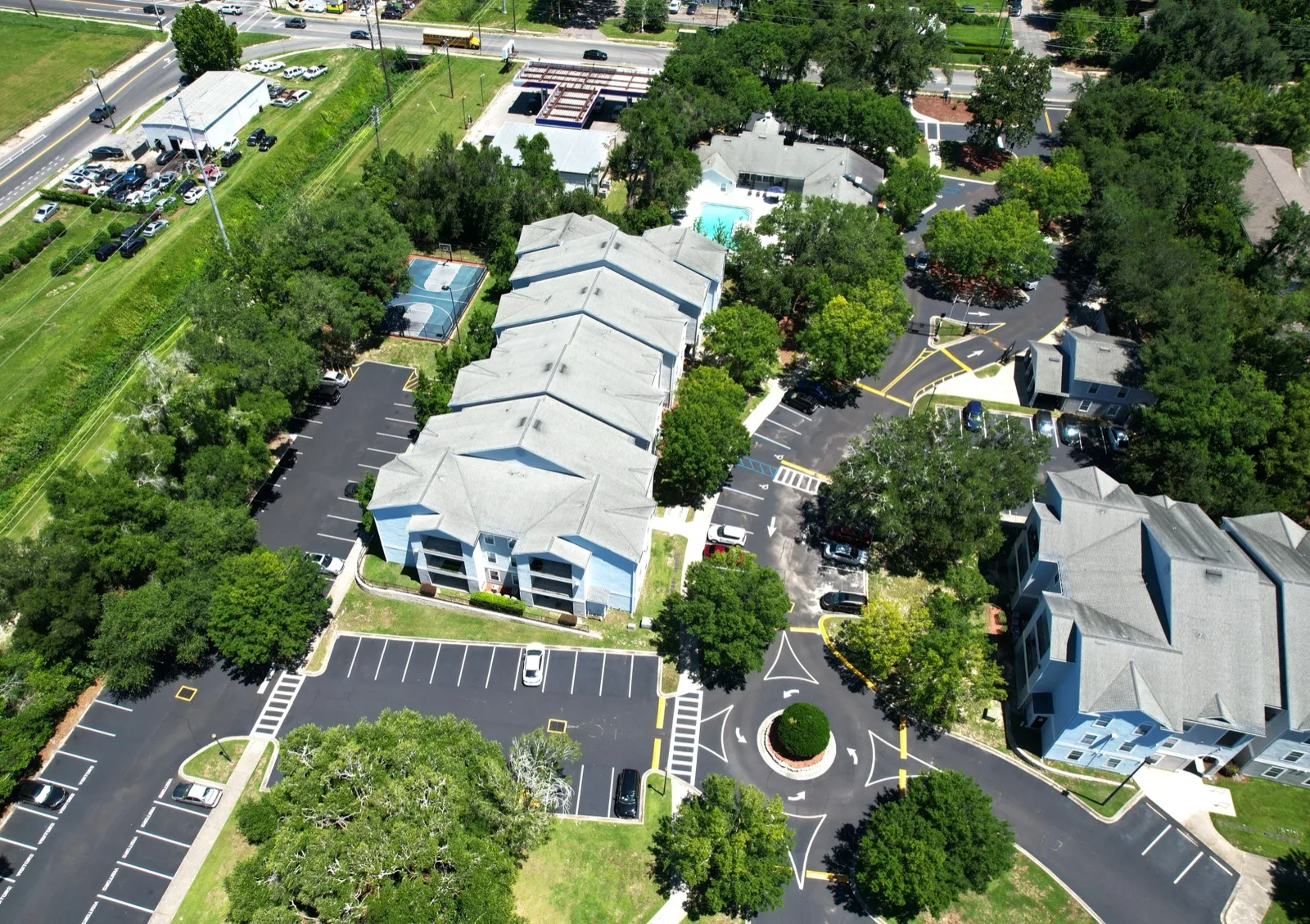
Most of the lots we look at do not need replacing, and that is the whole reason this company exists. If the surface is cracked, dull or has a few isolated potholes but the pavement is still solid underfoot, you are looking at a repair and preservation job. Replacement becomes the honest answer only when the failure has moved down into the base. The difference is checkable, and you can do most of the checking yourself in a walk around the property.
Here's the short version:
- Cracking, fading and isolated potholes on pavement that feels firm underfoot is a repair and preservation situation, not a teardown.
- Widespread alligator cracking, soft spots and standing water are signs the base underneath is wet and losing its ability to carry weight, which changes the answer.
- Concrete follows its own rule. A cracked slab that is still supported can be repaired. A slab that has sunken or rocks under weight has lost its support.
Start With What Is Under the Asphalt, Not the Asphalt
Asphalt in North Florida sits on a limerock base. That base does the structural work. The asphalt on top is a wearing surface and a waterproof lid. As long as the base stays dry and compacted, it keeps carrying traffic, and almost anything that goes wrong above it can be corrected.
The failure story is almost always the same, whether the lot is in Tallahassee, Crawfordville or Quincy. A crack opens up. Our heavy rains run straight down that crack instead of off the surface. The limerock stays wet, it softens, and the pavement above it no longer has anything firm to rest on. That is when cracks spread into a web, when a patch sinks, and when a pothole comes back three months after somebody filled it.
So you are standing in your lot deciding between a few hundred dollars and several thousand. You are really asking one question. Is the base still doing its job. Everything below is a way of answering that.
What Surface Cracking Actually Tells You
Not all cracks mean the same thing, and this is where most owners either overreact or wait too long.
Single, separated cracks
Long straight cracks, joint lines and scattered individual cracks are a surface problem with a base still intact. They are an easy maintenance item to skip, and skipping them is the primary reason pavements fail early. Sealed properly, they stop being a path for water. Hot applied rubber cleaned into a dry, debris free joint is a small line item compared with anything structural.
Alligator cracking
When cracking turns into a tight interconnected web that looks like reptile skin, you are no longer looking at the surface. That pattern means the pavement is flexing under load because the material beneath it has gone soft. Sealcoating will not fix it and crack filler will not fix it. A localized patch of alligator cracking is repairable with a full depth repair. Alligator cracking across most of the lot is the signal that changes the answer toward replacement.
Crumbling edges
Edges break off because pavement edges have no shoulder holding them in place. Water gets under the outer few inches, the base washes out, and the asphalt breaks away in pieces. This is one of the most common calls we get, and it is fixable, but sealing the cracks alone will not stop it because the problem is under the edge, not on top of it.
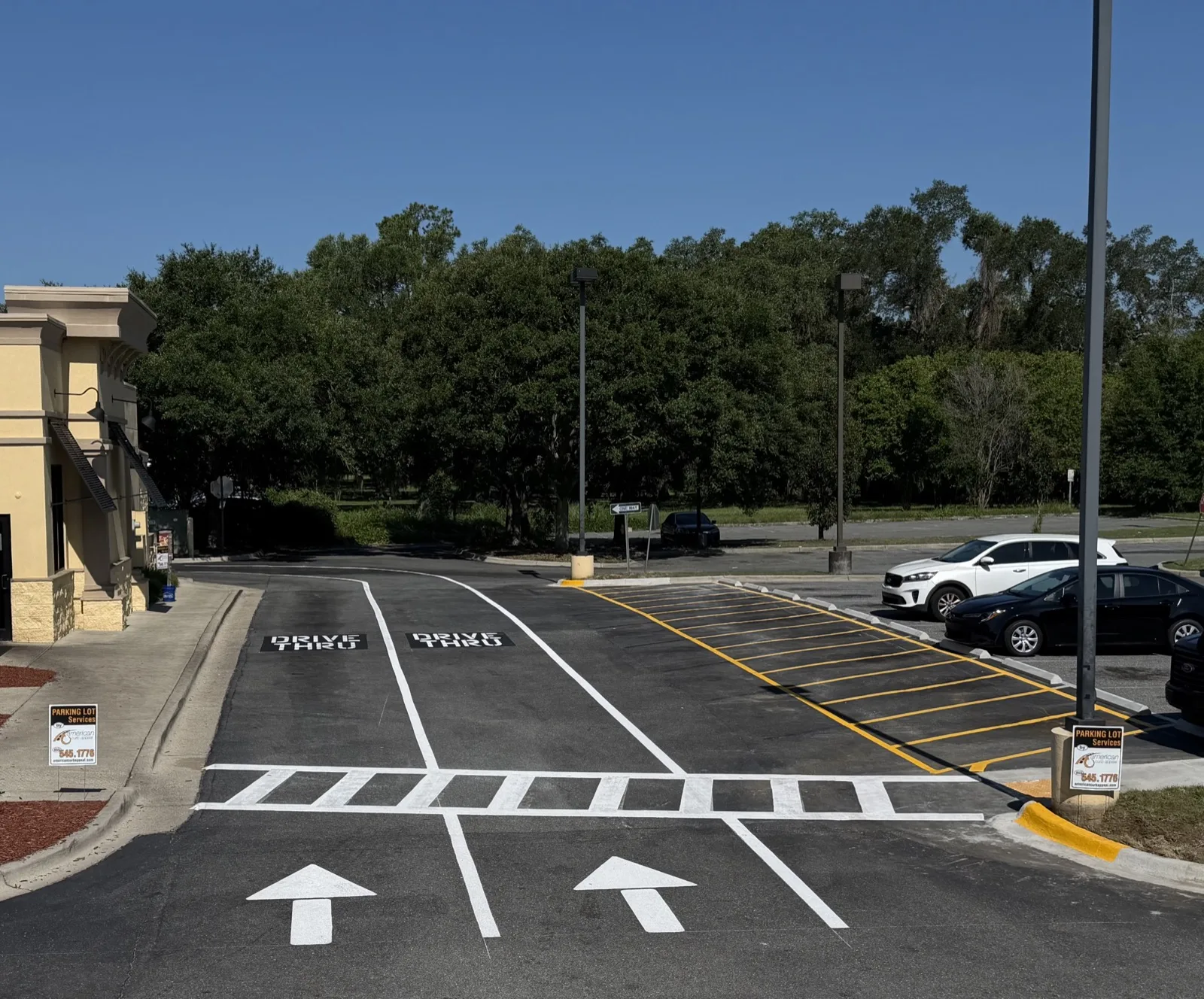
A commercial asphalt lot showing surface cracking along a drive lane and a repaired section next to it.
The Two Signals That Change the Answer
Standing water
If rainwater runs across your property and sits, take that seriously before you spend money on anything else. Water is what breaks pavement in the first place. A low area that holds water is soaking the base from above every time it rains, and any repair you place there is being installed on a surface that will keep failing.
The good news is that drainage is usually correctable. Depending on the site we can build an asphalt berm or a curb to steer runoff away from the surface, or regrade a low area so water leaves instead of parking. Fixing the water first is what makes the rest of the work last. Our article on standing water in a Tallahassee shopping center lot goes deeper on what pooling is costing you.
Movement underfoot
Walk the lot. Step firmly on the questionable areas. Pavement that feels solid is telling you the base is intact. Pavement that gives, sinks or feels spongy is telling you it is not. A patch that has settled below the surrounding grade, or a pothole that keeps reopening in the same spot, is the same message.
Concrete Is a Different Test
Concrete sidewalks, curbs and pads do not fail the way asphalt does, so judge them by a different standard. The question is whether the slab still has solid support beneath it.
Cracking on a slab that is otherwise flat and solid is a repair. We can fill, resurface or replace individual sections without touching the rest. Once a slab has sunken or rocks when weight moves across it, the support beneath it is gone and the section needs to come out. Heaved or lifted panels carry a second problem. An uneven joint on a walkway is a trip hazard, it sits directly on the path of travel between your parking and your entrance, and that path is required to be stable, firm and free of trip hazards. Failing concrete on an accessible route is a liability exposure as much as a maintenance item, which is why we treat sidewalk restoration and trip hazard removal as part of keeping a property compliant.
A Quick Reference for Your Walk
| What you see | What it usually means | Likely path |
|---|---|---|
| Faded, dull, gray surface | UV oxidation on intact pavement | Clean and sealcoat |
| Single or straight line cracks | Surface opening, base still dry | Hot applied crack sealing |
| Isolated potholes, firm surroundings | Localized failure | Full depth repair |
| Crumbling outer edges | Base washing out at the unsupported edge | Edge repair, then seal |
| Alligator cracking over most of the lot | Base has lost bearing strength | Replacement conversation |
| Water standing after rain | Grade is feeding water into the base | Drainage correction first |
| Cracked but flat concrete slab | Slab still supported | Section repair |
| Slab that rocks or has sunken | Support underneath is gone | Replace the section |
Get a Straight Answer From Someone Standing on It
Photos and guesswork do not settle this. Pavement tells you what it needs when somebody walks it, steps on the soft spots, looks at where the water goes and reads the crack pattern in context. American Curb Appeal has specialized in the lifecycle of existing commercial pavement in Tallahassee since 1998, which means our interest is in preserving what you already own rather than selling you a new lot. Our work across the region holds a 4.9 star Google rating from 30 reviews.
Call or send the request through the site and we will come walk the property at no cost. For commercial properties we put the numbers in writing with the scope broken out, so you can see what is being repaired, what is being brought up to ADA code and what is optional, rather than one lump figure. You can reach us at (850) 545-1776 or start with our asphalt restoration and structural repair page.
If your walk turned up mostly surface issues, our High-Performance Sealcoating & Preservation and Asphalt Crack Repair pages explain what protection looks like once the structure checks out.
FAQs
Should my asphalt be repaired or replaced?
Most lots we look at do not need replacing. If the surface is cracked, dull or has isolated potholes but the pavement is still solid underfoot, that is a repair and preservation job. The signal that changes the answer is widespread failure that has reached the base, such as alligator cracking across the majority of the lot.
Does sealcoating fix cracks in the asphalt?
No. Sealcoating is a protective skin, not a structural filler. We can perform hot applied crack sealing before sealcoating so water cannot reach the base, and the sealcoat then provides the UV protection for the surface.
My driveway or walkway is badly cracked. Should it be repaired or replaced?
Check whether the slab is still carried by the ground beneath it. Cracking on a slab that is otherwise flat and solid is a repair, and we can fill, resurface or replace individual sections without touching the rest. Once a slab has sunken or rocks under weight, that section needs to be replaced.
Rainwater runs across my property and pools. Can that be redirected?
Usually yes, and it is worth doing before you repair anything else, because water is what breaks pavement in the first place. Depending on the site we can build an asphalt berm or a curb to steer runoff away from the surface, or regrade a low area so it drains.
What happens if I do not seal the cracks?
Unsealed cracks allow water to bypass the asphalt and saturate the limerock base. That leads to subgrade softening, alligator cracking and eventually potholes. Sealing is the primary and most cost effective defense against water reaching the raw land beneath your pavement.
Need parking lot maintenance?
Contact us today for a free proposal on your next pavement project.
Get Your Free Proposal