
The fastest way to keep a storm from turning into a pothole bill is to walk the lot in a fixed order, starting with water and ending with the accessible spaces. We have been repairing commercial pavement in this region since 1998, and the damage we get called out for after heavy rain almost always announced itself first. A walk that takes part of a morning gives you a written list, a sense of what is urgent, and something ownership can actually fund.
Here's the short version:
- Water is what breaks pavement, so look at drainage and pooling before you look at anything else.
- Edges and shoulders fail first because nothing holds them in place.
- Cracks, entrances, sidewalks and accessible spaces round out the walk, and each one tells you whether to call now or schedule for the dry season.
Why The Order Of The Walk Matters
Most post-storm inspections start at the worst-looking hole in the lot. That is understandable, and it is backwards. A pothole is the end of a story that started somewhere upgrade of it, usually with water that had nowhere to go or a crack that gave it a path into the base.
Under your asphalt is a limerock base. Once that base stays wet, it loses its ability to support the weight of a vehicle. The asphalt above it flexes, then cracks in a web pattern, then breaks apart. If you patch the surface without addressing where the water came from, you are scheduling the same repair again.
So the walk goes in this order: standing water, edges and shoulders, cracks, entrances and drive lanes, then concrete and accessible spaces. Bring a phone for photos and a notepad. Go out while water is still moving across the surface if you can do it safely, because you will never get better information than that.
Step One, Standing Water And Runoff Paths
Look for puddles that are still there well after the rain has stopped. Note where they sit, roughly how big they are, and what is upgrade of them. Also look for the tracks runoff leaves behind, which is fanned-out grit, silt lines across the asphalt, or soil washed from a landscape bed onto the pavement. Those tell you the path water took across your property.
Standing water is not just a slip and nuisance issue. It is the single condition most likely to produce next year's potholes in the same footprint. If you want the longer version of what pooling costs a property, we wrote about standing water in a Tallahassee shopping center lot and what it does to a surface over time.
The good news is that runoff can usually be redirected, and it is worth doing before you repair anything else. Depending on the site we can build an asphalt berm or a curb to steer runoff away from the surface, or regrade a low area so water leaves instead of sitting.
Water still pooled on a commercial lot after the rain has stopped, with silt tracks showing the path runoff took.
Step Two, Edges, Shoulders And Washouts
Walk the outside perimeter of the lot, including where asphalt meets grass, dirt, or a gravel shoulder. You are looking for asphalt that is crumbling or flaking away at the edge. Note soil washed out from under the outer few inches, and any place where the pavement edge has dropped below the ground beside it.
Edge failure is one of the most common things we are called out for. Pavement edges have no shoulder holding them in place, so water gets under the outer few inches, the base washes out, and the asphalt breaks off in pieces. Sealing the cracks alone will not stop that, because the problem is under the surface, not on it.
A washout that has undermined an edge along a drive aisle is urgent. A little flaking on a back corner where nothing drives is a dry season item. Photograph both, and note which one trucks run over.
Step Three, Cracks, Potholes And What Is Urgent
Now look at the field of the lot. Cracks, especially any that have opened wider or filled with silt, are direct lines for heavy rain to reach the base. Alligator cracking, which is the tight interconnected web pattern, means the base under it has already been softening. Isolated potholes on an otherwise solid lot are a repair, not a replacement. Most lots we look at do not need replacing.
| What you found | Why it matters | Call now or schedule |
|---|---|---|
| Pooling that lingers after rain | Saturates the base and creates future potholes | Call now, fix drainage before other repairs |
| Undermined edge on a drive lane | Asphalt has no support and will break off | Call now |
| Open pothole in traffic | Vehicle damage and liability exposure | Call now |
| Open or silted cracks, no deformation | Water path into the base, not yet structural | Schedule for dry season |
| Alligator cracking over a soft spot | Base failure under the surface | Have it looked at, then schedule full depth repair |
| Faded striping or worn ADA markings | Layout and accessibility exposure | Schedule, often paired with sealcoating |
Sealcoating does not fix any of this. It is a protective skin, not a structural filler. Hot-applied asphalt crack repair goes first so water cannot reach the base, and the sealer handles UV on the surface afterward.
Step Four, Entrances, Sidewalks And Accessible Spaces
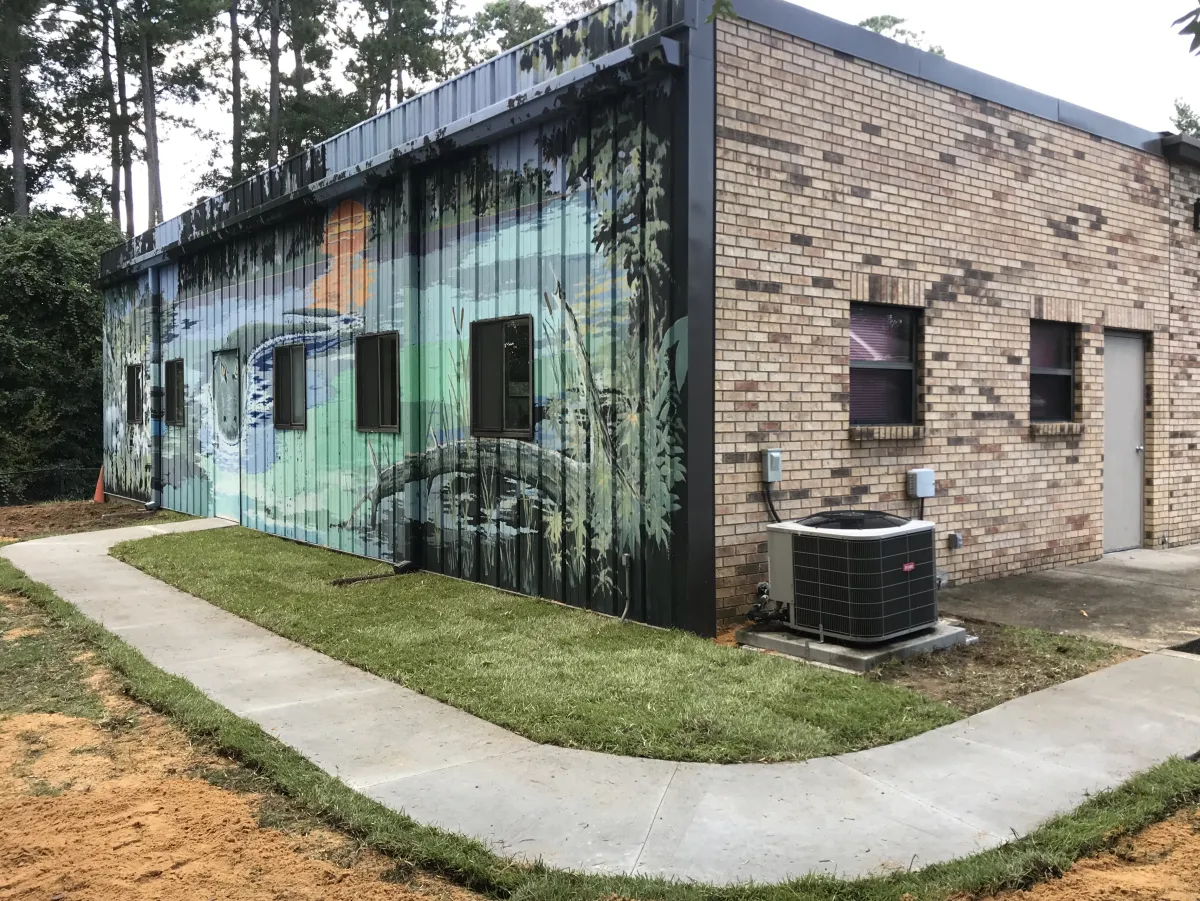
Entrances and aprons take the heaviest turning loads on the property, so check them for depressions, broken edges at the tie-in, and any patch that has settled below the surrounding pavement. Then move to the concrete. Look for sidewalk panels that have heaved or cracked, broken curbing, and any lip between panels that a pedestrian could catch a toe on.
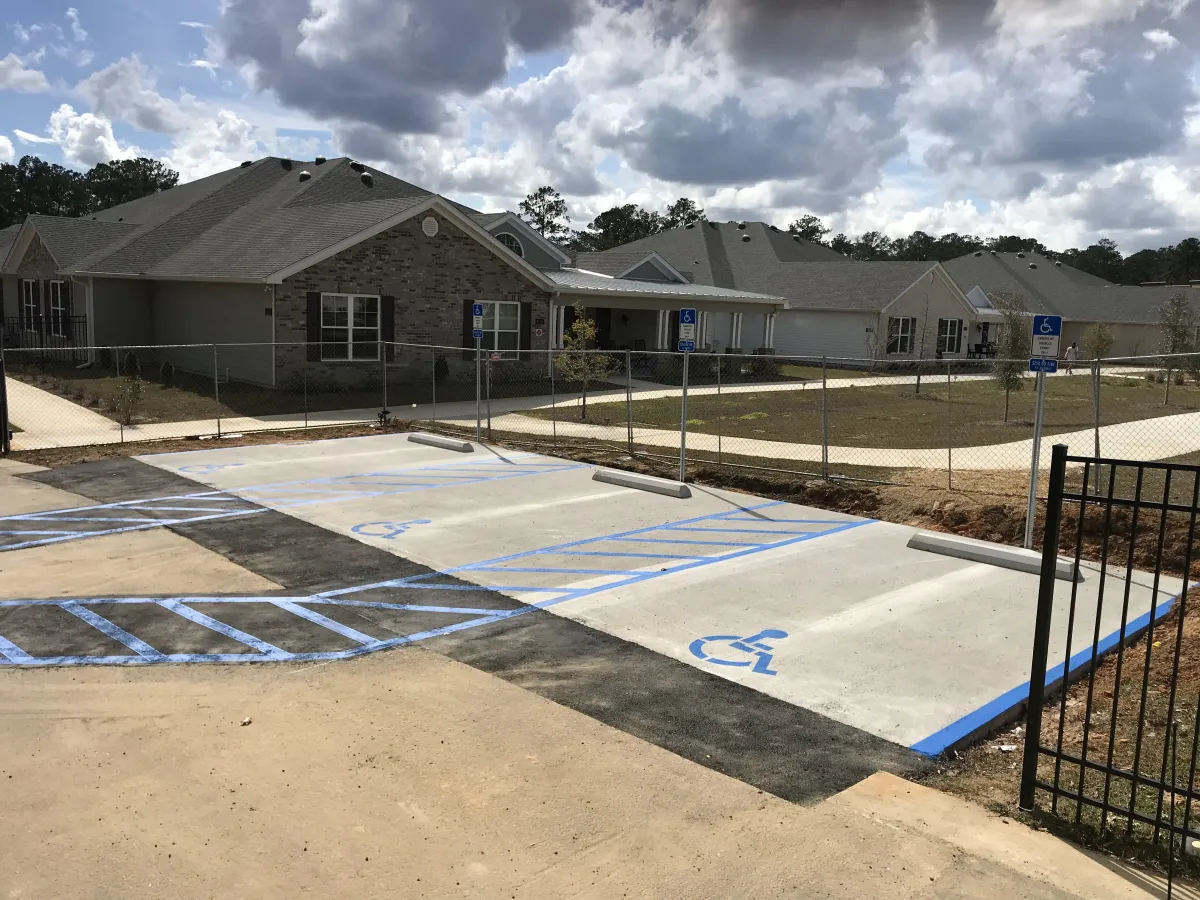
Finish at the accessible parking. Confirm the stalls and hatched access aisles are still readable after the storm. Check that no silt or debris is sitting in the access aisle, and that the path of travel from the accessible space to the entrance is clear and unbroken. The path of travel is the continuous, unobstructed route connecting the ADA space to the building entrance, and it must be stable, firm and slip resistant with no trip hazards. If a storm washed debris across it or lifted a panel in it, that is an immediate item. Our ADA and Florida accessibility compliance work covers both the pavement markings and the concrete side of that path.
Turning The Walk Into A Repair List And A Budget Request
Write the list in the same order you walked it. For each item, put down the location, a photo, one sentence on what is wrong, and your urgency call. Then split the list into three buckets: safety and liability items that cannot wait, structural items that should be corrected before they spread, and preservation items for a dry season project.
That structure is what makes a budget request easy for ownership to approve, because it separates a decision about risk from a decision about maintenance. When we quote commercial properties, we put the numbers in writing with the scope broken out. You see what is being repaired, what is being brought up to ADA code, and what is optional. Your walk list and our scope line up, and ownership sees the same property you do.
Working With American Curb Appeal
American Curb Appeal has served Crawfordville and the surrounding North Florida communities since 1998, and we specialize exclusively in the lifecycle management of existing commercial pavement. On asphalt restoration and structural repair we remove the failed asphalt to reach the base material. We excavate the edges of the repair area so a full thickness of asphalt is achieved, then bond the new hot mix to the old with professional-grade liquid asphalt tack. We do not throw and go.
"American Curb Appeal does an incredible job at a very fair and competitive price. Terry is a great communicator, and his attention to detail is exceptional. Highly recommend this company for any asphalt needs." Noah C., Tallahassee
Send us your walk list and we will come look at the property with you. Start here: American Curb Appeal for property managers, or call (850) 545-1776.
FAQs
How soon after a storm should I walk the property?
As soon as it is safe to be out on the lot, while water is still on the surface. That is the only window where you can see which low spots hold water and which ones drain. If you wait until everything is dry, you lose the most useful information on the whole walk.
Rainwater runs across my property and pools. Can that be redirected?
Usually yes, and it is worth doing before you repair anything else, because water is what breaks pavement in the first place. Depending on the site we can build an asphalt berm or a curb to steer runoff away from the surface. We can also regrade a low area so water moves off instead of sitting on the asphalt.
Should my asphalt be repaired or replaced after storm damage?
Most lots we look at do not need replacing, which is the whole reason this company exists. If the surface is cracked, dull or has isolated potholes but the pavement is still solid underfoot, that is a repair and preservation job. Widespread movement underfoot is the signal that changes the answer.
What happens if I leave the cracks until next year?
Unsealed cracks allow water to bypass the asphalt and saturate the limerock base. That leads to subgrade softening, alligator cracking and eventually potholes. Crack sealing is the primary and most cost effective defense against water reaching the raw land beneath your pavement.
Can you handle the concrete items on my list too?
Yes. We repair and replace heaved or cracked sidewalk panels to remove trip hazards and keep the path of travel compliant. We also reconstruct damaged curbing that is letting water undermine your asphalt, and we pour new work such as aprons, dumpster pads and ADA ramps. What we do not do is new asphalt paving.
Need parking lot maintenance?
Contact us today for a free proposal on your next pavement project.
Get Your Free Proposal