
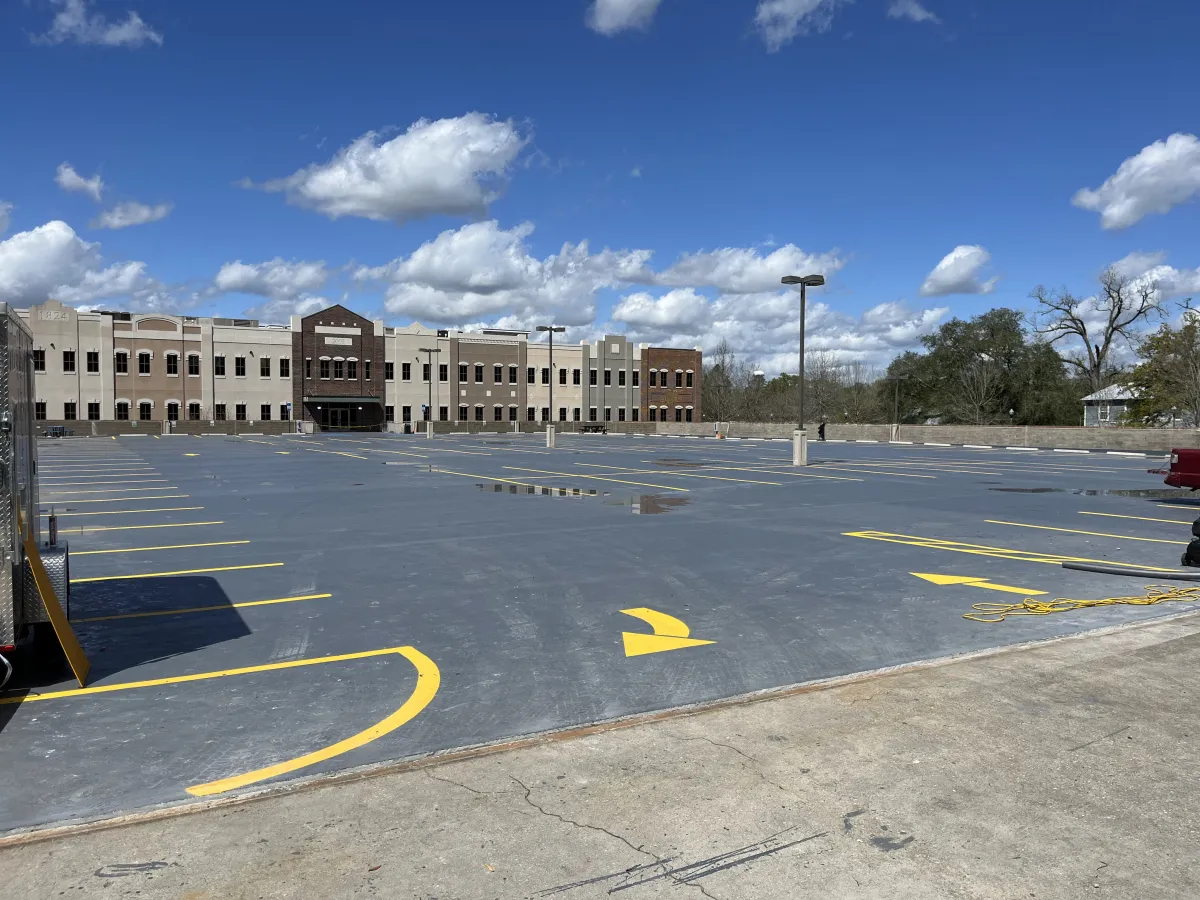
If you own or manage asphalt in North Florida, the best time to schedule sealcoating is usually late spring through early fall, when daytime temperatures stay warm and the forecast gives you a dry stretch after application.
Here’s the short version:
- Weather comes first. Warm, dry conditions matter more than the calendar.
- Asphalt age matters. New asphalt should not be sealed until it has fully cured.
- Most lots settle into a regular reseal cycle, but traffic can push that timing sooner.
- Watch for warning signs like graying, oxidation, hairline cracks, rough texture, and loss of water beading.
- Fix drainage and moisture issues first. If water ponds on the surface, sealcoating may not be the first job to schedule.
- For commercial sites, a worn surface and faded striping make stalls harder to read, so drivers park wide and the lot holds fewer cars than it was laid out for.
Treat sealcoating as a timing decision based on weather, traffic, pavement age, and surface condition, not guesswork. If the lot is dry, showing early wear, and heading into a warm stretch without rain, that is often the window to get it on the calendar before minor issues turn into larger repairs.
Best Weather Window for Sealcoating in North Florida
Once you've looked at pavement age and budget, weather is the next thing that can make or break the job. In North Florida, late spring through early fall is often the most dependable time for sealcoating, as long as daytime temperatures stay warm and you have a run of dry weather after the sealer is applied. Every sealer carries its own minimum application temperature and its own cure window on the product data sheet, so the real cutoff is whatever the material going down on your lot calls for, not a date on the calendar.
Why Warm, Dry Days Work Better Than Peak Afternoon Heat
North Florida summers can be tricky. You may get the warm weather you want, but afternoon thunderstorms can wipe out the dry window fast. That's why it often makes more sense to plan for warm, dry mornings or early afternoons instead of the hottest part of the day.
Humidity can slow curing. At the same time, strong afternoon heat can dry the top layer too fast before the sealer cures underneath. Think of it like paint that looks dry on top but hasn't set below the surface yet.
Pre-Scheduling Checks: Forecast, Surface Dryness, and Drainage
Before you lock in a date, walk the property and check that the pavement is fully dry. Moisture left in the surface can keep the sealer from sticking the way it should. Low spots, shaded sections, and areas with poor drainage often stay wet longer, so they may need more time to dry before the job can move ahead.
If you see standing water, deal with the drainage issue before sealcoating. Otherwise, the surface may not be ready even if the forecast looks good.
Weather sets the timing, but asphalt age tells you whether the lot is ready for that timing.
How Asphalt Age Affects Your Sealcoating Schedule
After weather, asphalt age is the next big clue in deciding whether sealcoating should happen now or later. The age of the pavement gives you a starting point for timing. That helps you avoid sealing too soon or putting it off until wear has already set in. Once age gives you that baseline, traffic helps show whether the schedule should move up.
When New Asphalt Is Ready for Its First Sealcoat
New asphalt needs time to cure before its first sealcoat. Seal it too early and you trap the oils that still need to work their way out of the surface. Instead of picking a date off the calendar and hoping for the best, have the surface looked at before you schedule that first application. The paving contractor who laid the lot can tell you when the surface should be ready, and a walk of the pavement will confirm whether it actually is.
How Traffic Levels Change the Reseal Cycle
Most properties settle into a regular reseal cycle, but where that lands shifts based on how much use the pavement gets. A quiet lot behind a small professional office can go a good while longer before wear starts to show. A busy retail center gets there sooner.
Heavy traffic often shortens the reseal interval, especially in turning areas, drive lanes, and entrances. Those parts of the pavement usually wear out first.
| Traffic Level | Typical Property Type | Monitoring Priority |
|---|---|---|
| Low | Small low-use lots, churches, storage and light industrial | Longest stretch between reseals; inspect for general wear |
| Moderate | Small retail lots, quiet professional offices | Middle of the range; inspect high-wear areas more often |
| High | Shopping centers, busy office complexes, banks | Shortest stretch between reseals; prioritize entrances and turning lanes |
If you're not sure where your property fits, a walk of the lot with someone who does pavement work for a living can replace guesswork with a clearer view of what the surface needs.
Age sets the schedule, but surface wear shows when that schedule may need to move up.
Surface Signs That Tell You Sealcoating Is Due
When the timing is close, the pavement usually gives you a pretty clear signal on whether to seal now or hold off.
Faded Color, Oxidation, and Loss of Water Beading
When asphalt shifts from black to gray, that usually points to oxidation drying out the surface.
A sound sealcoat helps water bead up and run off. If water starts darkening the asphalt or soaking into the surface, that protective layer may be wearing down.
Hairline Cracks, Rough Texture, and Wear in Traffic Lanes
A rough, brittle surface with loose aggregate is a sign that the asphalt is starting to break down. Hairline cracks matter because once water gets through them, it can reach the foundation.
Traffic lanes and other high-use spots often show the first signs of wear. That can include fading, cracking, and loss of aggregate.
If you can see these signs, the next step is a condition check before you put sealcoating on the schedule.
What to Check Before You Schedule Sealcoating
Once the pavement starts to show wear, make sure the site is ready for sealcoating before you put anything on the calendar.
Start with drainage. Check the lot for ponding water and deal with drainage problems first. Standing water can shorten the life of the sealcoat and should be fixed before scheduling. If water collects anywhere on the surface, that issue comes first.
Then make sure the pavement is fully dry. Sealing in trapped moisture can lead to early pavement failure. You should also clean the surface and fill cracks before sealcoating.
It is also worth asking what material is going down. On Florida commercial lots, a high-solids sealer meeting the FDOT spec is the product to ask about, and the crew should be able to tell you which one they are using and how it is being mixed.
Pay close attention to turning areas too. These spots often wear down faster than lower-stress parts of the lot and may need repairs or more frequent attention.
Scheduling Priority by Pavement Condition: A Quick Reference Table
Use this table to help decide whether to schedule now or hold off for repairs.
| Property Condition | Scheduling Priority | Main Condition Trigger |
|---|---|---|
| New Asphalt | Do not schedule yet | Wait until the asphalt has fully cured |
| Lightly Used Pavement | Medium | Minor fading and loss of deep black color |
| Moderate Traffic Pavement | High | Oxidation, loss of water beading, and hairline cracks |
| High-Traffic Pavement | Urgent | Graying/oxidation, heavy wear in travel lanes, and raveling |
Conclusion: Act on Minor Wear Before It Becomes a Major Repair
Schedule sealcoating during a warm, dry stretch, and move before fading and cracking turn into bigger repair issues.
FAQs
How long should I stay off the pavement after sealcoating?
Stay off the pavement until the sealer has fully cured, and ask the crew doing the work how long that will be on your lot. It may look dry well before it is ready, because the sealer still needs time to harden and bond to the asphalt. Cure time moves with temperature, humidity, shade, and the product being used, so the answer is job specific rather than a fixed number.
Once the lot reopens, avoid sharp or tight vehicle turns while the surface is still settling in. That can help reduce tire tracking or scuffing. Follow the curing guidance you were given for your property.
Can sealcoating fix cracks and rough spots?
No. Sealcoating is a preventive maintenance treatment, not a fix for cracks, rough spots, or structural damage.
Cracks should be handled with crack sealing. Potholes and other structural issues need asphalt repairs before sealcoating. If sealcoat is applied over damaged pavement, it won't fix the problem underneath.
Should I sealcoat if my lot has standing water?
No. Sealcoating needs a dry, sound surface. If water is pooling, that often points to a drainage problem that may affect the pavement base.
Sealcoating won’t fix water getting into the pavement or any structural damage. It makes more sense to deal with the drainage issue first so the surface can be prepared the right way for a protective coating.
Need parking lot maintenance?
Contact us today for a free proposal on your next pavement project.
Get Your Free Proposal