
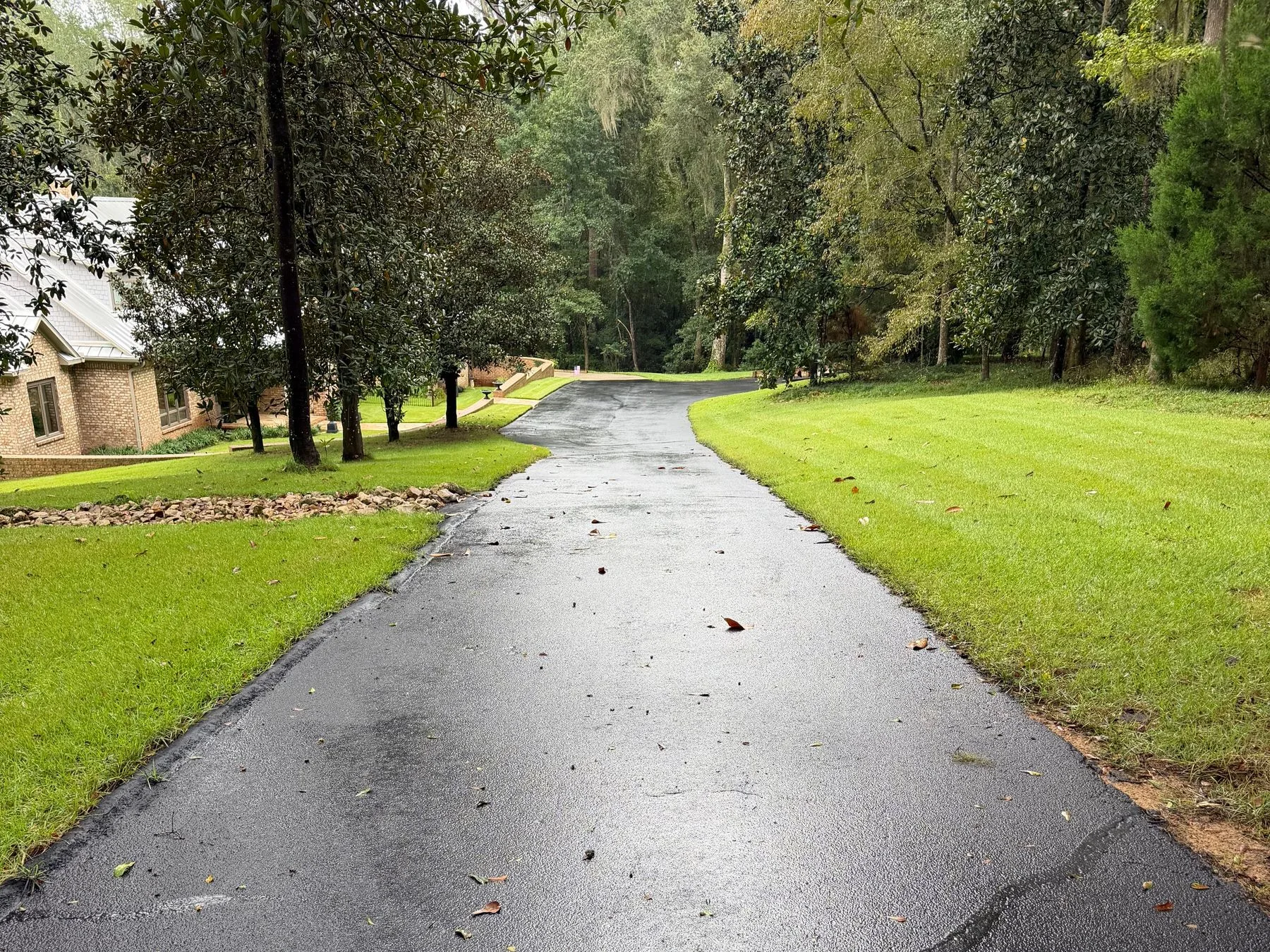
We sealed it again for free because a cold snap hit right after the first coat went down, and we could not be sure that coat had cured the way it should. The customer never asked us to come back. We offered, and this October we did the work. The same thinking applies to every parking lot we seal.
Here's the short version:
- A cold snap followed the first job
- The sealer may not have cured
- We resealed it this October, free
What Happened Last Fall
We sealed this driveway last year during what people around here call false fall. That is the first cool stretch of the season, the one that shows up before the heat comes back for a few more weeks.
The customer wanted the work done during the one window when he would be away from the house. That meant we could not push the job back a few weeks or hold it until spring. It was that week or not at all.
We sealed it. Then a sudden cold snap came through before the weather warmed back up.
What Cold Does to Fresh Sealer
A fresh coat of sealer has to release its moisture before it hardens into the barrier that protects the asphalt. Drier air and moderate pavement temperatures let that happen evenly. A cold snap can get in the way.
When the temperature drops right after a coat goes down, the sealer can sit there without curing the way it should. It may still look black and finished from the street. The trouble is that a coating that never fully releases its moisture never reaches full hardness, and a coat like that can wear sooner than it should.
That is why we pay so much attention to the calendar. We wrote about it in our article on why October is the right month to sealcoat a commercial lot in Tallahassee. The same product, the same crew and the same pavement can turn out differently depending on the week the work is done.
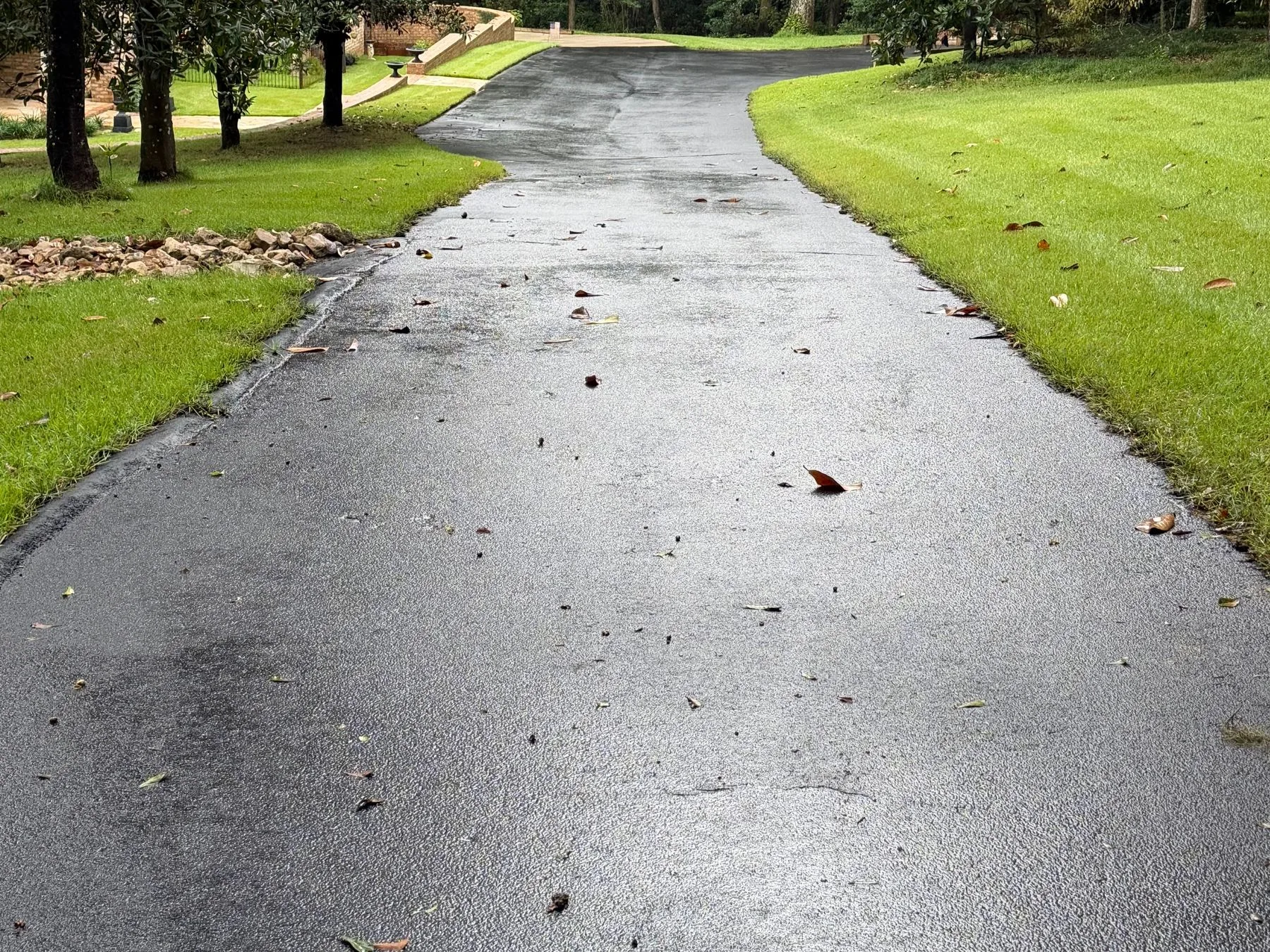
The driveway after its second coat this October, photographed after a rain.
Why We Resealed the Driveway
Nobody could say for certain that the cold had hurt that first coat. It was possible, and possible was enough for us.
The customer did not call to complain. He did not ask for anything. We told him we would come back this year and seal it again at no charge, and this month we did. October was again the only time he had available. This fall has been warmer than the last one, so the sealer had the weather it needed.
We could have left it alone. The customer had not asked for anything. We would rather know a coating is right than hope it is.
What This Means for a Parking Lot
Most of what we seal is commercial parking lots, and the same rule applies there on a larger scale.
A lot has to cure before it reopens. We recommend at least 24 hours of cure time after the final coat before vehicles go back on it. On a large property we seal in sections, so tenants and customers keep access while each section gets its time.
The order of the work matters too. Failed areas get asphalt repair before any sealer goes down, because sealer is a surface coating and not a structural fix. Fresh parking lot striping goes on last, over a cured surface.
Weather is the part nobody controls. Fall in North Florida usually brings drier air and moderate pavement temperatures, which is why we like to schedule sealcoating then. If rain or a cold front is on the way, the right call is to move the date. If the date cannot move, we tell you what the risk is before we start. We stand behind every project, and that is what this driveway came down to.
Sealcoating With American Curb Appeal
American Curb Appeal has been in business since 1998. Most of what we seal is commercial parking lots, and we seal driveways like this one too.
If your lot is due for a coat, or you are not sure the last one held up, we will come out and look at it. You can see how we approach the work on our sealcoating page, or call us for a free proposal.
FAQs
Can you sealcoat in cold weather?
Sealer needs warm pavement and dry air to cure. We check the forecast before every job and move the date when a cold front or rain is on the way. Fall in North Florida still gives us plenty of good days to work with.
How long does sealcoat need to cure?
We recommend at least 24 hours of cure time after the final coat before vehicles go back on the surface. Cool or damp weather can stretch that out. That is why we watch the conditions and not only the clock.
What happens if a coat does not cure right?
A coating that does not fully cure does not reach full hardness, so it can wear sooner than it should. On this driveway we did not wait to find out. We sealed it again at no charge.
Do you seal parking lots or only driveways?
Parking lots are most of our work. We seal, stripe and repair commercial lots across Tallahassee and North Florida. We also seal residential driveways.
Need parking lot maintenance?
Contact us today for a free proposal on your next pavement project.
Get Your Free Proposal