
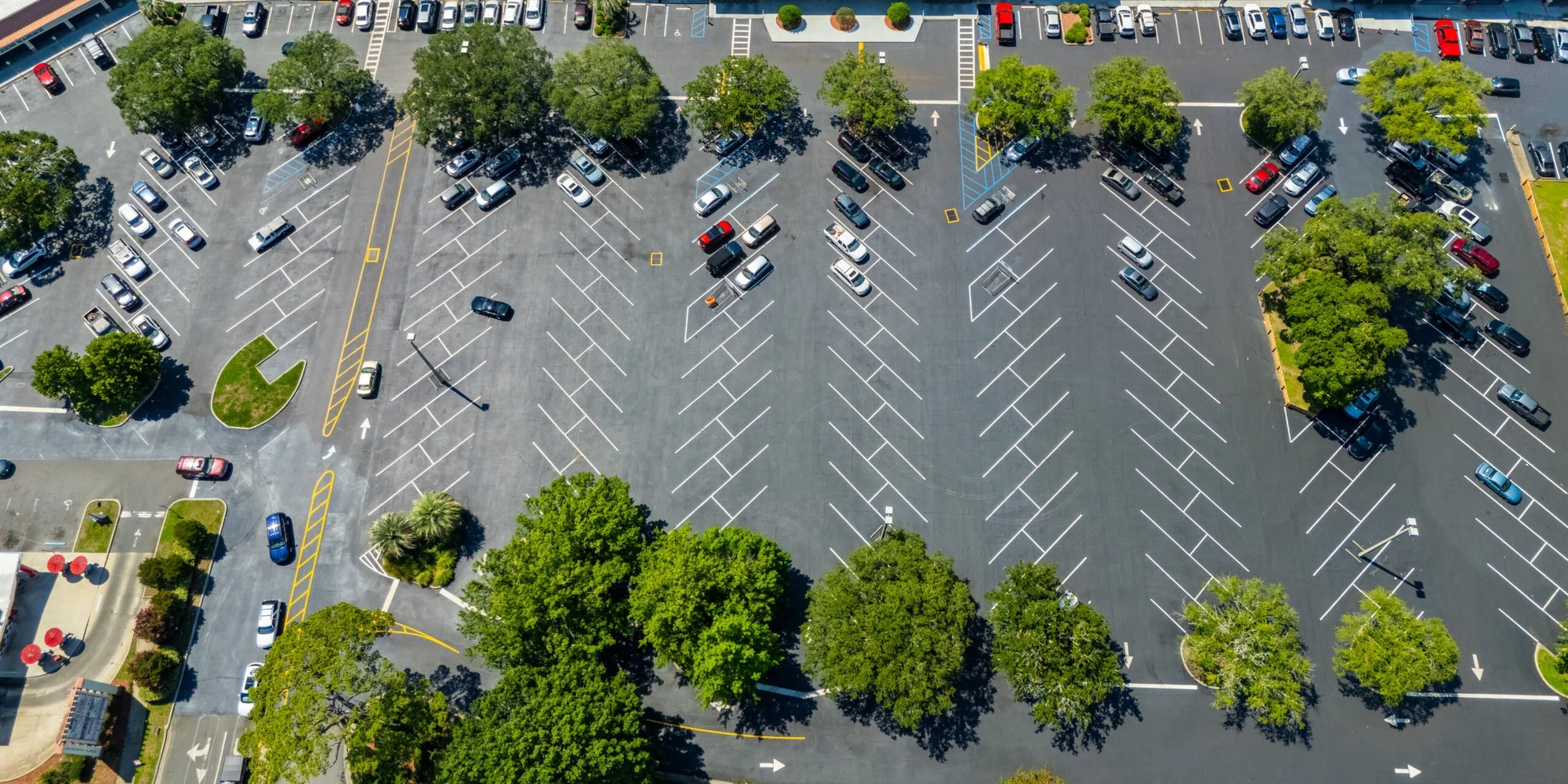
October gives a commercial lot in Tallahassee the steadiest cure conditions of the year, which is exactly what a high solids sealer needs to bond and harden before traffic returns. We have been sealing parking lots in North Florida since 1998, and the calendar matters more than most property managers expect. The same product, the same crew and the same lot can give you two very different results depending on the month it goes down.
Here's the short version:
- Sealer fails from conditions more often than it fails from product, and the two worst conditions here are trapped afternoon moisture and blistering surface heat.
- Fall in Tallahassee usually brings drier air and moderate pavement temperatures, which lets a commercial grade coating cure evenly instead of skinning over on top.
- A high solids, polymer modified sealer only pays off on a lot that takes real traffic if it is given time to harden.
- Crack sealing comes before sealcoating, always, because coating is a skin and not a filler.
- Plan the walk through now so the work lands before the winter rain pattern sets in.
What Goes Wrong When Sealer Goes Down at the Wrong Time
Sealcoating is a bonding process. We are asking a liquid coating to grip the top of an aged asphalt surface and then harden into a wear layer. Two things ruin that relationship in North Florida.
The first is water. A storm that rolls in before the coating has set can wash fresh sealer off the surface and leave a streaked, thin result behind. Even without a downpour, heavy humidity and overnight dew slow the release of moisture from the coating, and a coating that never fully releases moisture never reaches full hardness.
The second is heat. When pavement is baking, the surface of a fresh coat can dry faster than the material underneath it. You get a skin on top and a soft layer below. The lot looks finished, the property opens back up, and then delivery trucks and turning tires scuff and track it. That is a timing problem, not a product problem.
The cure is not the same as being open
A lot that is walkable is not a lot that is finished curing. Sealer keeps hardening after you drive on it, and the early part of that process is where the difference between a short lived coating and a long serving one gets decided. If you have ever wondered why a fresh lot gives slightly under a shoe, we wrote about that in why a freshly sealed Tallahassee parking lot feels soft.
Why October Suits a Tallahassee Sealcoating Schedule
October tends to remove both of those problems at once. Air is drier, storm activity calms down, and pavement warms in the middle of the day without cooking. That is the window we want for a lot that has to carry weight soon after it reopens.
It also sits ahead of the winter rain pattern. Preservation work needs workable days in a row, and those are easier to line up in the fall than they are once steady rain settles in. If you want a broader view of how the year breaks down, our guide on when to schedule sealcoating for a North Florida property walks through the full calendar.
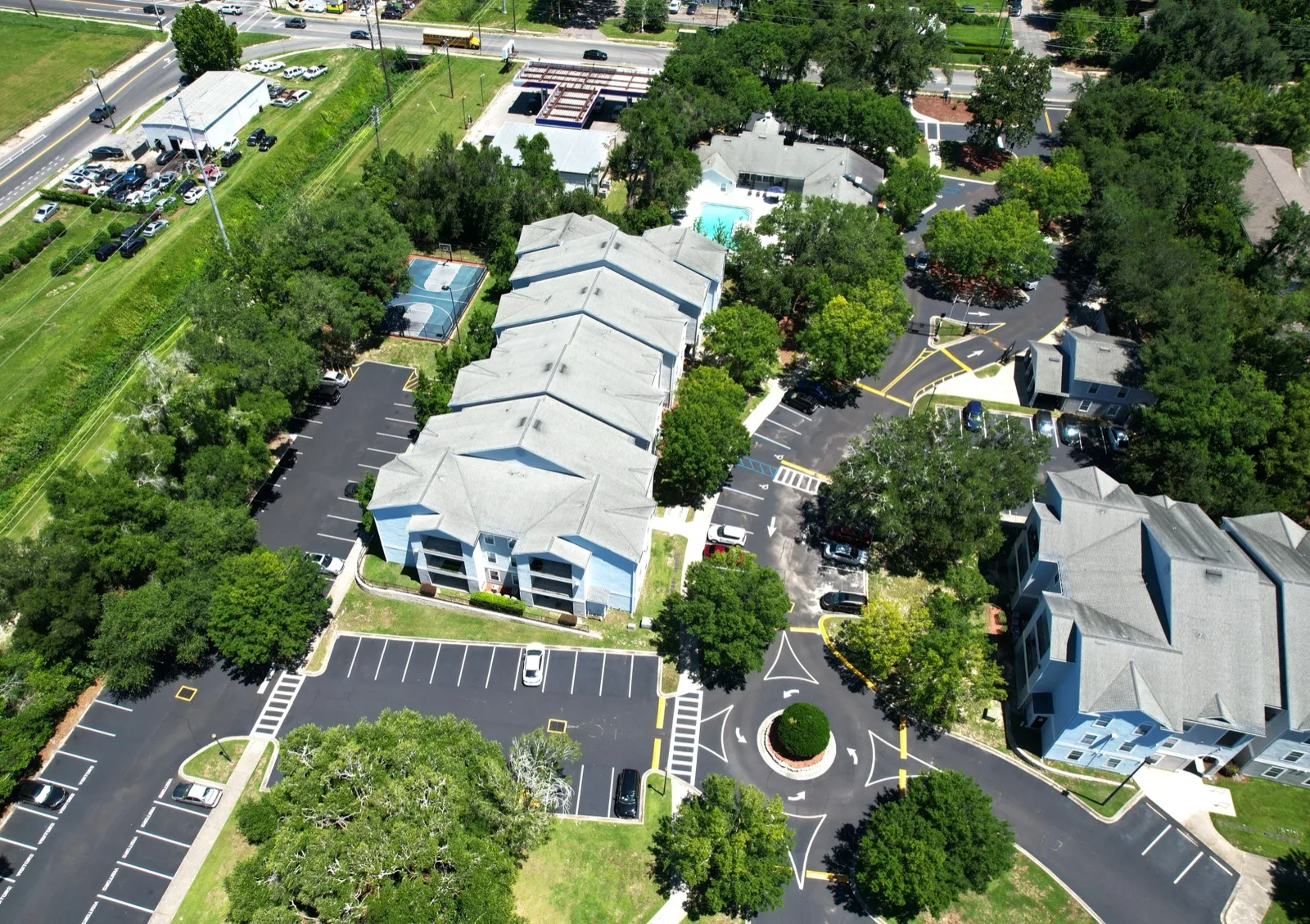
A commercial parking lot surface after cleaning and before the sealer application begins.
What "High Solids" Means for a Lot That Takes Real Traffic
Sealer is not one product. Discount jobs are usually discount because the mix has been cut, which means more water and less of the material that actually becomes your wear layer. On a residential driveway a thin coating can look acceptable for a while because almost nothing drives on it. On a commercial lot with delivery trucks and constant wheel turning in the same spots, a cut mix wears through in the traffic aisles first and leaves you with a patchy gray surface.
We use high solids, commercial grade coal tar emulsion sealers enhanced with specialized polymers. Solids are the part that stays behind after the water leaves. Polymers give the cured film wear resistance and flexibility instead of brittleness. The finish comes out deep black, but color is the least important part of it. The point is a barrier against the three things that kill pavement here: UV oxidation from the Florida sun, water intrusion, and chemical spills.
That barrier is also why the cure window matters. A heavier solids coating has more material to harden. Put it down in October and it gets what it needs.
Sequence Matters: Cracks First, Then Coating, Then Lines
Sealcoating does not fix cracks. It is a protective skin, not a structural filler. If a crack is left open under a fresh coating, water still runs past the asphalt into the lime rock base, the base softens, and you get alligator cracking and eventually potholes in the spot you just paid to make look new.
So the order on a well run project is fixed:
- Structural repairs first. Failed areas get removed down to the base and rebuilt at full thickness, not thrown and patched over. That is the work covered by our Asphalt Restoration & Structural Repair service.
- Asphalt Crack Repair next, using hot applied rubber in a joint that has been mechanically cleaned and blown dry. If the sidewalls are damp or full of vegetation, the bond will not hold.
- High-Performance Sealcoating & Preservation after the repairs are set, with mechanical cleaning and prep so the coating bonds to pavement instead of dust.
- Striping last, over a cured surface, including ADA stalls, hatched access aisles and directional markings.
That last step is a good moment to correct problems you have been living with. If the layout wastes capacity, or the accessible stalls no longer match the Florida dimensions of a 12 foot space with a 5 foot hatched access aisle, the restripe is when it gets fixed rather than repainted wrong.
| Situation | What it usually needs |
|---|---|
| Surface dull and gray, pavement still solid underfoot | Clean, crack seal, sealcoat, restripe |
| Open cracks running through traffic aisles | Hot applied crack sealing before any coating |
| Isolated potholes, base still sound | Full depth repair, then preservation |
| Brand new asphalt, recently placed | Wait 6 to 12 months for the pavement to cure and release oils |
| Water pooling and running across the lot | Drainage correction first, then repairs |
Drainage belongs at the top of that list when it applies. If runoff crosses your lot and pools, it is usually worth correcting before you spend money on the surface, because water is what breaks pavement in the first place. Depending on the site, that can mean an asphalt berm, a curb to steer runoff, or regrading a low area.
Getting on the Schedule with American Curb Appeal
American Curb Appeal has worked on North Florida commercial pavement since 1998, out of 1336 Timberlane Rd in Tallahassee, and we also serve Crawfordville, Quincy, Havana, Monticello, Perry, Madison, Lake City, Apalachicola and Live Oak. We are insured and bonded, and we carry a 4.9 rating across 30 Google reviews. Our work is with property managers, shopping centers, restaurants and theaters, so the scope we write reflects a property that has to keep serving people.
If you want fall dates, call us at (850) 545-1776 or request a walk through our commercial sealcoating and pavement preservation page. We come out and walk the lot, and for commercial properties we put the numbers in writing with the scope broken out, so you can see what is being sealed, what is being brought up to ADA code and what is optional, rather than one lump figure.
FAQs
Is October the only month you sealcoat in Tallahassee?
No. We seal through much of the year, and plenty of lots do fine outside the fall. October simply tends to give the most reliable combination of drier air and moderate pavement temperature, which is the easiest environment for a heavy solids coating to cure in. If your lot takes heavy traffic, the fall window is the one to aim for.
My lot was just paved this year. Can we seal it in October?
Probably not yet. New asphalt needs time to cure and release its light oils, and in our North Florida climate we typically recommend waiting 6 to 12 months before the first application. Sealing too early can trap those oils and soften the pavement. We are happy to look at the lot and tell you which season to target.
Will sealcoating take care of the cracks in my parking lot?
No. Sealcoating is a protective skin, not a structural filler. We perform hot applied crack sealing before the coating so water cannot reach the base, and the sealcoat then handles UV protection for the surface. Skipping the crack work means paying for a coating that sits over an ongoing failure.
Can you restripe the lot after the sealer, including the ADA spaces?
Yes. Striping goes over a cured surface, and it is the right time to address layout and accessibility together. Our Parking Lot Striping & Precision Layout work uses measured layout techniques rather than eyeballed lines, so the lot comes back uniform and maximized for capacity.
Need parking lot maintenance?
Contact us today for a free proposal on your next pavement project.
Get Your Free Proposal