
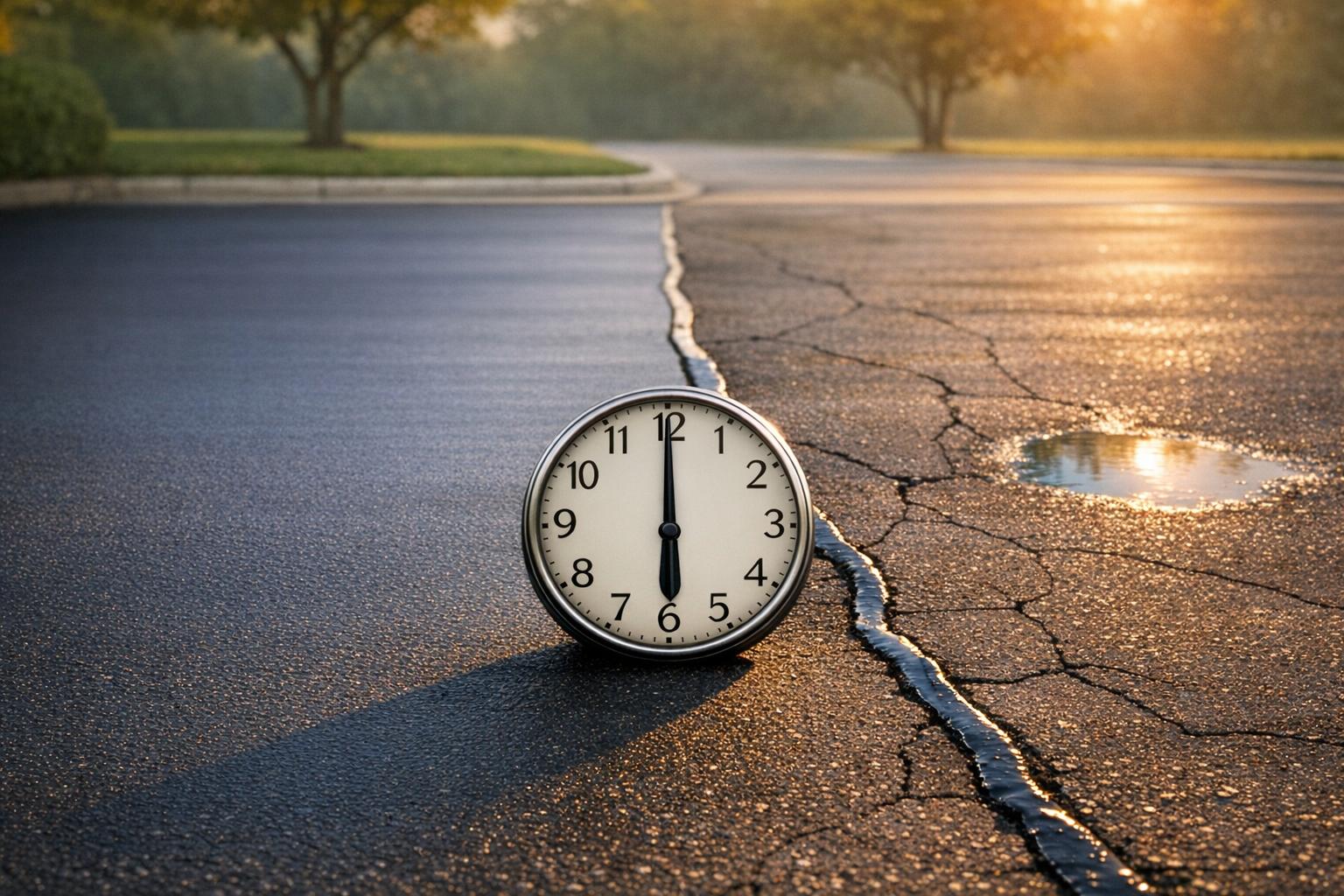
The 6-Month Window: Timing Your Pavement Preservation for Maximum Longevity
When it comes to maintaining asphalt, timing is everything. Acting during the 6-month window, when pavement shows early signs of wear but remains in good condition, can extend its life significantly. Sealcoating during this period can add 8–10 years to pavement with a PCI of 75–85, compared to just 4–6 years if delayed until the PCI drops to 55–65.
Key factors for success include:
- Temperature: Ideal range is 50°F to 90°F, with surface temperatures above 60°F for proper curing.
- Humidity: Below 60% ensures the sealant bonds effectively.
- Weather: Dry conditions for at least 24–48 hours are critical.
- Season: Spring and Fall are ideal in regions like North Florida.
Spotting early signs, like hairline cracks, fading color, or standing water, and scheduling treatments promptly can prevent expensive repairs later. Regular inspections and a seasonal maintenance plan can help protect your investment and keep your pavement in top shape. Contact professionals to ensure treatments align with local weather conditions and your pavement's specific needs.
Why Timing Affects Pavement Lifespan
Pavement wears down in stages. Small cracks may seem harmless at first, but they can quickly grow into larger problems as water seeps in and temperature changes worsen the damage. Over time, what starts as a minor issue can lead to significant structural failures.
Sealing cracks as soon as they appear is key to preventing water intrusion and avoiding expensive repairs down the line.
How Seasonal Changes Damage Pavement
Seasonal temperature changes can be tough on pavement. In places like North Florida, rainwater often finds its way into tiny cracks. When temperatures drop, freeze-thaw cycles occur - water freezes, expands, and forces the pavement apart.
"The freeze-thaw cycles... are the single biggest driver of driveway damage. Water enters small cracks, freezes, expands, and splits the pavement." - Michelson's Sealcoating
But it’s not just freezing temperatures that cause issues. Moisture can also lead to bubbling, peeling, and faster deterioration by weakening the layers beneath the surface. On the other hand, high heat - above 90°F - can interfere with how well sealcoating adheres, while quick temperature shifts between warm days and cold nights can disrupt the curing process of fresh treatments.
Benefits of Early Pavement Maintenance
Taking care of pavement issues early - ideally within six months - can make a big difference. Sealing cracks promptly helps prevent water damage, reduces safety risks like trip hazards, and improves traction. Pre-freeze treatments, in particular, offer added protection against moisture-related decay, making early maintenance a smart and cost-effective choice.
Up next, discover how to identify early signs of pavement damage before they turn into bigger problems.
sbb-itb-bfcbd36
Spotting Early Signs of Pavement Damage
Catching pavement issues early - ideally within six months - can help you avoid expensive repairs down the road. One of the first changes to look for is in the color of fresh asphalt. Initially, it has a deep black color, but within a few months, UV exposure causes it to fade to light gray or brown. This shift signals oxidation, which makes the surface brittle and more prone to cracking. Spotting these early indicators is crucial before moving on to more detailed inspection methods.
Visible Signs That Your Pavement Needs Attention
Certain visual cues can tell you when your pavement is in trouble:
- Hairline cracks: These small fractures often result from thermal expansion and contraction, signaling the need for maintenance.
- Standing water: If rainwater sits on the surface for more than 24 hours, it’s a sign of poor drainage or grading issues, which can speed up deterioration.
- Depressions or ruts: These may appear within weeks and often point to poor compaction during installation.
- Rough or sandy texture: This suggests aggregate separation, where the asphalt mixture is losing its bond.
- Crumbling edges: This can happen if the mix used during paving didn’t contain enough bitumen, leading to weak edges.
Spotting these signs early can help you take proactive steps to protect your pavement.
Simple Methods for Checking Pavement Condition
A few straightforward techniques can help you assess your pavement’s condition effectively:
- Daylight inspections: Walk the entire area during the day to spot subtle changes in color or texture.
- Post-rain checks: After rainfall, look for water pooling and measure any visible cracks. Cracks over 1/8 inch wide should be sealed quickly, while those nearing or exceeding 1/4 inch may indicate deeper structural concerns.
- Routine inspections: Create a schedule for regular checks:
- Weekly: Look for safety hazards and drainage issues.
- Monthly: Examine the surface for cracks, stains, or other signs of wear.
- Annually: Hire a professional to conduct a thorough structural assessment.
Pay special attention to high-traffic areas, like loading zones or delivery truck paths, as these spots tend to wear out faster. Consistent monitoring and timely action can go a long way in extending your pavement’s life.
Best Weather Conditions for Pavement Treatments
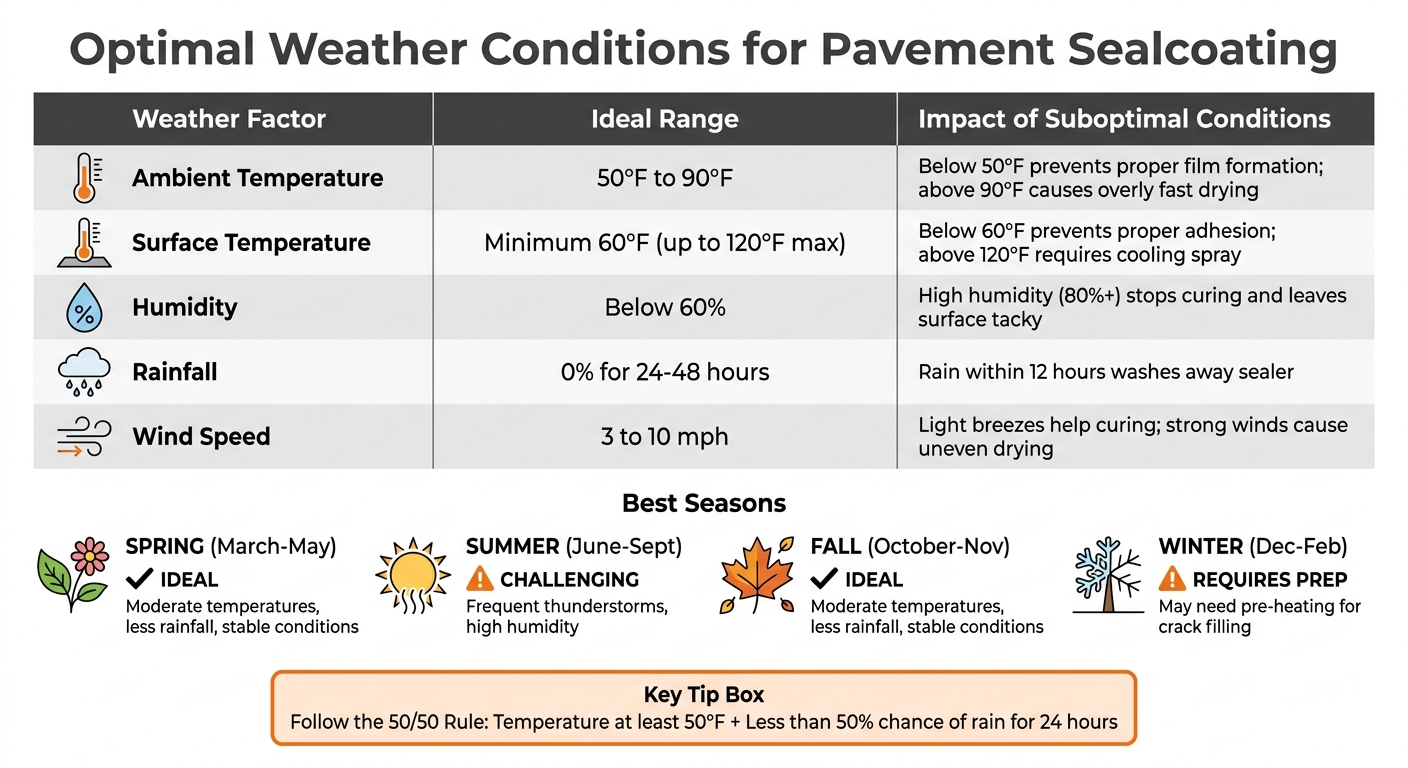
Optimal Weather Conditions for Pavement Sealcoating
Weather plays a crucial role in the success of pavement treatments. Poor conditions can lead to wasted resources and leave the pavement unprotected. To get the best results, it’s important to match the treatment to the right weather conditions, especially when it comes to temperature, humidity, and rainfall.
Temperature and Humidity Requirements for Sealcoating
Sealcoating depends heavily on precise weather conditions to ensure proper bonding. The ambient temperature should be at least 50°F and ideally stay between 50°F and 90°F. Additionally, the pavement surface itself must reach at least 60°F for the sealer to adhere properly. If the surface temperature climbs above 120°F - something that can happen quickly in sunny regions like Florida - a light fog spray can help cool it down, as long as no puddles form.
Humidity is another critical factor. Levels should stay below 60% for optimal curing. High humidity, particularly above 80%, can leave the sealer tacky and prevent it from setting properly. A dry, sunny forecast is essential for at least 48 hours after application, as rain within the first 12 hours could wash the treatment away, potentially causing environmental issues by carrying it into storm drains.
"Using additives adds a whole different dimension to your sealer. It encapsulates sand... adds flexibility to different types of sealcoat... But most importantly, it can reduce drying and curing time, so it extends your spring and fall season."
| Weather Factor | Ideal Range for Sealcoating | Impact of Suboptimal Conditions |
|---|---|---|
| Ambient Temperature | 50°F to 90°F | Below 50°F prevents proper film formation; above 90°F can cause overly fast drying |
| Humidity | Below 60% | High humidity (80% or more) can stop curing and leave the surface tacky |
| Rainfall | 0% for 24-48 hours | Rain within 12 hours can wash away the sealer |
| Wind Speed | 3 to 10 mph | Light breezes help curing; strong winds cause uneven drying |
Best Seasons for Crack Filling in North Florida
In North Florida, the best times for crack filling are Spring (March–May) and Fall (October–November). These seasons typically offer moderate temperatures, less rainfall, and stable weather conditions that are ideal for pavement treatments.
Summer (June–September) brings challenges like frequent thunderstorms and high humidity, which can interfere with application and curing. On the other hand, winter (December–February) might require pre-heating cracks to ensure the material adheres properly, as cooler temperatures can affect the process.
To plan effectively, aim for dry periods and follow the 50/50 rule: ensure the temperature is at least 50°F and that there’s less than a 50% chance of rain for at least 24 hours after application. This approach helps secure the best possible outcome for your pavement treatments.
Building Your Seasonal Maintenance Schedule
Taking weather patterns and early damage signs into account, creating a seasonal maintenance plan can help you stay ahead of repairs. This approach not only prevents costly issues but also helps extend the life of your pavement.
Maintenance Schedules for Asphalt vs. Concrete
Asphalt and concrete require different care, but both benefit greatly from routine maintenance. For asphalt driveways, regular upkeep can extend their lifespan to 20–30 years, while neglect can lead to faster deterioration. One key task is resealing asphalt every two to five years, which protects it from UV rays and water damage.
| Maintenance Task | Recommended Frequency | Optimal Timing |
|---|---|---|
| Sweeping & Cleaning | Annually | Spring |
| Crack Filling | As they appear | Late Spring / Summer |
| Pothole Patching | Immediately | Dry weather periods |
| Sealcoating | Every 2 to 5 years | Late Spring / Early Summer |
| Winterizing/Inspection | Annually | Late Fall |
| Full Replacement | Every 20 to 30 years | Late Spring / Summer |
These seasonal guidelines help you time your cleaning, inspections, and repairs effectively.
Spring is the perfect time to power wash and sweep away winter debris, while also checking for new cracks or potholes. Summer provides the ideal conditions for sealcoating and major repairs, as the warm, dry weather ensures proper curing. In the fall, focus on winterizing by filling cracks to prevent water from seeping in and freezing. During winter, avoid using rock salt, which can worsen damage during freeze-thaw cycles. Opt for sand or alternative de-icers instead.
"The best frequency to reseal your driveway is every two years." - Taylor Sansano, Contributing Writer, Angi
Asphalt repair costs can range from $300 to $4,700, with an average of around $1,500. However, if repairs become frequent after about 15 years, it may be more economical to consider a full replacement, which typically costs between $4,200 and $9,000.
Tips for Following Your Maintenance Schedule
Pair your seasonal tasks with regular inspections. Setting reminders for early spring and late fall can help you stay on top of your pavement’s condition. These simple checks allow you to catch small problems early, making repairs easier and less expensive. Schedule major projects like sealcoating or repaving for late spring or early summer to avoid the challenges of rainy or cold weather.
Additionally, keep irrigation systems aimed away from pavement, as constant water exposure can weaken asphalt and lead to potholes. Annual sweeping is also a great way to spot early signs of damage, such as hairline cracks, before they turn into bigger issues.
Planning Tools and Professional Services
American Curb Appeal's Pavement Services
Streamline your seasonal property maintenance with professional services and planning tools. American Curb Appeal provides specialized pavement maintenance services for North Florida properties. Their offerings include sealcoating, crack filling, asphalt repair, parking lot striping, concrete repair, pressure washing, and ADA compliance work for commercial parking lots and roadways. They also handle debris removal, surface cleaning, and stormwater control services to help mitigate water-related damage to pavement.
For property managers overseeing multiple locations, having a single provider manage everything - from annual sweeping to pothole patching - simplifies scheduling and ensures consistent quality across all sites. These services are designed to fit seamlessly into customized maintenance plans, helping to extend the life of your pavement.
Custom Maintenance Plans for North Florida Properties
American Curb Appeal takes it a step further by developing custom maintenance plans tailored to your property's specific needs and budget. These plans consider factors like pavement age, traffic levels, drainage, and material type. Key components include timely crack repairs, annual spring inspections, and sealcoating every two to five years, scheduled to match North Florida’s ideal weather conditions.
Working with a local provider familiar with the region’s climate offers a big advantage. Maintenance schedules can avoid major projects during the rainy spring season or cooler fall months, while winterizing tasks are completed well before cold snaps. Custom plans focus on timely interventions, ensuring that critical work is done within the vital 6-month preservation window. This proactive approach helps safeguard your investment and reduces the risk of costly repairs down the line.
Conclusion
Taking action promptly is key to keeping your pavement in good condition for years to come. Addressing issues within the crucial six-month window can extend the life of your asphalt by an additional 8–10 years.
The best time for treatments is when pavement temperatures are between 70°F and 90°F, with at least 24 hours of dry weather. These conditions allow sealants to bond and cure properly. Skipping this window can lead to problems like soft sealant, streaks, or even bonding failure.
Planning ahead is just as important as timely repairs. American Curb Appeal develops tailored maintenance plans suited to North Florida's ideal treatment season, which typically runs from March through October. Promptly addressing small cracks can prevent them from growing into major structural problems that might require costly reconstruction later. Working with a local provider who understands the region's weather ensures your pavement is treated at the right time, reducing risks and improving results.
Don't wait - protect your pavement now. Contact American Curb Appeal to schedule an inspection and design a maintenance plan that keeps your property in great shape throughout the year.
FAQs
How do I know if my pavement is still in the 6-month window?
To determine if your pavement falls within the ideal 6-month window for preservation, focus on its age and current condition. Pavement that’s less than 30 months old is often still within this timeframe. Keep an eye out for early signs of wear, such as small cracks, oxidation, or a rougher surface texture. By routinely inspecting and noting the pavement’s age, you can schedule maintenance before serious damage occurs, making preservation efforts much more effective.
What should I do if rain is forecast right after sealcoating?
If rain is in the forecast, it's best to hold off on applying the sealcoat. Rain can wash away or harm the fresh coating, stopping it from curing correctly. If the sealcoat has already been applied and rain is on the way, wait for the weather to improve and ensure the surface is completely dry before walking or driving on it. This helps reduce damage and allows the sealcoat to cure as intended.
When should I sealcoat versus just fill cracks?
Sealcoating and crack filling each play a distinct role in pavement maintenance. Crack filling comes first, as it helps prevent water from seeping into the pavement, which can lead to more extensive damage. Once cracks are addressed, sealcoating is applied. This step is best done in warm, dry conditions - temperatures should be at least 50°F, with no rain expected for 24 hours. Sealcoating adds a protective layer that shields the pavement from UV rays, water, and oxidation, helping to extend its lifespan.
Need parking lot maintenance?
Contact us today for a free proposal on your next pavement project.
Get Your Free Proposal