
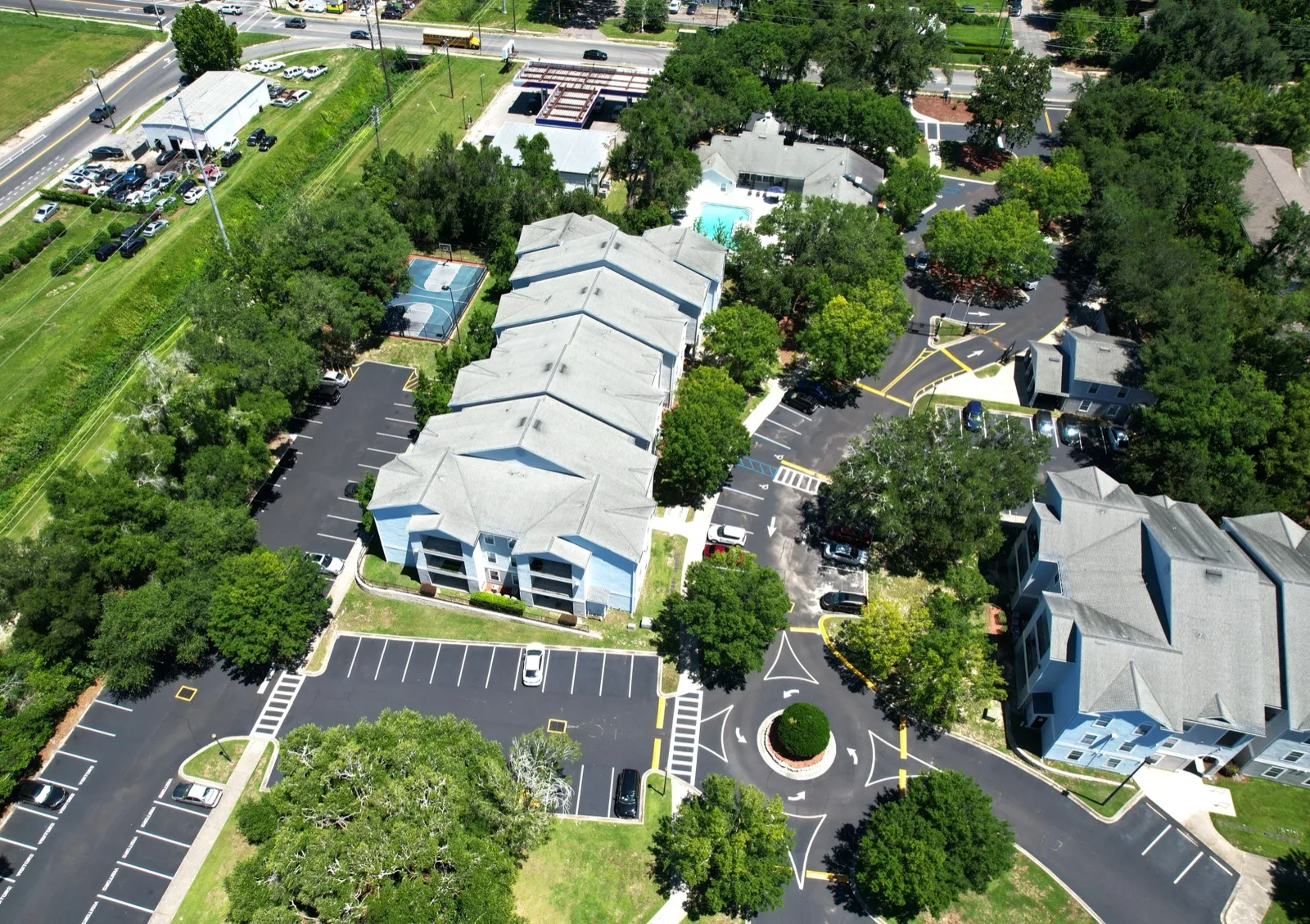
To protect your pavement in Tallahassee's challenging climate, crack sealing is essential. It prevents water from penetrating the foundation, reducing the risk of potholes, structural issues, and costly repairs. Choosing the right contractor involves assessing their skills, methods, and compliance with local regulations. Here's how to make an informed decision:
- Inspect Your Pavement: Identify crack types (longitudinal, transverse, reflective, or alligator) and measure their widths. Document site details like photos, crack measurements, and drainage issues.
- Evaluate Contractors: Look for proper cleaning and drying techniques, quality sealants, and adherence to correct work sequences. Verify licenses, insurance, and ADA compliance.
- Compare Proposals: Ensure estimates are detailed, with costs based on linear footage and crack widths. Watch for clear steps, material descriptions, and warranty coverage.
- Check Reviews and References: Focus on detailed feedback, project photos, and long-term results shared by past customers.
Crack sealing, combined with regular maintenance like sealcoating and drainage reviews, helps extend pavement life and curb appeal. A thoughtful approach ensures durable, safe, and visually appealing surfaces for years to come.
Assessing Your Pavement Condition and Project Scope
Before reaching out to a contractor, take some time to inspect your pavement and document any visible issues. Clear, detailed descriptions will help you get accurate bids and avoid unexpected changes during the project. A good starting point is identifying the types of cracks present, as this will guide the appropriate repair approach.
Common Types of Pavement Cracks and What They Mean
Not all cracks are the same, and knowing which type you’re dealing with can make a big difference in how they’re repaired.
- Longitudinal cracks run parallel to the direction of travel. These are often caused by poor joint construction or stress from traffic loads. If left untreated, they allow moisture to seep into the subgrade. Cracks under ½ inch wide are typically suitable for sealing.
- Transverse cracks run perpendicular to the direction of travel and are usually the result of thermal stress, where the surface layer shrinks faster than the base during temperature changes. Like longitudinal cracks, they can often be sealed if they’re under ½ inch wide.
- Reflective cracks appear in newer overlay layers, mirroring cracks in the underlying pavement. Depending on their severity, these can be sealed or overlaid.
- Alligator cracking, which looks like a network of interconnected scales, is a sign of deeper structural or subgrade failure.
"Crack sealing is generally no longer effective once the alligator scale cracking pattern forms." - Pavement Interactive
Unlike surface-level cracks, alligator cracking requires more extensive repairs, such as removing and replacing the affected areas.
| Crack Type | Appearance | Primary Cause | Recommended Action |
|---|---|---|---|
| Longitudinal | Parallel to travel direction | Poor joint construction or loading | Seal if under ½" wide |
| Transverse | Perpendicular to travel | Thermal shrinkage | Seal if under ½" wide |
| Alligator | Interconnected "scale" pattern | Structural or subgrade failure | Remove and replace |
| Reflective | Mirrors cracks from old layer | Movement in base layers | Seal or overlay |
Defining the Scope of Your Crack Sealing Project
Once you’ve identified the crack types, it’s time to define the scope of your project. This includes noting whether your surface is asphalt or concrete and considering the traffic load, as these factors influence the type of sealant and application method required.
For commercial properties or public-facing areas in Tallahassee, don’t overlook ADA compliance. If accessibility features need restoration, include this in your project scope to ensure bids reflect all necessary work.
Crack width is another key factor in estimating costs. In the Tallahassee area:
- Small cracks under ¼ inch wide typically cost $1 to $3 per linear foot.
- Medium cracks between ¼ and ½ inch range from $3 to $6 per linear foot.
- Larger cracks over ½ inch can cost $6 to $12 per linear foot.
Knowing these details ahead of time helps you set realistic expectations and compare contractor proposals effectively.
What Site Details to Document Before Calling Contractors
Before contacting contractors, gather specific site details to streamline the bidding process. Here’s what to document:
- Take photos of the most prominent cracks.
- Measure the widths of cracks and calculate the total linear footage, as most contractors price their work based on these measurements.
- Check for debris or vegetation in the cracks, as cleaning may add to the overall cost.
- Look for signs of moisture bleeding through cracks, which might indicate drainage issues that sealing alone won’t fix.
- If you notice sunken or uneven slabs, mark these areas separately, as they may need leveling before sealing can be done.
Providing this information upfront, along with a simple site diagram if possible, will help contractors give you precise and comparable estimates rather than vague ballpark figures.
How to Evaluate a Crack Sealing Company's Skills and Methods
Technical Practices to Look For in a Contractor
When choosing a contractor, it's important to confirm their expertise in proper crack sealing techniques. A key step is ensuring that cracks are thoroughly clean and dry before applying sealant. Skipping this step can lead to repairs that fail prematurely, sometimes within just a season.
In areas like Tallahassee, moisture control becomes even more critical. High humidity and residual dampness can weaken the sealant's adhesion. A dependable contractor will take the time to ensure cracks are dry and may also evaluate drainage issues or soil movement that could cause cracks to reappear.
Another aspect to discuss is the type of sealant being used. Hot-pour rubberized sealants are designed to flex with temperature changes, making them more durable, while cold-pour products often degrade faster. A trustworthy contractor should explain their choice of materials and provide written details about the products they use.
Timing matters, too. Spring and fall are ideal for crack sealing because cracks are at their mid-point width during these seasons. If a contractor suggests sealing during Tallahassee's peak summer without a valid reason, it's worth questioning their approach.
Once you've reviewed their methods, look at whether they use the appropriate tools and follow a logical work sequence.
Equipment Use and Work Sequencing
The right equipment is essential to getting long-lasting results. Tools like melter kettles and routing saws are designed to maintain the correct sealant temperature and shape cracks for better adhesion.
The order in which tasks are performed also plays a big role. Crack sealing should always come before sealcoating. Applying a sealcoat over unsealed cracks can trap moisture and worsen damage. If a contractor plans to handle both services in one visit, they should clearly explain the proper sequence and why it matters.
Poor Practices vs. Recommended Practices: A Side-by-Side Comparison
Here’s a quick table to help you evaluate a contractor’s approach:
| Practice Area | Recommended Approach | Red Flag |
|---|---|---|
| Surface Condition | Cracks should be bone-dry and free of debris before sealing | Sealing over dirt, vegetation, or moisture |
| Temperature | Apply sealant above 40°F; use a hot air lance if necessary | No temperature checks or preparation in cold weather |
| Seasonal Timing | Seal in spring or fall when cracks are at mid-point width | Sealing during peak summer without explanation |
| Material Quality | Use professional-grade, weather-resistant sealants with written specs | Vague descriptions or use of generic retail products |
| Work Sequencing | Complete crack sealing before applying sealcoat | Sealcoat applied without addressing cracks |
| Scope of Work | Provide a written contract detailing materials, methods, and warranty | Relying solely on verbal estimates |
This guide can help you ensure your contractor follows industry-standard practices while considering Tallahassee's specific climate and conditions.
Checking Credentials, Insurance, and Compliance
How to Verify Licenses and Insurance
Once you've explored the technical aspects, it's important to verify that the contractor is legally qualified to handle the job. In Florida, services like crack sealing and driveway maintenance do not require a state contractor's license from the Department of Business and Professional Regulation (DBPR). However, contractors must still hold a local business tax receipt or a certificate of competency issued by the City of Tallahassee or Leon County.
To confirm a contractor's status, use the "Verify a License" tool at MyFloridaLicense.com. You can search by license number, name, or business name. This step is crucial because some local paving professionals may have inactive licenses.
"First and foremost, protect yourself and make sure the contractor and any sub-contractors are licensed, bonded and insured." - Porch
Ask the contractor for a Certificate of Insurance (COI) directly from their insurance agent. Verify that they have active general liability and workers' compensation coverage. If these policies are missing and a worker gets injured on your property, you could be held financially responsible. Once you've confirmed their credentials, turn your attention to ensuring they comply with local regulations.
Local Regulations and Compliance Knowledge
After verifying licenses and insurance, confirm that the contractor understands local codes and requirements. For commercial parking lots and public sidewalks, compliance with ADA standards is non-negotiable. This means any repaired surface must meet specific requirements for slope, texture, and clearance. Contractors unfamiliar with these rules could leave you exposed to liability issues even after the work is done.
Storm drainage is another critical consideration. Any work that alters drainage patterns or runoff flow might need to comply with local environmental rules. For larger projects or those involving public areas, use the City of Tallahassee's permit portal at tlcpermits.org to check if a permit is required before starting the job.
Traffic and Pedestrian Safety During the Job
Beyond compliance, make sure the contractor has a solid safety plan in place. In busy areas like Midtown, College Town, or commercial properties with high foot traffic, safety measures are essential. A reliable contractor should come prepared with the right tools for the job - think signage, cones, and barriers to guide pedestrians away from freshly sealed surfaces or wet sealant.
Freshly treated or unsealed cracks can pose trip hazards during the curing process. If a contractor doesn't proactively address this, they aren't just being careless - they're creating a liability risk for you. Before signing any agreements, ask how they plan to manage pedestrian and vehicle access during and after the project. Their approach to safety speaks volumes about their professionalism and attention to detail.
Using Reviews, References, and Photos to Judge a Contractor
How to Read Online Reviews
Once you've assessed a contractor's technical qualifications, online reviews can provide additional insight into their reliability and work quality. But don't just focus on star ratings - dig into the details of what customers say about their projects. Reviews that describe specific tasks, like "filling potholes" or "installing an asphalt berm to manage water flow", are typically more reliable than vague praise like "great job".
Look for patterns in feedback. For example, repeated mentions of tardiness or communication issues can highlight potential concerns.
Positive reviews that highlight follow-up visits or responsive communication suggest a contractor who stays committed even after completing the job. Reviews from well-known local entities, such as banks, HOAs, or construction firms, often carry more credibility than anonymous entries. Additionally, project photos included in reviews can offer visual proof of the contractor's workmanship.
What to Look for in Project Photo Galleries
Photo galleries can complement reviews by giving you a clearer picture of a contractor's capabilities. Pay attention to the details in these images. For instance, cracks should be properly filled before applying sealcoat. Sealcoat is designed to protect against water and UV damage, but it won't fill cracks. If you see visible cracks in a freshly sealed surface, it likely means the contractor skipped a crucial step.
"Sealcoat is a protective layer, not a crack filler. It slows water intrusion and UV damage, but cracks must be cleaned and filled first." - Asphalt Kingdom
Ask for progress photos in addition to completed project images. This lets you verify that key steps, such as cleaning and crack-filling, were done correctly. Also, examine edges and surrounding areas in the photos. Signs like sealant splatter on curbs or tire tracks on nearby concrete can indicate poor site management or that traffic was allowed on the surface too soon. In areas like Tallahassee, photos showing effective drainage solutions, such as asphalt berms, can demonstrate the contractor's ability to handle heavy rainfall.
How to Request and Use References
References provide a more personal perspective on a contractor's work and allow you to evaluate their performance over time. Ask for both recent and older references to get a sense of how well their work holds up under local conditions, such as Tallahassee's climate.
When speaking with references, focus on the durability of the work and the contractor's current reliability. Long-term relationships with clients can also indicate consistent quality. As one satisfied customer shared:
"Terry Thompson at American Curb Appeal is a true honest man who stands behind his work. I have used American Curb Appeal for over 25 years." - Daniel Plain, Site Work Contractor, Lester D. Plain & Son, LLC
If a contractor is unwilling to provide references or only offers outdated ones, treat this as a potential warning sign.
Comparing Proposals and Planning for Long-Term Pavement Care
How to Read and Compare Crack Sealing Proposals
Proposals can vary widely, so it's important to focus on clarity and detail. A good proposal will outline exactly which areas will be treated, how the work will be prepared, the materials to be used, and the associated costs. Be cautious of vague phrases like "crack repair as needed" - specifics are crucial.
When evaluating bids, ask contractors to provide pricing based on the linear foot and crack width. Local pricing guidelines can help you understand typical costs for different crack sizes. Also, check that the proposal includes essential preparation steps, like pre-sealing cleaning, as mentioned earlier.
"Well-defined, written expectations help prevent misunderstandings and ensure everyone is aligned on the scope of work." - Tallahassee Concrete Repair
It's also wise to confirm whether the estimate includes all potential costs or if there might be extra charges later. For example, American Curb Appeal offers a site walk and diagnostic process to ensure property owners only pay for services their pavement genuinely needs. Once you have clear proposals and comparable pricing, take the time to review warranty details for insight into long-term performance.
Understanding Warranties and Expected Sealant Life
A written warranty is more than a promise - it's a reflection of the contractor's confidence in their work. Look for details on what the warranty covers, how long it lasts, and any conditions that apply. Be cautious of warranties that exclude damage from normal weather conditions, especially in areas like Tallahassee where heavy rainfall and high UV exposure are routine.
The performance of sealants in Tallahassee depends on the materials used. Seasonal weather patterns, including intense rain and temperature swings, can cause rapid wear. The proposal should specify sealants designed to handle these conditions by expanding and contracting with temperature changes. If a contractor can't explain their choice of materials, don't hesitate to ask for clarification.
Building a Long-Term Pavement Maintenance Plan
A good maintenance plan goes beyond the initial repair, combining clear proposals and reliable warranties to keep your pavement in top shape. Crack sealing should be just one part of a broader strategy that includes regular maintenance actions.
For example, sealcoating every 2–3 years and refreshing striping every 1–2 years can help preserve both the appearance and functionality of your pavement. Drainage is another critical factor, especially in Tallahassee, where standing water from storms can erode the pavement base and lead to new cracks. A thorough contractor will address drainage issues during the initial site walk and may recommend solutions like grading adjustments or installing drainage channels.
"Protect it with data, not guesswork. Our InSITE+ pavement analysis program gives you the inspection reports, structural assessments, and treatment plans you need to make smart maintenance decisions." - American Curb Appeal
The table below outlines a practical maintenance schedule to help extend the life of your pavement:
| Maintenance Action | Recommended Frequency | Primary Benefit |
|---|---|---|
| Crack Sealing | As needed (annual inspection) | Prevents water from reaching the base layer |
| Sealcoating | Every 2–3 years | Protects against UV, rain, and oil; restores color |
| Drainage Review | Annually / after heavy storms | Prevents erosion and foundation failure |
| ADA Audit | Annually | Ensures legal compliance and reduces liability |
| Striping/Marking | Every 1–2 years (or with sealcoating) | Maintains traffic safety and curb appeal |
Conclusion: What to Remember When Hiring a Crack Sealing Contractor in Tallahassee
Before hiring, check the contractor's active license on MyFloridaLicense.com and ensure they provide up-to-date certificates for liability and workers' compensation insurance. Florida law mandates these protections, and skipping this step could leave you financially vulnerable if something goes wrong.
Once credentials are verified, evaluate the quality of their work. Request references from past clients, particularly those in the Tallahassee or Leon County area, and ask for photos of completed projects similar to yours. Look for signs of quality, such as even sealant coverage and clean edges - these details indicate proper surface preparation, which is key to long-lasting repairs.
When reviewing proposals, insist on detailed estimates. Each proposal should clearly outline the areas to be treated, the materials to be used, and a cost breakdown by linear foot. Avoid vague estimates, as they make it difficult to compare options and hold contractors accountable.
FAQs
How do I know if my cracks can be sealed or need replacement?
When deciding whether to seal cracks or replace the damaged area, it’s important to evaluate their size and condition. Small, shallow cracks that aren’t growing can often be sealed to protect against water intrusion. On the other hand, large or deep cracks, especially those showing structural problems like spalling, typically need replacement to ensure safety and long-term durability. For cracks involving extensive or structural damage, it’s best to consult a professional to determine the most effective course of action.
What should I ask a contractor about sealant type and prep work?
When you're considering a contractor for crack sealing, it's important to dig into the details. Ask about the type of sealant they use and whether it's designed to handle your local climate and the specific surface conditions. Equally important is their preparation process - make sure they thoroughly clean the cracks, remove any debris, and ensure the surface is dry before applying the sealant. These steps play a huge role in achieving proper adhesion and ensuring the seal lasts as long as possible.
Do I need permits or ADA repairs for crack sealing in Tallahassee?
Permits or ADA-related repairs are generally not necessary solely for crack sealing in Tallahassee. That said, property owners should always review local regulations and confirm ADA compliance for their particular project to steer clear of any complications.
Need parking lot maintenance?
Contact us today for a free proposal on your next pavement project.
Get Your Free Proposal